

What is at stake when you choose organic olive oil for fine dining
Organic olive oil is now a fixture in most fine dining establishments. Between customer demand, menus moving upmarket and respect for certification, it has become as much a point of difference as a mark of quality. Yet bringing organic olive oil into your kitchen is not just about picking a cuvée: you also need to choose the right format, manage stock efficiently and make the most of the product in the guest experience.
To meet these challenges, restaurateurs need to consider service volume, how often they reorder, storage space and how oils rotate through the seasons. Too small a format means running out often; too large, and you risk oxidation. There are solutions for every stage, from the 5 L tin to the service bottle, including personalisation on the table to reinforce the identity of your establishment.
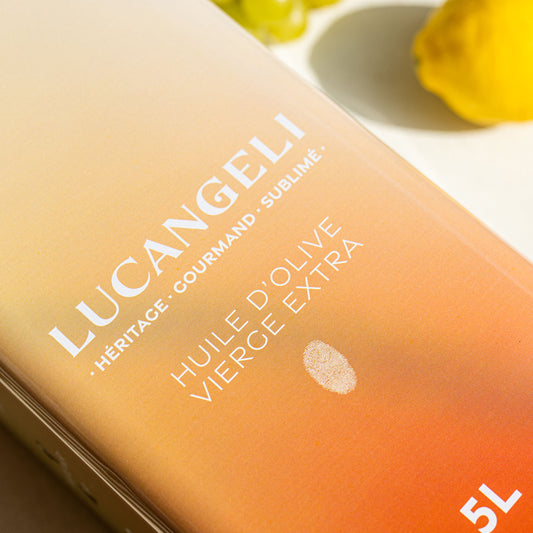
Discover organic olive oil in the 5 L tin – ideal for managing stock in a professional kitchen.
See the trade area for dedicated supply.
Professional formats: how to choose for your service

5 L tin, 1 L bottle or 500 ml: the criteria to weigh up
The right format depends on the type of service (kitchen, dining room, buffet, room service), the number of covers and how often you reorder.
- 5 L tin: for the kitchen only, it lets you handle large volumes and limits running out. Store it away from light and decant it regularly into a service bottle to avoid oxidation.
- 1 L bottle: an in-between format, suited to medium-sized establishments or mixed kitchen and dining room use.
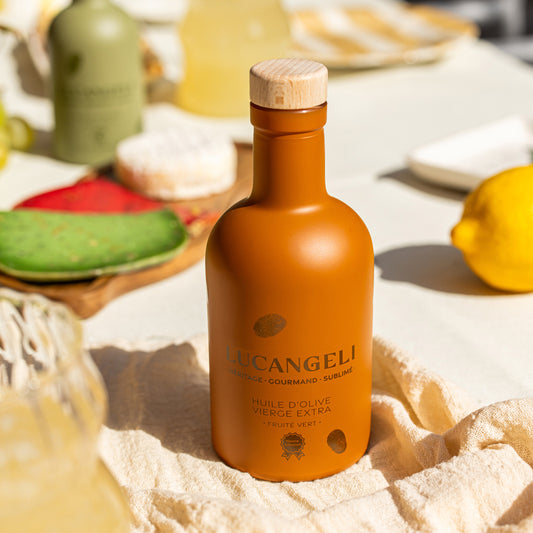
- 500 ml bottle: ideal for the table, dining room service or room service, it looks good on presentation and lets you bring in a personalised bottle carrying your establishment's identity.
Discover bottle personalisation for restaurants and hotels.
Comparison table of organic olive oil formats for food service
Stock management and rotation: keeping it fresh
Storage, best-before date and rotation: good practice to adopt
Organic olive oil should be stored away from light, in a cool, dry space. Fast rotation is best, especially during busy periods (back to school, the holidays, spring). The best-before date appears on every tin and bottle: build that parameter into your stock software and train your team to check it regularly.
- 1. Keep a buffer stock so you never run out in a busy week.
- 2. Set up a FIFO system (First In, First Out) to guarantee freshness.
- 3. Check the best-before date on every delivery and every use.
- 4. Use opaque service bottles in the dining room to limit photo-oxidation.
- 5. Clean service containers regularly.
Understanding the best-before date of olive oil.
Making the most of it on the menu and in the dining room
Highlighting organic certification and provenance on the menu is a real asset when you present the product to guests. Some establishments go further, offering a cellar of olive oils to taste or personalising table bottles with the restaurant's name.
Design your own personalised bottle.
Frequently asked questions
How much organic olive oil should you allow per cover in food service?
Allow between 10 and 15 ml per cover on average, depending on the type of cuisine and how many dishes are finished with oil.
What is the best way to store organic olive oil in a restaurant?
Keep tins away from light and heat, decant into small opaque bottles for the dining room and respect the best-before date shown.
What are the advantages of a personalised olive oil bottle on the table?
Beyond showcasing the establishment, personalisation reinforces the identity of the house and gives guests a memorable experience, especially at events or business meals.




 lucangeli.it