

Why Italian fig jam is a must in September
Italian fig jam hits its peak in early autumn, thanks to the perfect ripeness of the fruit in the South. In Calabria, white and purple figs are harvested from late August to late September, which makes it a seasonal product to reach for right now.
Unlike industrial jams, a real Italian artisan jam contains nothing but fresh figs, sugar and sometimes a dash of lemon. That respect for the fruit comes through in the texture, in the sugar-acidity balance and in the aromatic depth.
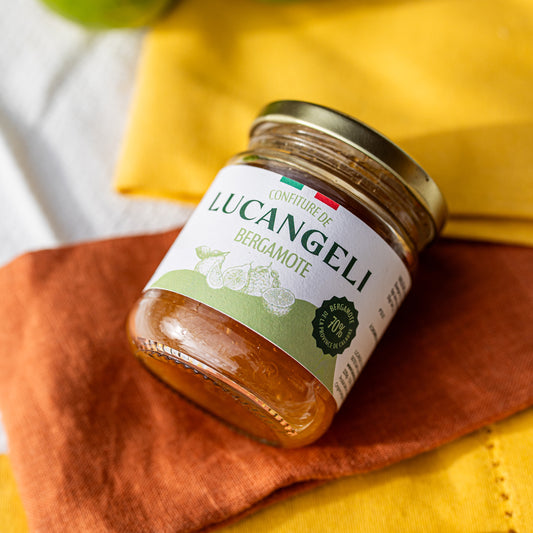
Take a look too at the bergamot preserve, another emblematic jam from the South, to vary the pleasures on your breakfast or afternoon table.
How to choose a quality Italian fig jam

What to check on the label
- Origin of the figs: go for fruit grown in southern Italy, in Calabria, Sicily or Campania, regions known for the richness of their produce.
- Fruit percentage: a good jam should show at least 60% figs.
- Simple ingredients: fresh figs, sugar, lemon. Avoid preservatives and added flavourings.
- Texture: pieces of fruit and visible seeds are the sign of gentle, artisan cooking.
- Jar and storage: go for a glass jar, which preserves the aromas better and can be recycled.
You will find these same criteria in the selection of Italian sweet treats available on the site, such as the bergamot spread, winner of an Épicures d'Or 2024 award, or the 100 percent pistachio purée for savoury or sweet cravings.
Choosing the variety
In Calabria, the Dottato fig is the queen of jams: pale flesh, delicate scent, natural sweetness. Its season is in full swing in September, which guarantees a fresh jam that is rich in flavour. This variety, rarely worked with outside southern Italy, gives a result you will not find in industrial production.
Ways to enjoy fig jam the Italian way

At the table, from breakfast to dessert
- On a slice of toasted rustic bread, with a touch of bergamot preserve for a citrus note.
- As a filling for crostata, the Italian jam tart, for a family dessert typical of the South.
- With mature cheeses (pecorino, gorgonzola, taleggio): the sweet-and-savoury pairing celebrated in Italian apertivi.
- In little glasses with plain yoghurt, fresh fruit and swirls of Piedmont hazelnut purée.
- To top a panna cotta or to go alongside an artisan ice cream.
A professional tip: the Dottato fig from Calabria
Few French makers offer a jam based on the Dottato fig, a protected variety harvested exclusively in southern Italy. That particularity, sought after by chefs, explains why this jam turns up on the cheese boards of starred establishments in Paris and in Nice. To discover other sweet treats or to supply your own establishment, explore the professional offering.
#### Checklist for enjoying Italian fig jam
- Check the season: September is the perfect moment.
- Read the label for the origin and the fruit percentage.
- Go for the Dottato variety for authenticity.
- Try it with Italian cheeses or on a crostata.
- Discover other sweet treats to vary the pleasures.
Frequently asked questions about Italian fig jam
What is the difference between white and purple fig jam?
White figs (Dottato) offer natural sweetness and a melting texture, ideal for artisan jams from southern Italy. Purple figs are tangier and give a jam with a more intense taste.
How do you store fig jam once it is opened?
Keep your jar in the fridge once opened and finish it within the month to enjoy all the freshness of the fruit.
Where can you buy a seasonal artisan Italian fig jam?
Go for specialist delicatessens or sites that select artisan jams from southern Italy, such as the bergamot preserve or the bergamot spread.




 lucangeli.it