


What is flavored olive oil?
Flavored olive oil is an extra virgin olive oil infused with natural ingredients—fresh herbs, citrus, spices—to give it a distinct aromatic profile. It differs from classic olive oil in its ability to instantly flavor a dish, without the need for additional condiments. It is a finishing product, designed to be used raw or as a final touch, never as the main cooking oil.
How is it made?
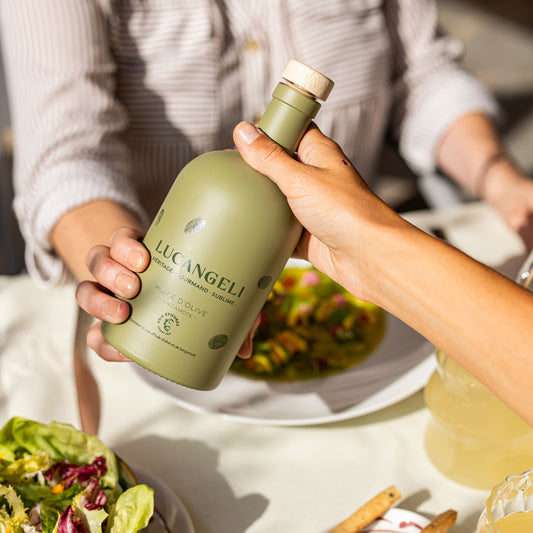
There are two main production methods. The first, called co-milling, involves pressing the olives at the same time as the aromatic ingredients (basil, lemon, chili pepper…). This is the most natural method: the aromas are extracted directly during pressing, without the addition of artificial essences or flavors. The second method, maceration or infusion, involves soaking the ingredients in an already extracted oil. The result is different, often milder. For lovers of artisanal products, the co-milling method is generally preferred for its authenticity. This is the method used by Lucangeli for its flavored olive oils, sourced from organic Calabrian agriculture.
Flavored vs. infused: what's the difference?
A quality flavored oil contains no artificial flavors. The difference with an oil that is simply industrially "perfumed" is notable: the former offers real aromatic complexity, the latter often a uniform and not very persistent taste. Before buying, it is advisable to check the list of ingredients: a good flavored oil should only contain extra virgin olive oil and the natural ingredients mentioned. The "organic" label is also an indicator of quality, guaranteeing the absence of pesticide residues in the aromatic ingredients.
How to use flavored olive oil in cooking?

The most common mistake with flavored olive oil is heating it to a high temperature. Heat alters the aromatic compounds and can make the oil bitter or bland. These oils are designed to be used differently.
Cold or as a finishing touch: the golden rule
The fundamental rule is simple: flavored olive oil is used cold or as a finishing touch, just before serving. A few drops are enough to flavor a dish. On a tomato salad, burrata, vegetable carpaccio, or freshly drained pasta, the effect is immediate. For example, lemon olive oil brings a bright freshness to grilled fish or steamed zucchini, without masking the main product's flavor.
What dishes can be enhanced with flavored oil?
The combinations are numerous and depend on the chosen aromatic profile. An orange & lemon olive oil pairs perfectly with white fish, summer salads, grilled shrimp, or even a light dessert like panna cotta. An organic basil olive oil is ideal on fresh tomatoes, Margherita pizza, pasta al pomodoro, or bruschetta. For lovers of more intense flavors, an organic garlic & chili olive oil effectively enhances roasted vegetables, grilled octopus, garlic pasta, or vegetable soup. It can also accompany a sun-dried tomato spread or pitted black olives to create an Italian-style aperitif.
Can flavored olive oil be cooked?
Technically, yes—but it's not recommended. High-temperature cooking destroys the aromatic compounds that make these oils interesting. However, they can be used for cold marinades (meats, fish, vegetables before cooking), or added at the end of cooking, off the heat, to flavor a sauce or risotto. For cooking, it's better to use an organic ripe fruity olive oil or an organic green fruity olive oil, which are more suitable for heat.
Which flavored olive oil to choose according to your tastes?

The choice of a flavored oil depends primarily on its intended use and the flavors one enjoys. Here are some guidelines to help you choose.
Fruity and citrus aromas
Citrus oils—lemon, orange, bergamot—are the most versatile. They bring freshness and lightness, and are suitable for savory dishes as well as some desserts. Lemon olive oil is particularly appreciated with fish, seafood, and green vegetables. Orange & lemon olive oil offers a softer, fruitier note, ideal for mixed salads or sweet-savory dishes. These oils also pair very well with an IGP balsamic vinegar to create an original vinaigrette.
Herbaceous and spicy aromas
For those seeking more vegetal or pungent flavors, basil or garlic and chili oils are good choices. Organic basil olive oil directly evokes Southern Italian cuisine: it naturally pairs with DOP basil pesto, tomatoes, mozzarella, or fresh pasta. Organic garlic & chili olive oil, on the other hand, is more characterful: it suits lovers of spicy cuisine, legume dishes, pizzas, or grilled meats.
How to store flavored olive oil?
Flavored olive oil should be stored away from light and heat, ideally in a cupboard or cool cellar. It should not be exposed to direct sunlight, which degrades the aromas and accelerates oxidation. Once opened, it is advisable to consume it within 3 to 6 months to fully enjoy its aromas. Contrary to popular belief, it is not necessary to store it in the refrigerator—this can even alter its texture and taste. Restaurateurs and catering professionals who wish to include these oils on their menu can consult the page dedicated to professionals for information on formats and supply conditions.




 lucangeli.it