


What olive oil oxidation is and why it matters
Oxidation is a chemical reaction that happens when the fatty acids in the oil come into contact with oxygen. It breaks down the aromatic compounds, the pigments and the molecules responsible for bitterness and pungency — two recognised markers of freshness in an extra virgin oil. The result is easy to notice: an oxidised oil shows notes of old butter, wet cardboard or rancid nuts, where a fresh oil offers aromas of cut grass, artichoke or green tomato.
At this point in the season, late September, many bottles opened over the summer are nearing their limit. It is a good moment to take stock, finish what is left, and choose the next organic green fruity olive oil or organic ripe fruity oil that will see you through the new season.
There are three distinct oxidation mechanisms, each with its own cause and its own speed. Knowing them means you can act in the right place.
Photo-oxidation, thermal oxidation, contact with air: three mechanisms to tell apart

Photo-oxidation: the fastest enemy
Photo-oxidation is triggered by exposure to light — direct sunlight, fluorescent kitchen lighting, strong LED lighting. It acts on the chlorophylls present in the oil and produces reactive species that massively speed up the breakdown of the fatty acids.
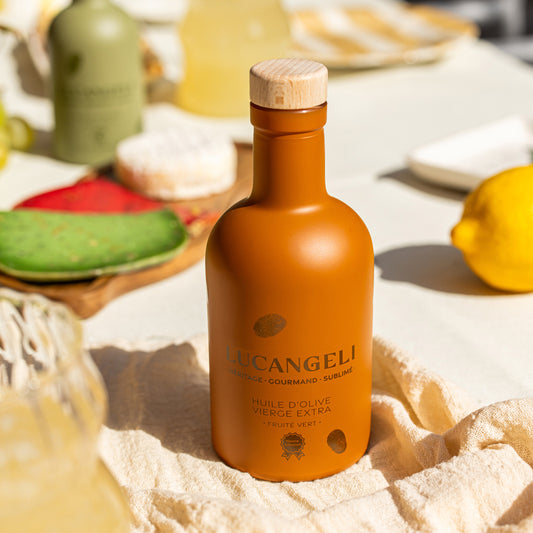
Its defining feature: it is roughly a thousand times faster than oxidation in the absence of light. A clear glass bottle sitting on the worktop next to a window can lose noticeable quality within a few days of direct exposure, even when it is closed. That is exactly why quality oils are always bottled in dark glass — deep green or amber — or in an opaque metal tin.
So an oil whose profile you enjoyed at the time of purchase can taste flat or slightly rancid a few weeks later, not because it was poor, but because it was exposed to light. The container and the storage spot matter as much as the harvest date.
Thermal oxidation: heat speeds everything up
Heat increases the speed of every chemical reaction, oxidation included. For olive oil, every ten-degree rise in temperature roughly doubles the rate of oxidation. Storing a bottle above the hob, on a windowsill in the afternoon sun, or in a cupboard under the sink where heat builds up, significantly shortens how long it tastes good.
The ideal storage temperature is between 14 °C and 18 °C, away from any heat source. An interior cupboard, a cool cellar or a room with little exposure all work perfectly. The fridge is not an enemy of the oil — it does not harm its quality — but it causes the saturated fats to crystallise, which can be surprising. The oil turns liquid again at room temperature with no problem at all.
Contact with air: the silent oxidation
As soon as the cap is off, the oxygen in the air starts acting on the unsaturated fatty acids in the oil. This process is slow if it is not combined with heat or light, but it is unavoidable and cumulative. The more often you open and close the bottle, the larger the contact surface between the oil and the air, and the faster the phenomenon goes.
Two concrete good habits follow from this:
- Close the bottle straight after use, rather than leaving the cap off on the worktop.
- Choose a bottle size that matches your weekly use rather than a large format whose level drops slowly. A 200 ml or 500 ml bottle finished quickly will keep its quality better than a litre dragged out over three months.
The discovery duo of two 500 ml bottles follows this logic: two different profiles to use one after the other, rather than a large volume of a single profile.
How to choose your container and your storage conditions
Choosing the container at purchase: what dark glass really changes
The type of container is the first filter against photo-oxidation. Here is what to look at before you buy:
- Dark glass (deep green or amber): filters out a large share of visible and UV radiation. It is the standard for quality oils.
- Clear glass: no protection against light. Keep it for bottles used up in under a week and stored away from light.
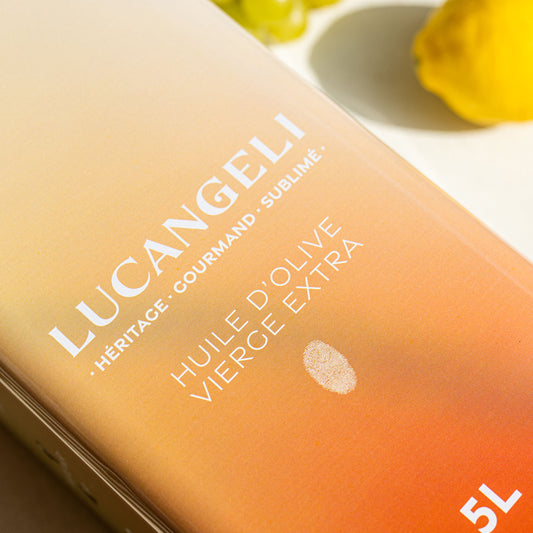
- Opaque metal tin: total protection from light, very well suited to large volumes. The 5-litre tin of organic olive oil is designed for regular use at home or in a professional kitchen — it combines a better price and optimal protection.
- Plastic: to be avoided for long storage. Plastic is permeable to oxygen over time and can transfer unwanted compounds to the oil.
Where to store it: three simple rules
Once the bottle is home, three practical rules are enough to slow oxidation significantly:
- Store the oil somewhere dark and closed — an interior kitchen cupboard, away from the window and from heat sources.
- Keep it away from the hob. The radiant heat of a stove is enough to speed up the degradation of a bottle standing nearby.
- Keep the bottle upright and closed when you are not using it. That limits the contact surface between the oil and the air trapped under the cap.
Restaurant professionals, who handle larger volumes and faster turnover, have access to specific formats and advice through the section dedicated to cafés, hotels and restaurants.
Reading the best-before date without getting it wrong
The date shown on the bottle is not an expiry date in the strict sense. It guarantees that, under normal storage conditions, the oil keeps its sensory and analytical characteristics until that date. A properly stored oil often stays usable for a while afterwards, but its finest aromas — the green notes, the pungency, the bitterness — start to fade even before the date is passed.
The most reliable practical rule is a sensory one: if the oil smells of old fat, cardboard or candle wax, do not use it for finishing. It can still be used for pan cooking, where heat partly masks the defects, but it will bring nothing to a raw dish.
For finishing use — on a burrata, a carpaccio, a soup — always choose a fresh, well-stored oil, within two months of opening. The limited-edition 1L ripe fruity olive oil is designed for this kind of use, where the aromatic profile matters as much as the analytical quality.
Frequently asked questions
Does olive oil degrade faster once it is opened?
Yes. Contact with the oxygen in the air intensifies with every opening. An opened bottle degrades faster than a sealed one, especially if it is stored somewhere warm or bright. In practice, you have four to six weeks after opening to keep the full range of aromas.
Why has my olive oil gone cloudy in the fridge?
It is the natural crystallisation of the saturated fatty acids and waxes present in the oil. The phenomenon is reversible: simply let the bottle come back to room temperature for an hour and the oil returns to its usual liquid appearance with no loss of quality.
Is a clear glass bottle enough if I keep it in a cupboard?
Yes, provided the cupboard is genuinely dark and closed. Clear glass offers no protection in itself, but if the bottle is never exposed to light, that stops being the limiting factor. Heat and contact with air are then the two variables to watch.





 lucangeli.it