

Why a large olive oil format changes the front-of-house experience
In hospitality, the details guests can see are part of the story you tell them. The bottle of olive oil set on the table or presented by your team does more than season a dish: it signals a stance, a commitment to product quality. The jeroboam — a 3-litre format, the equivalent of four standard bottles — amplifies that signal through its presence alone.
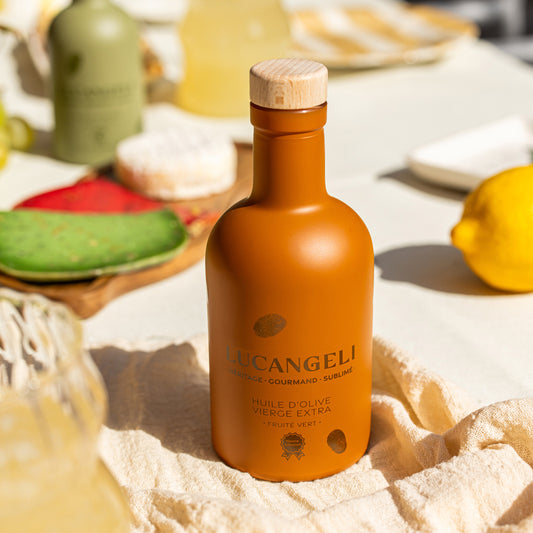
Where a 500 ml bottle goes unnoticed, a jeroboam of organic extra virgin olive oil commands attention. It draws a natural parallel with the large bottles of cellar-worthy wine: without anyone explaining it, guests understand they are looking at a product with character. In a wine bar restaurant, a bistronomic restaurant or a fine dining venue, this format becomes an active piece of the décor, one that speaks to the table before service has even begun.

An immediate point of difference
Restaurateurs who have brought a large olive oil format into their dining room consistently report the same curiosity effect: guests ask questions, the team gets into a conversation about origin, olive variety, harvest year. That moment of contact is valuable, because it raises the perceived value of the whole meal with no direct selling effort at all.
For venues that want to take it further, a custom bottle carrying the house name turns this format into a genuine table signature, recognisable and memorable.
How it differs from the professional tin
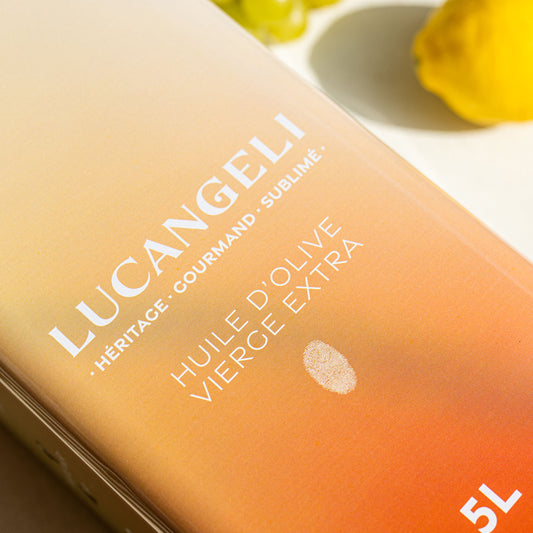
The jeroboam and the 5-litre professional tin answer two opposite logics. The tin is a kitchen tool: it is used behind the scenes, for cooking, marinades and finishing at the station. It is opaque, sturdy, designed for fast rotation. The jeroboam is designed to be seen. It belongs to the dining room as much as to the kitchen. Confusing the two is like using a case of cellar wine as a service carafe: technically possible, but not the use that does the product justice.
| Feature | Jeroboam | 5L pro tin | Use |
|---|
---
Where does it fit in professional hospitality?
The olive oil jeroboam does not suit every context. Bringing it in has to be thought through against your cover volume, your service format and how often it will be used.
The settings where it makes sense
The wine bar restaurant and the fine dining restaurant are the two most natural environments for this format. Cover numbers are kept under control, attention to product is high, and the team is trained to present what it serves. A jeroboam of organic extra virgin olive oil becomes part of the unwritten menu there: it builds anticipation before the first course.
The fine dining hotel and the hotel restaurant are another natural fit. Set on an upmarket breakfast buffet or presented during service in a private dining room, the large format speaks to the care given to every detail of the experience. It is a visible argument for guests comparing venues.
Caterers and private events can also make the most of it: a jeroboam placed on a fine food buffet catches the eye, invites guests to serve themselves and starts the conversation about the products.
The settings where it is not advised
In a high-volume brasserie or a fast-turnover café, this format creates more constraints than it adds value. The usable window after opening is limited, and a bottle left open too long loses its organoleptic qualities. In those settings, the 500 ml bottle of organic green fruity olive oil or organic ripe fruity olive oil gives you healthier rotation and simpler management.
Choosing the aroma profile
For all-purpose front-of-house service, ripe fruity is generally the better choice: its rounded notes, its ripe olive aromas and its low pungency suit a wide range of dishes and palates. Green fruity, more intense, more bitter and more pungent, is better suited to venues whose cooking has pronounced Mediterranean accents or that want to educate their guests in tasting. To support your team's presentation in the dining room, we can supply you with a detailed product sheet.
---
Managing a large format in service: rotation, oxidation and food cost
Bringing a jeroboam into your service calls for management discipline you need to plan for. Unlike wine, olive oil does not improve after opening: it oxidises. Exposure to light, heat and air speeds that up. A large format that has been opened and moves too slowly becomes a risk to the quality you serve.
Rotation rules to apply
- Only open a jeroboam if your service volume guarantees it will be used up within four to six weeks at most. Beyond that, quality starts to degrade noticeably.
- Store the unopened bottle away from light at a stable temperature, ideally between 15 and 18 °C. Keep it away from the stoves or a sunlit window.
- Use a suitable pourer to limit contact with air at every service. A well-fitted pouring spout significantly reduces how much oxygen gets in between uses.
- Train your team to spot it: rancid olive oil smells of pencil or melted wax. If that signal appears, the bottle has to come out of service, no exceptions.
- Write the opening date on the bottle and assign someone to watch the rotation, the way you would for an open wine served by the glass.
Food cost per portion
The food cost of serving olive oil front of house is often underestimated or miscalculated. As a plate finish, a reasonable dose is between 5 and 8 ml per plated dish. On a 3-litre jeroboam, that works out to between 375 and 600 portions — a volume consistent with a service of 30 to 50 covers over three to four weeks. This calculation lets you build the cost of the large format into your recipe costing with no surprises.
To go further on logistics, available formats and delivery terms, the dedicated professional area lets you contact the sales team directly.
---
Frequently asked questions
Can a jeroboam of olive oil stay open for more than two months in service?
No. Once opened, a large format of olive oil should be used within four to six weeks to guarantee the organoleptic quality you serve. Beyond that, oxidation alters the aromas and can bring in unpleasant notes. If your cover volume does not allow that rotation, go for a 500 ml bottle on weekly rotation.
What is the difference between a jeroboam of olive oil and a 5-litre professional tin?
They are two formats with opposite functions. The tin is designed for the kitchen: opaque and sturdy, it suits cooking and behind-the-scenes preparation. The jeroboam is designed for the dining room: visible and attractive, it is used for finishing, table service and presentation. Using both side by side is often the best set-up for a fine dining venue.

Can I have a jeroboam customised in my venue's colours?
Yes. Bottle customisation is available from 24 units, with the design created by you through the online configurator. For a high-volume project or bespoke customisation, the sales team dedicated to professionals handles your request directly.




 lucangeli.it