

What is a sagra? The beating heart of Italian villages in autumn
The word comes from the Latin *sacrare*, to consecrate. Today, a sagra is a popular festival built around a local product: a vegetable, a fruit, a cheese, a wine, a cured meat. It can last a single day or a whole week. It draws the people of the village as much as visitors from the region, and sometimes from all over the peninsula.
A village festival, but more than that
Contrary to what you might imagine, a sagra is not a simple open-air market. It is a structured event, usually organized by local associations, the pro loco — the equivalent of neighborhood tourist offices —, parishes or town councils. You eat, you drink, you dance. The recipes are those of the village grandmothers, cooked in industrial quantities in makeshift kitchens under marquees. Prices are modest, the mood is convivial, and the product being celebrated is always at the center of every dish.
This collective ritual says something essential about Italian food: it cannot be understood apart from its territory. A truffle sagra in Umbria exists only because that truffle grows in those hills, foraged by those families for generations. That same logic of terroir runs through the great designations — IGP, DOP — which today protect products such as Modena IGP balsamic vinegar or Calabrian olive oil under the Olio di Calabria IGP designation.
A calendar that follows the rhythm of the harvests
The autumn sagre start in mid-September and run through November, following the harvests one by one. Grapes open the season in September, chestnuts take over in October, white truffle moves in through November. In Calabria, the last chili pepper sagre are held in late October, while the first events around bergamot are already being prepared by the end of the month — the harvest of that fruit is not far off, running from November to March.
Here is an overview of the calendar by region and by product:
---
The star products of Italy's autumn sagre

Grapes and new wine
The vendemmia sagre are the oldest of all. In the Castelli Romani south of Rome, in Marino, the festival of the wine fountains is an institution: every first Sunday in October, the village fountains flow freely. In Piedmont, the grape festivals in Asti and Barolo bring producers and enthusiasts together in a mix of folklore, food and tasting. New wine is not yet the French Beaujolais Nouveau: it stays cloudy, fruity, and is drunk with cured meats, cheeses and roasted vegetables.
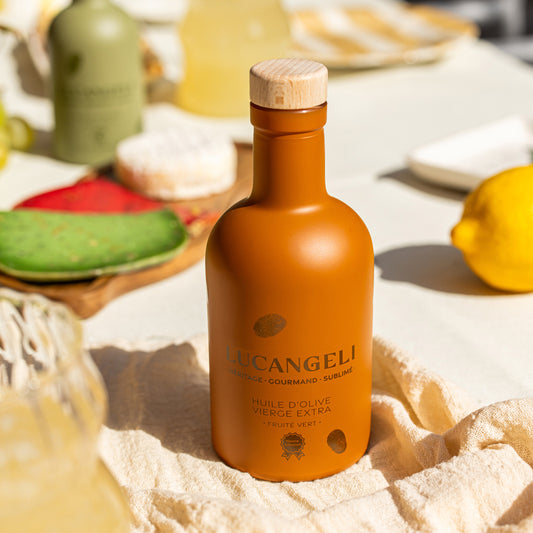
On your table, the natural pairing for this kind of simple, convivial meal is a ripe fruity olive oil as a finishing touch on grilled vegetables, or a drizzle of IGP balsamic vinegar over a board of aged cheeses.
Calabrian chili pepper, king of the South
Diamante, on the Calabrian Tyrrhenian coast, holds its Sagra del Peperoncino every year in late August and early September; it has become one of the best known in Italy. Hundreds of chili varieties are displayed, cooked and put up in jars. You eat spaghetti aglio, olio e peperoncino in its most fiery version, cheeses aged with chili, spiced cured meats.
Calabrian chili is not just a condiment: it is an identity. It goes into dozens of everyday recipes, from pasta to sautéed vegetables to fish marinades. On your table, organic garlic and chili olive oil — made by crushing fresh chili together with the olives at the moment of extraction, and not by adding flavoring — carries that Calabrian heritage straight onto the plate.
Chestnut, truffle, mushroom
In October, the forests of Calabria, Campania and Tuscany take the stage. The chestnut is the food that fed southern Italy for centuries, and the sagre devoted to it keep that authentic village-festival character. It is eaten grilled over embers, ground into flour for thick pancakes called *necci*, puréed or in a thick soup.
The white truffle of Alba belongs to another category: there the sagra is a gastronomic affair, prices are high, starred restaurants everywhere. But the feeling is the same — a product you cannot make, only find, in one specific forest, in one specific season.
Bergamot, the quiet treasure of late autumn

Bergamot is the least known fruit of the Italian autumn — and probably the most singular. It grows almost exclusively in the province of Reggio di Calabria, on a narrow coastal strip facing the Strait of Messina. Its harvest begins in November and runs until March. From late October, the first cultural and culinary events around the fruit start appearing in the region.
Its taste is unique: somewhere between lemon, bitter orange and something indefinable, floral and slightly resinous. You find it as juice, as a spread, as olive oil, as jam. Pure organic Calabrian bergamot juice is one of the most direct ways to approach it, before the season is in full swing. The bergamot spread, an Épicures d'Or 2024 award winner, gives a softer, almost candied version that works as well with cheese as with fresh morning bread.
---
How do you bring the flavors of the sagre home?
The local products that make the connection
A sagra cannot be exported — the festival stays in the village, the light stays in Italy. The products, though, do travel. What makes a sagra memorable is rarely the recipe itself: it is the raw quality of the ingredient in the spotlight. A Marrone chestnut, an oil pressed within forty-eight hours of picking, a bergamot juice cold-extracted with no added sugar — that is what separates an ordinary meal from a meal that tells you something.
To put together an Italian autumn table, a few simple markers:
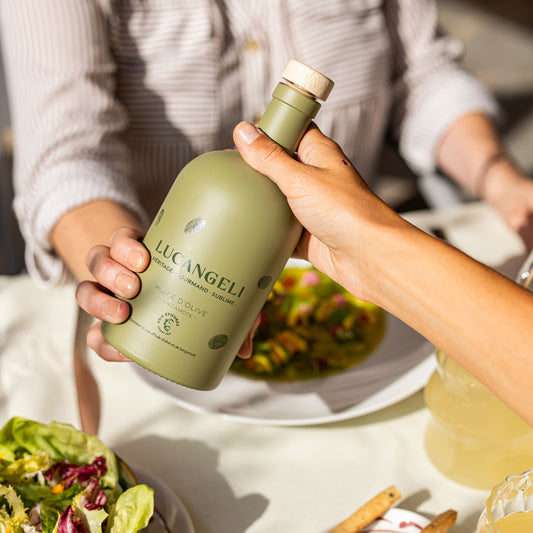
- Choose an olive oil from a recent harvest, with a picking date on the label — organic green fruity olive oil is perfect for finishing soups and seasonal vegetables.
- Bring in a quality acidic condiment, such as Modena IGP balsamic vinegar Silver edition, to lift chestnut dishes, autumn salads or a cheese board.
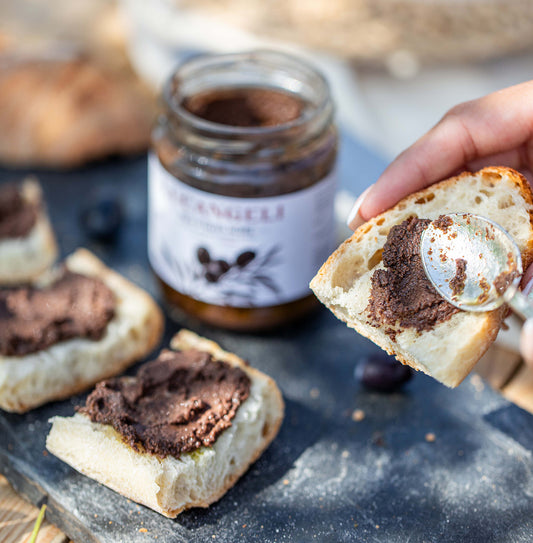
- Play the surprise card with bergamot: a few drops of the juice in a vinaigrette, or a spoonful of the spread on fresh cheese, and the table takes an unexpected turn.
A few simple moves for an Italian-style table
The sagre teach that generosity matters more than elaboration. The dishes are simple, the portions are generous, the products are good. At home, that translates into direct gestures: a drizzle of raw oil over roasted vegetables rather than drowning them during cooking, good bread served with a small dish of oil, cheeses served with a line of balsamic rather than an industrial jelly.
If you are hosting an autumn meal, the sunshine bergamot gift set — which brings together juice, olive oil and spread — is also a way to offer a sagra in miniature, taking your guests traveling without leaving the table. For businesses that want to add this kind of product to their menu or their shop selection, the professionals section gathers all enquiries in one place.
---
Frequently asked questions
What exactly is a sagra in Italy?
A sagra is a popular festival built around a local product — grapes, chestnut, truffle, chili, cheese — usually in a village or a small town. It takes place on a square or in an open space, over anything from one day to a week, and serves meals cooked on site from the product being celebrated. Most are organized by local associations (*pro loco*).
When do the autumn sagre take place in Italy?
The autumn sagre are spread from mid-September to late November, following the rhythm of the harvests. Grapes and chili are celebrated in September and October, chestnut and mushroom in October and November, the white truffle of Alba in November. The new olive oil sagre begin in mid-October in Calabria and Sicily, and run through December in Tuscany and Umbria.
How can you bring the flavors of an Italian autumn sagra home?
The secret lies in the quality of the basics: an olive oil from a recent harvest, a quality IGP balsamic condiment, and one or two local products typical of the season — chestnut, chili, bergamot. What matters is staying simple in the preparation and generous in the portions, just like those festivals where the cooking is never intimidating.




 lucangeli.it