


Why choose orange and lemon pressed olive oil for your restaurant?
Orange and lemon pressed olive oil, obtained by co-crushing fresh citrus fruits with olives during extraction, stands out as a distinctive asset on the tables of restaurants, hotels, and caterers. It enhances late summer and autumn dishes: raw fish, fruit salads, desserts, grilled vegetables. Its ability to bring freshness and originality makes it a signature appreciated by customers seeking a unique experience. To highlight this oil, it is important to choose the right format and master inventory management.
To learn more about integrating olive oil into your table service, consult the page dedicated to bottle customization for professionals.
Adapting the format to the use: bottle, can, or jeroboam?

Available formats
- 200 ml or 500 ml bottles: ideal for plating, display on tables, or takeout sales.
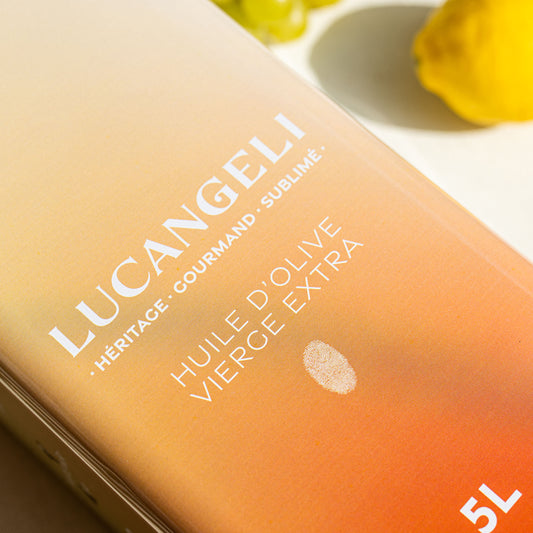
- 5 L can: suitable for high-volume kitchens or establishments that use oil for daily seasoning.
- Jeroboam (3 L): a signature format, perfect for table service or a shared dining experience.
You can discover the 200 ml orange and lemon format or explore the complete range of olive oils for catering.
Selection criteria
- Anticipated rotation: a small format limits the risk of oxidation if consumption is low.
- Visibility in the dining room: an elegant bottle enhances the menu and the customer experience.
- Cost management: the can offers a more competitive price per liter but requires regular transfer in the kitchen or dining room.
Concrete example: In a 60-seat restaurant in Nice, a 500 ml bottle dedicated to finishing dishes lasts one week without compromising the aromas, while a 5 L can is used for preparing salads and marinades in the kitchen.
Material cost and stock rotation: best practices for effective management
Calculate and control material costs
- Price per liter: the 5 L can is the most economical (up to 20% difference compared to smaller formats).
- Dosing control: favor pour spouts to limit waste in the dining room.
- Ensure traceability: note the lot number and opening date on each container.
Optimize stock rotation
- Store away from light and heat, both in the kitchen and dining room.
- Plan restocking: schedule delivery every two to three weeks to ensure freshness.
- Train staff: explain the difference between pressed oil (co-crushing) and flavored oil (added aroma) to better advise customers.
To delve deeper into oil management in restaurants, consult the professionals' area page.
Summary table: formats, uses, and advantages
Frequently Asked Questions
How to prevent oxidation of orange and lemon pressed olive oil in restaurants?
To limit oxidation, favor small formats, store away from light and heat, and regularly refresh bottles in the dining room. Use airtight pourers.
What is the correct dosage of orange and lemon pressed olive oil per plate?
For finishing, count 5 to 7 ml per plate for an aromatic drizzle that doesn't overpower the dish. Have your team test it during plating to harmonize the application.
Can I customize an orange and lemon pressed olive oil bottle for my restaurant?

Yes, starting from 24 bottles, you can create a custom design using the online configurator or contact sales for a bespoke project.




 lucangeli.it