

Why Italian Cuisine is Naturally Vegetarian
The Tradition of "Cucina Povera"
Italian cuisine is rooted in a popular tradition called cucina povera — literally, "poor cooking." Born in the rural areas of Southern Italy, this culinary philosophy is based on a simple principle: making the most of every available ingredient, especially vegetables, legumes, and grains. Far from being a cuisine of deprivation, cucina povera is a cuisine of ingenuity, where the quality of products takes precedence over quantity. It is in this spirit that dishes like pasta e fagioli, caponata, and ribollita came into being — vegetarian recipes that have become classics of Italian gastronomy.
To recapture this spirit in your own kitchen, organic green fruity olive oil is an ideal starting point: its vegetal and slightly peppery notes recall the direct and honest flavors of Southern Italian cooking.
Vegetables at the Heart of Italian Gastronomy
In Italy, vegetables are not a secondary accompaniment: they are often the star of the dish. Italian markets, especially in spring, overflow with fresh produce — zucchini, artichokes, fava beans, asparagus, peas — which Italian cooks transform into generous and flavorful dishes. This central role given to vegetables explains why Italian cuisine so naturally lends itself to a meat-free diet, without ever sacrificing taste or conviviality.
Organic ripe fruity olive oil, softer and rounder on the palate, perfectly complements grilled or roasted vegetables, bringing them an aromatic depth characteristic of Calabrian olive oils.
Seasonal Vegetables to Cook Italian-Style in Spring
Asparagus, Peas, Artichokes: The Essentials
From March, spring vegetables make their appearance in the markets. Green asparagus, fresh peas, purple artichokes, and fava beans are the first to emerge. In Italy, these vegetables are cooked with great simplicity: sautéed in a pan with garlic and olive oil, simmered in a sauce to accompany pasta, or served raw in a salad with a few shavings of Parmesan.
For a light and flavorful dressing on an asparagus salad, a few drops of IGP Gold balsamic vinegar are enough to transform a simple dish into a memorable taste experience.
Pasta Primavera: A Vegetarian Spring Classic
Pasta primavera — literally "spring pasta" — is one of the most popular vegetarian dishes in Italian cuisine. The principle is simple: al dente pasta mixed with an assortment of seasonal vegetables sautéed in olive oil, possibly with a little Parmesan and a few fresh basil leaves. This dish can be endlessly reinvented according to the available vegetables and current desires.
To make successful pasta primavera, the choice of olive oil is crucial. The organic olive oil trio allows for varying aromatic profiles depending on the vegetables used: a more intense oil for bitter vegetables like artichokes, a milder oil for peas and zucchini.

Italian Condiments to Enhance Your Vegetarian Dishes
Pesto: The Quintessential Vegetarian Sauce
Pesto is undoubtedly the most famous Italian sauce, and it is also one of the most vegetarian. Made from fresh basil, pine nuts, garlic, Parmesan, and olive oil, pesto alla genovese is a versatile sauce that accompanies pasta as well as grilled vegetables, bruschetta, or soups. The quality of the basil used is crucial: DOP (Protected Designation of Origin) basil guarantees a precise geographical origin and an authentic aromatic profile.
The DOP basil pesto with olive oil is made according to this tradition: selected basil, quality olive oil, for a ready-to-use sauce that respects the codes of the original recipe.
Extra Virgin Olive Oil: The Basic Ingredient
In Italian vegetarian cuisine, extra virgin olive oil plays a central role. It is used at all stages of preparation: for sautéing vegetables, for dressing salads, for finishing a pasta dish, or for preparing a sauce. The quality of the olive oil directly influences the final result: a quality oil brings complex aromas and a pleasant texture, whereas an ordinary oil remains neutral and lacks character.
Choosing an organic extra virgin olive oil, from artisanal production and an identified terroir, ensures a product whose aromas are preserved from harvest to bottle. The organic green fruity olive oil is particularly suitable for spring vegetable dishes, thanks to its herbaceous and slightly bitter notes.
Tapenades and Condiments: To Enrich Every Plate
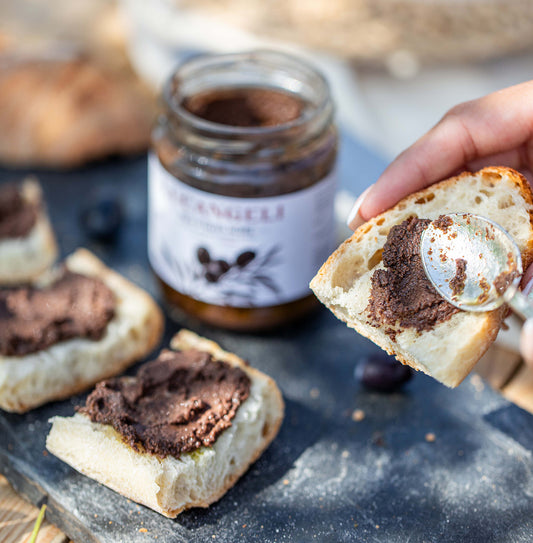
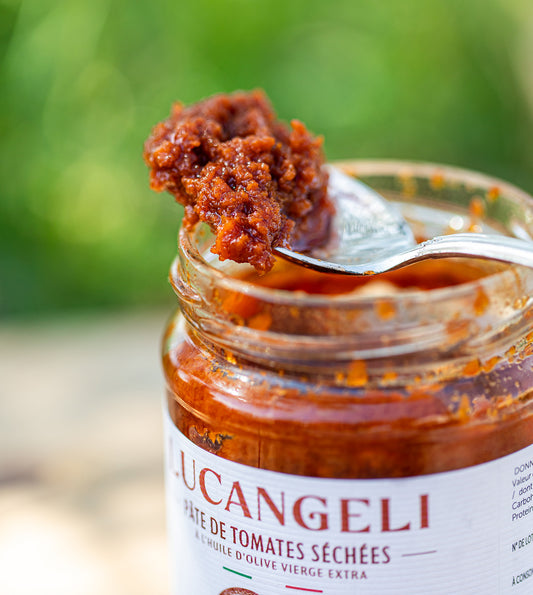
Italian vegetarian cuisine is not limited to fresh vegetables and pasta. Condiments play an essential role in adding depth and complexity to dishes. The sun-dried tomato tapenade is a versatile condiment: it can be spread on bruschetta, mixed with pasta, or used as a base for a quick sauce. The black olive tapenade, meanwhile, brings an umami note and an aromatic intensity that enriches vegetarian dishes without resorting to meat.
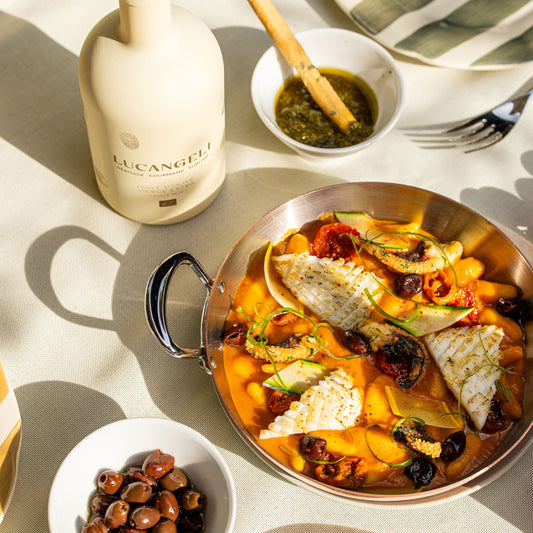
To create an Italian-style vegetarian appetizer, pitted black olives in olive oil and the set of 4 tapenades offer a wonderful variety of flavors to share around a table.
Italian vegetarian cuisine in spring is above all an invitation to rediscover the richness of seasonal vegetables and the power of local condiments. With the right ingredients — quality olive oil, authentic pesto, carefully prepared tapenades — it is possible to cook without meat while remaining true to the generous and flavorful spirit of Italian gastronomy.




 lucangeli.it