


Caprese salad is one of the most iconic dishes in Italian cuisine. Born on the island of Capri, it embodies the Mediterranean philosophy: few ingredients, but of high quality. Ripe tomatoes, fresh mozzarella, basil, extra virgin olive oil – every element counts. However, behind this apparent simplicity lie crucial choices that make all the difference between an ordinary Caprese and a memorable one.
Origins and History of Caprese Salad
Born on the Island of Capri
Caprese salad takes its name from the island of Capri, off the coast of Naples in southern Italy. Its creation is often attributed to the 1920s, when a bricklayer reportedly created this tricolor dish in homage to the Italian flag: the red of the tomato, the white of the mozzarella, the green of the basil. Simple, visual, patriotic – the Caprese was born.
Today, it is served throughout Italy as the quintessential summer antipasto. In Neapolitan trattorias, it is prepared with mozzarella di bufala campana DOP, San Marzano tomatoes or beefsteak tomatoes, and quality extra virgin olive oil. No balsamic vinegar in the traditional version – that's a modern addition, popular outside Italy, but which can enhance the dish when chosen well.
A Recipe That Travels
While Caprese originated in Campania, it quickly spread throughout the Italian peninsula and beyond. Each region adds its own touch: in Calabria, it is sometimes garnished with black olives or a hint of sweet pepper. In Sicily, capers or sun-dried tomatoes are added. These regional variations attest to the richness of Italian terroir and the dish's ability to adapt without ever losing its soul.
Key Ingredients: How to Choose Them Well

The Tomato: The Heart of the Dish
The success of a Caprese salad primarily depends on the quality of the tomatoes. In summer, opt for ripe, fleshy, and fragrant tomatoes: beefsteak tomatoes, heirloom tomatoes, vine-ripened tomatoes, or cherry tomatoes for an appetizer version. A tomato picked at maturity, sun-drenched, needs nothing else to express itself.
Avoid tomatoes that are too watery or picked before maturity: they will dilute the flavors and make the dish bland. The summer season, from July to September, is ideal for finding tomatoes at their peak flavor.
Mozzarella: Freshness and Creaminess
Fresh mozzarella is essential. Mozzarella di bufala campana DOP, made from buffalo milk, offers a creamy texture and a slightly tangy taste that contrasts perfectly with the sweetness of the tomato. Fior di latte, made from cow's milk, is milder and more accessible – it also works very well.
Take the mozzarella out of the refrigerator at least 30 minutes before serving: at room temperature, it reveals its full texture and aromas.
Olive Oil: The Ingredient That Changes Everything
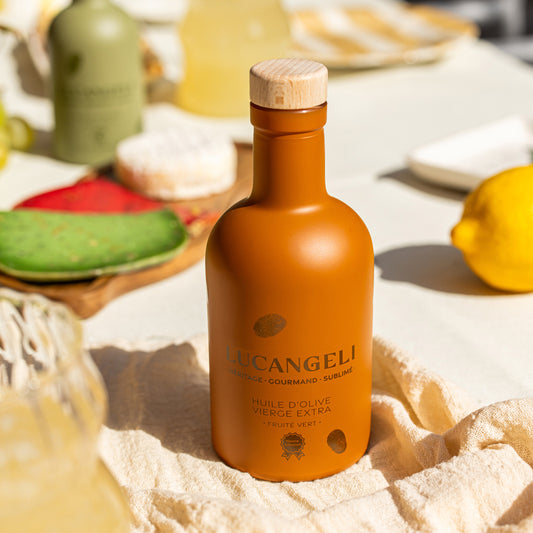
This is where Caprese takes on a whole new dimension. Quality extra virgin olive oil doesn't just season: it binds the flavors, adds richness, and defines the dish. The choice of oil is therefore crucial.
For a fresh and herbaceous Caprese, organic green fruity olive oil, harvested early in the season, brings vegetal and slightly peppery notes that awaken the tomatoes and basil. For a softer and more enveloping version, organic ripe fruity olive oil, with its aromas of ripe fruit and almond, harmonizes perfectly with creamy mozzarella.
For lovers of original flavors, bergamot olive oil, awarded at the Épicures d'Argent 2023, brings a bright and unexpected citrus touch that transforms Caprese into a unique culinary experience. A few drops are enough to completely change the profile of the dish.
The olive oil trio allows you to have all three expressions at hand and vary the pleasures according to your desires and guests.
Making a Successful Caprese: Tips, Presentation, and Variations
The Basic Recipe Step-by-Step
For 4 people:
- 4 ripe tomatoes (or 500 g of cherry tomatoes)
- 250 g fresh mozzarella
- 1 bunch of fresh basil
- 3 to 4 tablespoons extra virgin olive oil
- Sea salt, freshly ground black pepper
Slice the tomatoes and mozzarella to similar thickness. Arrange them alternately on a serving dish, slightly overlapping them. Place basil leaves between each slice. Drizzle generously with olive oil, season with salt and pepper. Serve immediately or let stand for 10 minutes for the flavors to meld.
Balsamic Vinegar: A Modern Addition to Master
While the traditional recipe does not include balsamic vinegar, its addition is now very common and can truly enhance the dish, provided a quality product is chosen. A Modena PGI balsamic vinegar brings a touch of mild acidity and a slight sweetness that balances the richness of the mozzarella.
The PGI Silver balsamic vinegar, more fluid and slightly tangy, can be drizzled directly over the Caprese. The PGI Gold balsamic vinegar, denser and more concentrated, can be reduced over low heat to obtain a balsamic glaze to delicately drizzle over the dish. For a more original touch, the red onion balsamic vinegar, Silver medalist at the Épicures 2025, brings a caramelized sweetness and surprising aromatic complexity.
Variations and Accompaniments
Caprese lends itself to many variations depending on the season and preferences:
Appetizer version: replace slices with skewers of cherry tomatoes, small mozzarella balls, and basil leaves. Serve with a dip made from DOP basil pesto for an even more Italian touch.
Enriched version: add a few pitted black olives in olive oil for a more pronounced Mediterranean note, or a spoonful of sun-dried tomato tapenade on toasted bread as an accompaniment.
Appetizer board version: incorporate Caprese into a complete Italian board with the set of 4 tapenades, grissini, cold cuts, and ciabatta bread. An ideal format for summer meals on the terrace or evenings with friends.

Caprese salad is much more than just a starter: it's an Italian way of life, that of sublimating everyday ingredients through quality and attention to every detail. In summer, when tomatoes are at their peak and basil perfumes the gardens, it naturally stands out as the essential dish for sunny tables.




 lucangeli.it