


Sun-dried tomato tapenade is one of those condiments that transforms an ordinary meal into a gourmet experience. Packed with flavor, rooted in Mediterranean tradition, it is equally at home on an appetizer bruschetta as it is in a pasta sauce or a summer marinade. But how do you choose it, where does it come from, and how do you make the most of it in the kitchen? Let's take a look at this essential summer spread.
Origins and History of Sun-Dried Tomato Tapenade
A Millennial Mediterranean Heritage
Sun-dried tomatoes are one of the oldest preservation methods in the Mediterranean basin. Before refrigerators, farming families in southern Italy – Calabria, Sicily, Puglia – dried their tomatoes in the summer sun to preserve them throughout the winter. This simple act, repeated for generations, gave rise to an ingredient with incomparable aromatic intensity: the concentrated, slightly sweet sun-dried tomato, with an umami depth that fresh tomatoes cannot match.
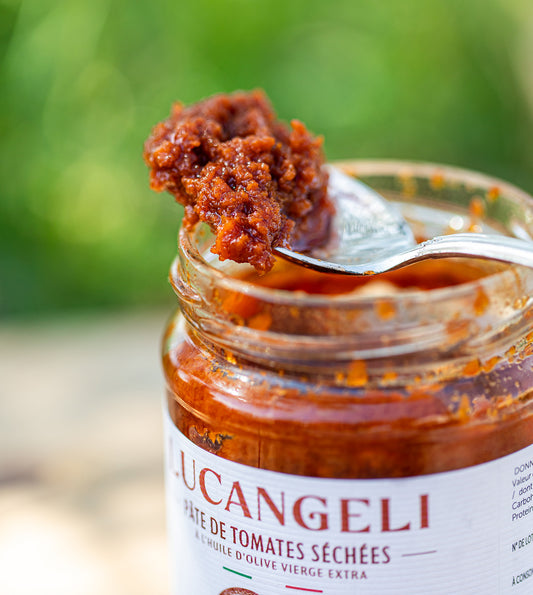
The sun-dried tomato tapenade is the spreadable version of this heritage: dried tomatoes are ground with extra virgin olive oil, aromatic herbs, and sometimes capers or olives, to obtain a creamy and flavorful paste. It is a local product, born out of necessity and elevated by artisanal know-how.
Calabria, Land of Exceptional Tomatoes
Calabria, a region at the tip of the Italian boot, enjoys exceptional sunshine and volcanic soil that give the tomatoes grown there a particular aromatic richness. Local varieties are harvested at full ripeness, then slowly dried in the sun or at low temperatures to preserve their full intensity.
It is in this context that Lucangeli selects its ingredients: tomatoes from local producers, processed with a mellow fruity organic olive oil with sweet and enveloping notes, for a tapenade that respects tradition while offering gastronomic quality. The Calabrian terroir is also about that: a standard passed down from family to family.

How to Choose a Good Sun-Dried Tomato Tapenade
Reading the Composition: Essential Criteria
Not all sun-dried tomato tapenades are created equal. On the market, you can find industrial versions loaded with additives, colorants, or preservatives, and artisanal versions that respect the traditional recipe. To choose well, here are the points to check:
- The ingredient list: Sun-dried tomatoes should be listed first, followed by extra virgin olive oil. Beware of products where sunflower oil replaces olive oil.
- Absence of additives: A good tapenade doesn't need preservatives or flavor enhancers. Herbs, salt, and oil are enough to preserve it naturally.
- Texture: An artisanal tapenade has a slightly grainy texture, a sign that the tomatoes have been ground rather than industrially blended.
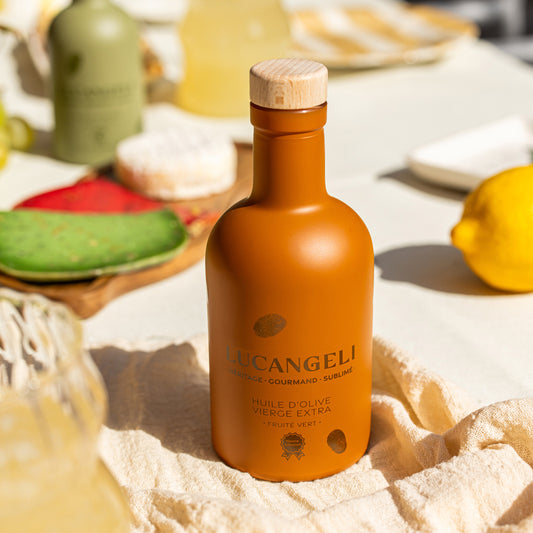
A green fruity organic olive oil will bring a herbaceous and peppery note that pairs particularly well with sun-dried tomatoes in cold preparations.
Artisanal vs. Industrial: What's the Difference in Taste?
The difference between an artisanal tapenade and an industrial version is immediately felt upon tasting. A quality tapenade offers a complex flavor: the concentrated sweetness of the tomato, a slight acidity, smoky notes, and a lingering finish that standardized versions cannot reproduce.
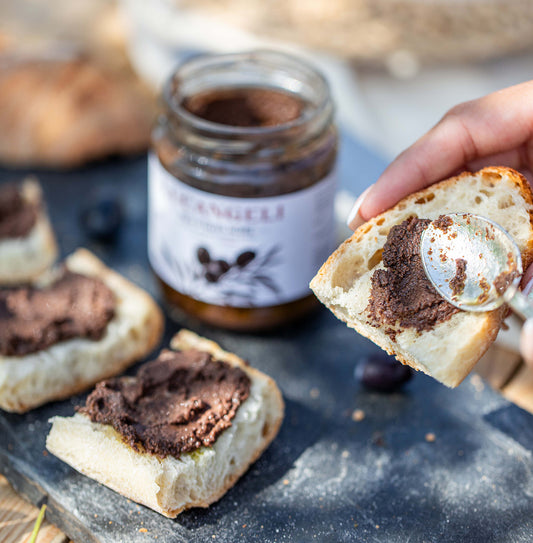
For a successful appetizer, consider pairing the sun-dried tomato tapenade with other characterful spreads: the black olive tapenade brings an elegant bitterness, while the DOP basil pesto offers an ideal herbaceous freshness in summer. The set of 4 tapenades allows you to create a varied and generous appetizer platter.
How to Use Sun-Dried Tomato Tapenade in Summer Cooking
For Appetizers: Bruschettas, Verrines, and Sharing Platters
The most natural use of sun-dried tomato tapenade remains as an appetizer. Spread on toasted bread slices rubbed with garlic, it forms the base of an authentic Italian bruschetta. Add some pitted black olives in olive oil, a drizzle of olive oil, and a few fresh basil leaves: you get a simple, colorful, and characterful starter.
It also lends itself very well to appetizer verrines: mixed with fresh cheese (ricotta, goat cheese), it forms a creamy spread to be served with grissini or crunchy vegetables. In summer, on a sharing platter with Italian cold cuts and aged cheeses, it stands out as the central element that sets the Mediterranean tone.
In Cooking: Sauces, Marinades, and Accompaniments
Sun-dried tomato tapenade is also a culinary ingredient in its own right. Diluted with a little pasta cooking water and a drizzle of olive oil, it becomes a quick and flavorful sauce for spaghetti or penne. A few basil leaves, grated Parmesan, and it's ready in under ten minutes.
It can also be used as a marinade for white meats or grilled vegetables: mixed with olive oil and a few drops of gold collection PGI balsamic vinegar from Modena, it adds an aromatic depth that enhances summer grilling. For plant-based cooking enthusiasts, it pairs perfectly with roasted eggplants, grilled zucchini, or a cold rice salad.

Gourmet Pairings and Combinations
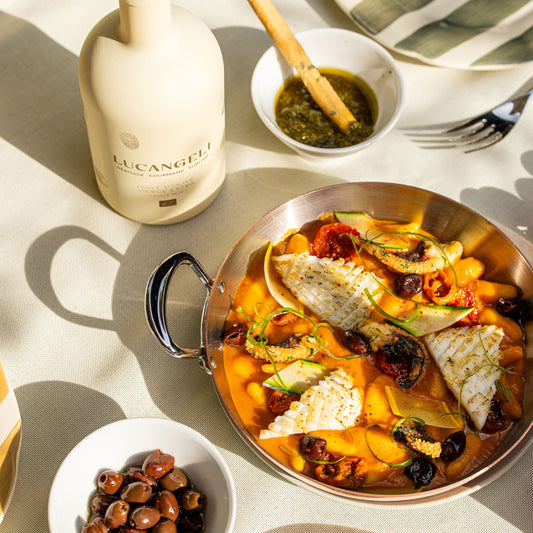
Sun-dried tomato tapenade pairs well with a wide variety of ingredients. For cheeses, it goes well with burrata, mozzarella di bufala, or aged pecorino. For fish, it elegantly enhances a grilled sea bream or sea bass fillet. For a sweet and savory touch, a few drops of gold collection PGI balsamic vinegar from Modena on a tapenade bruschetta create a much-appreciated contrast of flavors.
To offer an assortment of Italian flavors, the customizable gift box allows you to combine sun-dried tomato tapenade with other regional gems: olive oil, balsamic vinegar, pesto, or olives. A gourmet gift that transcends the seasons with elegance.



 lucangeli.it