

Pistachio has become the star ingredient of recent seasons. From pastry shop windows to fine dining tables, it colors desserts, flavors sauces, and makes its way into Sunday brunches. But behind whole or crushed pistachios lies an even more versatile product: pistachio paste. Concentrated, pure, and additive-free, it has become the go-to ingredient for amateur and professional cooks alike. However, knowing how to choose and use it wisely is key.
What is pistachio paste and where does it come from?

Pistachio paste — sometimes called pistachio butter — is made by grinding roasted pistachios until a smooth, creamy texture is obtained. In its purest form, it contains only one ingredient: pistachio. No added sugar, no palm oil, no artificial flavors. This purity makes it an exceptional product, both in sweet and savory cooking.
Pistachio, a nut from the Mediterranean basin
The pistachio tree is a tree native to the Middle East, cultivated for millennia in the arid and sunny regions of the Mediterranean basin. In Italy, Sicily — and more precisely the Bronte region, on the slopes of Mount Etna — produces the most renowned pistachios in the world. Their intense green color, pronounced taste, and natural fat content make them an ideal raw material for making quality 100% pistachio paste.
Pistachio purée vs. pistachio paste: what's the difference?
The two terms are often used interchangeably, but there is a nuance. Pistachio purée generally refers to a product composed of 100% ground pistachios, with no additions. Pistachio paste can, depending on the manufacturer, contain sugar, oil, or flavorings to soften the taste or improve the texture. For precise culinary use — in pastries, sauces, or as seasoning — 100% purée offers more freedom, as it allows you to adjust the sweetness and final texture yourself. Pistachio spread, on the other hand, is a ready-to-use preparation, ideal for breakfast or a snack.
How is artisanal pistachio paste made?
The making of artisanal pistachio paste begins with the selection of the fruits: only quality pistachios, well-ripened and properly dried, are chosen. They are then lightly roasted to develop their aromas, then slowly ground until the natural fat of the fruits is released and forms a homogeneous paste. This process, without the addition of external oil, guarantees a naturally creamy texture and an authentic taste. It is this artisanal know-how that distinguishes a 100% pistachio paste from an industrial product.
How to use pistachio paste in cooking?

Pistachio paste is one of the most versatile ingredients. It can be incorporated into both sweet and savory preparations, and its creamy texture makes it easy to add to many recipes.
Uses in baking and desserts
This is undoubtedly the area where pistachio paste excels the most. It flavors pastry creams, ganaches, mousses, ice creams, and entremets. A few spoonfuls are enough to flavor whipped cream or naturally color cookie dough. For homemade ice cream, pistachio paste is mixed directly into the custard base before churning. It pairs wonderfully with white chocolate, raspberry, apricot, or orange blossom. To vary the pleasures and explore other nuts, 100% Piedmont hazelnut paste and 100% almond paste offer complementary aromatic profiles.
Uses in savory cooking
Less known for its savory applications, pistachio paste is worth exploring beyond baking. It can be used in sauces to accompany white meats or grilled fish. Mixed with a drizzle of organic green fruity olive oil and some fresh herbs, it forms an original green sauce to top roasted vegetables or fresh pasta. It can also be incorporated into stuffings, terrines, or vinaigrettes to add depth and character.
Pistachio paste for breakfast and brunch
Summer is the season for outdoor brunches, and pistachio paste naturally finds its place. Spread on toast, mixed with plain yogurt, or incorporated into pancake batter, it transforms an ordinary meal into a gourmet moment. For an even simpler and ready-to-use option, pistachio spread — without palm oil — is a practical and delicious alternative. The set of 5 spreads allows for a variety of flavors: pistachio, hazelnut, almond, cocoa-hazelnut, and bergamot, for an Italian-inspired brunch.
How to choose your pistachio paste?
Given the proliferation of products on the market, it is useful to know how to distinguish a quality pistachio paste from an ordinary product. A few simple criteria allow you to make the right choice.
Check the ingredients
The first reflex is to read the ingredient list. A quality pistachio paste should contain only one ingredient: pistachio. As soon as sugar, palm oil, flavorings, or colorings appear, it is an industrial pistachio paste, less pure and less versatile in cooking. 100% pistachio paste meets this criterion: a single ingredient, a single origin, an authentic taste.
Evaluate color and texture
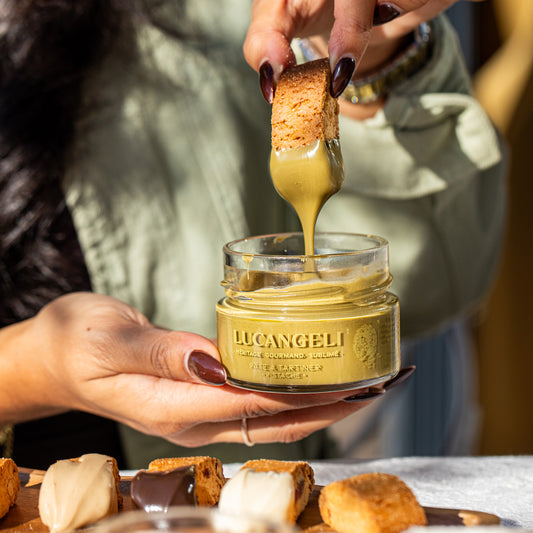
Artisanal pistachio paste has a natural color ranging from khaki green to light brown — and not an artificial fluorescent green. The texture should be smooth and creamy, slightly oily on the surface (which is normal: the natural oil of the pistachios rises over time). Just mix before use. A paste that is too dry or too compact may indicate a lack of natural fat or insufficient grinding.
Prioritize origin and artisanal craftsmanship
The origin of the pistachios directly influences the taste of the final product. Sicilian pistachios, especially those from Bronte, are renowned for their aromatic intensity and natural green color. Choosing a paste made from quality, artisanally produced pistachios ensures a product that respects the raw material. To offer a selection of artisanal nut pastes, the customizable gift box allows you to gather Italian culinary essentials in one gourmet gesture.



 lucangeli.it