


Tapenade is one of the most iconic spreads in the Mediterranean basin. Originating in Provence, and known in Italy as olive caviar, it's a staple at summer tables: as an appetizer, in cooking, as a stuffing, or in a sauce. But where does it truly come from? How do you choose the right one? And how can you use it beyond a simple grilled toast?
What is tapenade? Origins and History
Tapenade is a preparation made from crushed olives, olive oil, capers, and, in its classic version, anchovies. Its name comes from the Provençal word tapéno, which means caper—a key ingredient in the original recipe. Behind this simple name lies a long history, traversing the shores of the Mediterranean since Antiquity.
Provençal Tapenade, Born in Marseille
It was in Marseille, in 1880, that Chef Meynier of Maison Dorée codified the recipe as we know it today: black olives, capers, anchovies, marinated tuna, olive oil, and cognac. The recipe was refined over time, with olives becoming the central ingredient. Provençal tapenade then established itself as a southern French aperitif essential, spread on grilled bread or served alongside raw vegetables.
The Italian Version: Olive Caviar

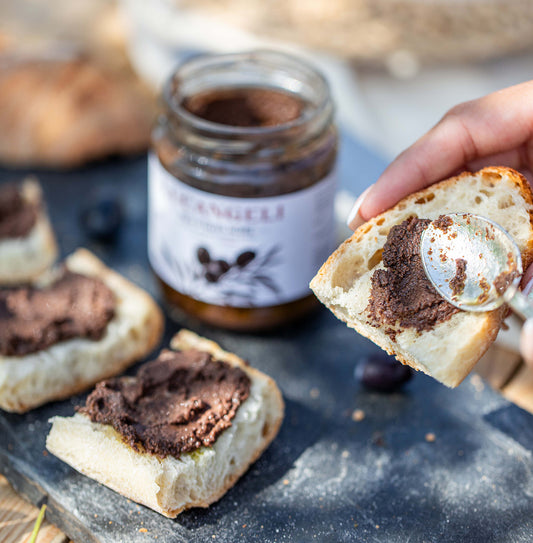
In Italy, the tradition of crushed olives is just as ancient. The Italian version, often called caviar d'olives (olive caviar), is distinguished by the absence of anchovies: it is prepared exclusively from pitted black olives in extra virgin olive oil, extra virgin olive oil, and aromatic herbs. The result is milder, fruitier, and highlights the quality of the olives used. This approach is found in Lucangeli house's black olive tapenade, made from Calabrian terroir olives and extra virgin olive oil.
Black or Green Tapenade: What Are the Differences?
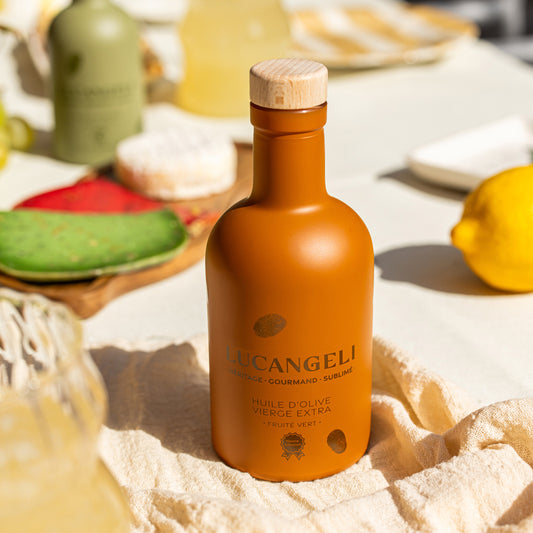
The color of tapenade depends on the olives used. Black tapenade, made with ripe black olives, offers an intense, slightly bitter, and deep flavor. Green tapenade, made from olives harvested before maturity, is fresher, more acidic, and often milder on the palate. Both versions have their place at the table: black for those who enjoy a strong character, green for those who prefer lightness. In both cases, the quality of the organic fruity ripe olive oil used in the preparation plays a decisive role in the final result.
How to Choose a Good Tapenade?
Not all tapenades are created equal. Between industrial versions and artisanal preparations, the difference is noticeable—both in texture and flavor.
Ingredients That Make the Difference
A good tapenade starts with good olives. The variety, cultivation method, and quality of the olive oil used directly influence the taste. Prefer a tapenade with a short and clear ingredient list: olives, extra virgin olive oil, salt, herbs. The absence of additives, colorants, or artificial flavors is a guarantee of quality. An artisanal tapenade should have a slightly granular texture, a sign that the olives have been processed by hand or at low speed, without being reduced to a homogeneous purée.
Artisanal vs. Industrial Tapenade
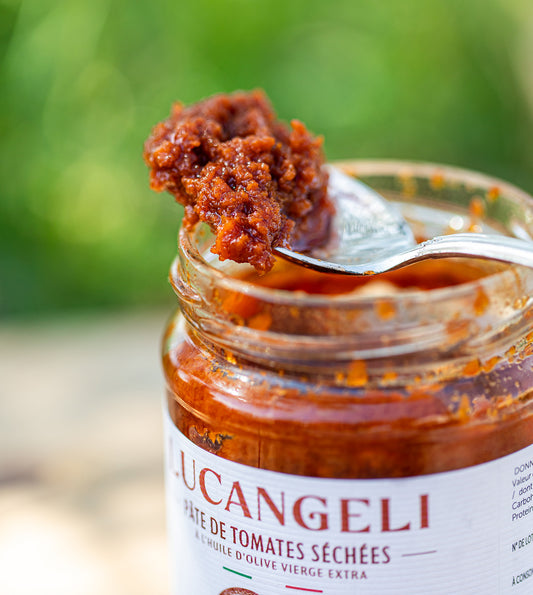
Industrial tapenades are often prepared with olives of varying quality, sunflower or rapeseed oils as supplements, and preservatives to extend shelf life. Conversely, an artisanal tapenade like sun-dried tomato tapenade or Lucangeli house's black olive tapenade is made with selected ingredients, without compromising on quality. The difference is palpable from the first bite.
Gourmet Variations: Sun-Dried Tomatoes, Pesto
Beyond the classic recipe, there are many variations of Mediterranean spreads that share the same spirit. Sun-dried tomato tapenade adds a sweet-and-sour touch, ideal for accompanying fresh cheeses or grilled vegetables. DOP basil pesto with olive oil, prepared according to Genoese tradition, is another delicious option to keep in your pantry. To explore several flavors at once, the set of 4 tapenades allows you to create a varied and generous platter.
How to Use Tapenade in Cooking?
Tapenade is much more than a simple spread. It can transform an ordinary dish into a preparation full of Mediterranean character.

As an Appetizer: Toasts, Platters, and Antipasti
The most common use remains as an appetizer: spread on grilled bread slices, crackers, or breadsticks, tapenade is ready in seconds. It also fits perfectly into an Italian-style antipasti platter, alongside cold cuts, cheeses, and whole olives. For a successful summer aperitif, combine it with a drizzle of Gold PGI balsamic vinegar from Modena on a bruschetta: the sweet-savory contrast is striking.
In Cooking: Marinades, Sauces, Stuffings
Tapenade can also serve as a base for a marinade for chicken fillets, fish, or vegetables before oven cooking. Mixed with a little olive oil and lemon juice, it coats food with an intense aromatic layer. It can also be incorporated into a pasta sauce, diluted with a little cooking water, or used as a stuffing for mushrooms, round zucchinis, or stuffing tomatoes.
Successful Pairings and Combinations
Black olive tapenade pairs particularly well with hard cheeses (Parmesan, Pecorino), fresh tomatoes, anchovies, and Mediterranean garrigue herbs. The sun-dried tomato version goes well with fresh cheeses, hard-boiled eggs, or roasted vegetables. To offer an assortment of Italian spreads to a gourmet friend, the customizable gift box allows you to select products according to their tastes.
Tapenade, whether Provençal or Italian, remains above all a product of the Mediterranean terroir: simple in its ingredients, generous in its flavors. Well-chosen and well-used, it transforms the simplest appetizer into a moment of genuine sharing.



 lucangeli.it