


What is olive oil yield?
Olive oil yield is the proportion of oil obtained from a given weight of olives. For example, a yield of 15% means that 100 kg of olives will give 15 kg of oil. This figure varies with the variety, the ripeness of the fruit, the climate, irrigation and the extraction method. A low yield is not a flaw: it can be the sign of a gentle extraction or of a sought-after variety, but it has a direct impact on the price per litre.
You will find more about fruitiness profiles in our article on green, ripe and black fruitiness. To discover other selection criteria, take a look at our complete buying guide as well.
The factors that influence yield

The olive variety
Some Italian varieties, such as Carolea or Coratina, naturally give higher yields, while rarer varieties like Tonda Iblea produce less oil but offer singular aromatic profiles.
Climate and ripeness
A year of drought or of excessive rain affects the amount of oil the olives contain. Fruit harvested too early or too late can also give less oil.
The extraction method
Cold extraction and careful handling of the fruit often mean a lower yield, but a better quality extra virgin olive oil. For oils pressed with basil, garlic or citrus, the yield drops further, because co-milling with fresh ingredients requires more raw material.
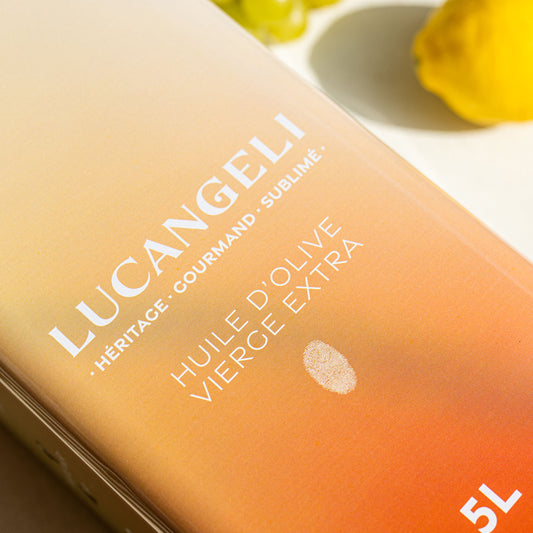
To compare formats, discover the jeroboam of organic extra virgin olive oil or the 5 L tin.
Yield and price: understanding the link

Why an olive oil with a low yield costs more
Getting one litre of oil at a yield of 10% takes 10 kg of olives, against 6 kg at a yield of 17%. That feeds straight through to the price. Olive oils pressed with orange and lemon, for instance, need not only more olives but also fresh citrus, which pushes up their production cost.
Yield at the heart of artisan producers' choices
Some small Italian mills accept lower yields in order to favour aromatic quality, particularly when co-milling with fresh fruit or herbs. You can taste that choice in the orange and lemon olive oil range, made by co-milling rather than by adding flavourings.
To go further on personalisation or professional supply, see the professionals' area page.
List: what makes an olive oil's yield vary
- Olive variety (Carolea, Coratina, Tonda Iblea, etc.)
- The year's climate (drought, rain)
- Ripeness at harvest
- Extraction method (cold, co-milling)
- Presence of fresh ingredients (basil, citrus, garlic)
Find out too how co-milling shapes an oil's aromatic profile.
Frequently asked questions
What is a good yield for an olive oil?
A yield of 15% to 20% is typical, but a lower yield can reflect a quality choice (the variety, a gentle extraction, co-milling). There is no "best" yield — it all depends on the profile you are after.
Does yield affect the quality of the oil?
Not directly. An oil from a low yield can be exceptional, especially if it comes from co-milling or from rare varieties. Yield mainly affects the price.
Where can you find olive oils made by artisan co-milling?
You can discover oils made by co-milling, such as the orange and lemon olive oil, or learn more about personalisation through the professionals' area.




 lucangeli.it