

Olive oil has long been a central ingredient in Mediterranean cuisine. But in restaurants, it often remains relegated backstage, used in the kitchen without ever appearing on the table. Yet, a high-quality, well-chosen, and well-presented extra virgin olive oil can transform the customer experience and strengthen a establishment's identity. Here's how to make olive oil a true tabletop asset.
Why olive oil deserves a place of honor on the table
From cooking ingredient to table condiment
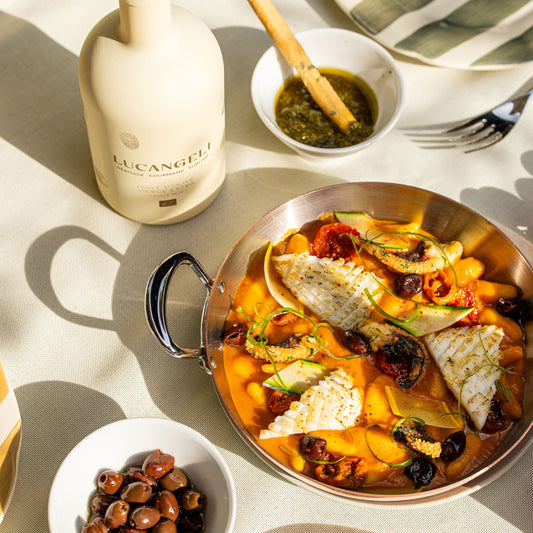
For a long time, olive oil was perceived as a cooking ingredient, much like butter or sunflower oil. But in Italian gastronomy, it holds a very different place: that of a condiment in its own right, served at the table to accompany bread, season grilled vegetables, or finish a dish. A organic green fruity olive oil with herbaceous and peppery notes, drizzled over burrata or carpaccio, radically changes the perception of a dish. This simple gesture, common in trattorias in southern Italy, is starting to gain ground in French restaurants keen to offer an authentic experience.
Olive oil like wine: a matter of identity
The parallel with wine comes naturally. Like wine, olive oil has an origin, a terroir, an aromatic profile, and a harvest year. An oil produced in Calabria, from olives hand-picked from centuries-old olive trees, is nothing like an industrial blend without a precise origin. Offering an organic ripe fruity olive oil with sweet almond and artichoke notes, or a bergamot olive oil — awarded at the Épicures 2023 — on a restaurant table is an affirmation of culinary identity and a commitment to quality. Some Michelin-starred establishments already offer a small selection of oils à la carte, much like what is done for wines by the glass.

How to choose your olive oil for a restaurant table
Green fruity or ripe fruity: which profile for which use?
The choice of aromatic profile is crucial. "Green fruity" oils are made from olives harvested early, before full maturity. They present intense aromas of fresh grass, raw artichoke, and pepper on the finish. An organic green fruity olive oil is particularly suitable for fish, salads, raw vegetables, and light dishes. "Ripe fruity" oils, on the other hand, are harvested at full maturity. Their aromas are rounder, with notes of dried fruit, almond, and butter. An organic ripe fruity olive oil pairs better with meats, cheeses, pasta, and simmered dishes. For a restaurant wishing to offer two complementary profiles, the 200ml olive oil trio allows guests to discover the different expressions of the same Calabrian terroir.
Quality criteria to check
For front-of-house use, the quality of the oil is non-negotiable. Several criteria ensure the value of a product. Firstly, the mention "extra virgin" guarantees cold mechanical extraction, without chemical treatment, and an acidity of less than 0.8%. Secondly, the precise geographical origin — ideally an identified region, like Calabria — is a guarantee of traceability. Thirdly, the presence of organic certification (AB label, Ecocert) attests to agricultural practices without pesticides. Finally, the harvest year must appear on the label: an olive oil should be consumed within 18 to 24 months of harvest to fully appreciate its aromas. For the volume needs of an establishment, an organic olive oil 5L jerrycan provides quality oil for cooking, while reserving 200ml bottles for the table.
Flavored oil: an option to enrich the experience
Flavored oils offer an additional dimension to a restaurant table. They allow for unexpected pairings and surprise guests. An organic basil olive oil naturally accompanies dishes based on tomatoes, mozzarella, or grilled vegetables. A organic garlic & chili olive oil enhances pizzas, pasta, and grilled meats. An orange & lemon olive oil adds a citrus touch to fish, shellfish, or desserts. These flavored oils, produced by cold infusion, retain all the characteristics of an extra virgin oil while adding a distinctive aromatic signature. To test several profiles before making a choice, the 500ml discovery duo is a practical option.
Promoting olive oil in the dining room: practical advice for professionals
Table presentation: a gesture that makes a difference
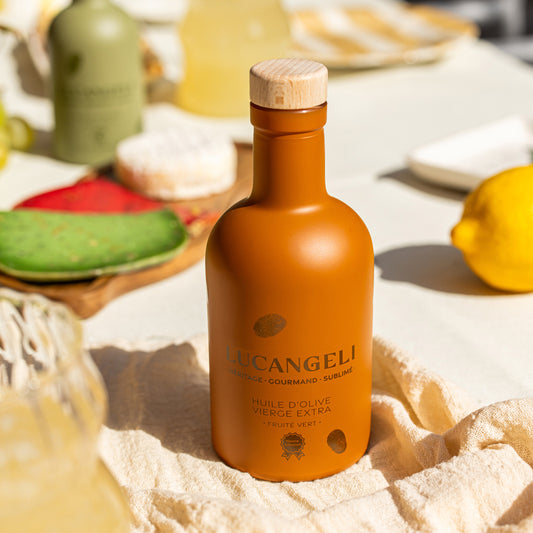
The way olive oil is presented in the dining room shapes customers' perception of it. A bottle placed directly on the table, with a legible label indicating the origin and aromatic profile, invites curiosity and tasting. It is advisable to avoid anonymous carafes or bottles without origin indications, which do not allow the customer to appropriate the product. Offering olive oil with bread at the beginning of the meal, or suggesting it as a finish on certain dishes, creates a table ritual that enhances the entire experience. Professionals wishing to discover the complete range can consult the professionals page to access offers dedicated to restaurateurs, hoteliers, and delicatessens.
Personalized bottle: a communication and image tool
Beyond the choice of product, the bottle itself can become a communication medium for the establishment. Personalized bottles for restaurants, screen-printed with the establishment's colors, reinforce the table's visual identity and create a memorable souvenir for customers. This approach, already adopted by several gastronomic restaurants, transforms an ordinary condiment into a brand object. It is possible to personalize the design of an olive oil or balsamic vinegar bottle starting from 24 bottles, directly via the personalized bottle configurator. A bottle bearing the restaurant's emblem, placed on each table, sends a strong message about the attention to detail and the quality of the products served.
Train your team to talk about olive oil
Olive oil is fully valued only if the dining room team is able to talk about it with precision and enthusiasm. Training waiters to distinguish a green fruity from a ripe fruity, to explain the Calabrian origin of an oil, or to suggest a pairing with a menu dish, offers the customer an educational and sensory experience. A few key pieces of information are enough: geographical origin, aromatic profile, harvest method, and recommended pairings. This level of knowledge, similar to what is expected of a sommelier for wine, distinguishes establishments that treat olive oil as a product in its own right. For professionals who wish to deepen their selection, the professionals page offers tailored support for the specific needs of each establishment.




 lucangeli.it