


Why choose orange and lemon pressed olive oil for your restaurant
Orange and lemon pressed olive oil does more than just add a touch of originality: it is obtained by co-milling fresh citrus fruits with olives at the time of extraction, guaranteeing a natural and vibrant fragrance, far from oils simply flavored by adding aroma. This unique process allows you to offer your customers an authentic and inimitable sensory experience.
Integrating this oil into your summer menu means responding to the search for freshness and lightness, but also to the growing demand for distinctive and differentiating products. Moreover, the summer season is ideal for highlighting citrus seasonings, which pair perfectly with seasonal products such as fish, salads, grilled vegetables, or fruity desserts.
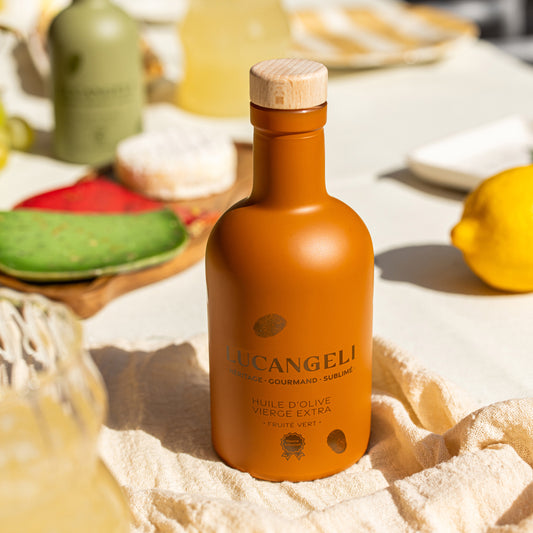
To further personalize your offer, discover our customized bottles for restaurants service and distinguish your establishment with a signature touch at the table.
How to integrate orange and lemon olive oil into a summer menu

Starters and main courses: winning combinations
Orange and lemon pressed olive oil is particularly effective as a finishing touch on:
- A white fish or scallop carpaccio, enhanced with a hint of fleur de sel and citrus zest
- A fennel, citrus, and fresh herb salad, for an immediate refreshing effect
- Grilled or roasted vegetables, such as zucchini, eggplant, or bell pepper
For each plate, a drizzle of oil just before serving helps preserve the full aromatic intensity of the product. This gesture becomes a true ritual in the dining room, to be highlighted by explaining the origin and co-milling method to your customers.
To vary the pleasures, you can also offer a trio of olive oils for tasting at the start of the meal.
Desserts and sweet pairings: Italian originality
Orange and lemon pressed olive oil is not limited to savory dishes. It beautifully enhances:
- Fresh fruit salads
- Citrus sorbets or ice creams
- Almond or pistachio cakes
Offering a dessert drizzled with orange-lemon oil is a simple way to surprise customers and offer a complete Mediterranean experience.
For establishments wishing to go further in differentiation, personalizing bottles with the establishment's name or a special summer label is an additional asset.
Promoting orange and lemon olive oil to your customers

Staging and communication
Promotion involves both the gesture in the dining room and communication on the menu. A few examples:
- Mention the origin of the oil and the co-milling method in the dish description
- Offer a tasting on the plate or as an accompaniment to bread
- Highlight the choice of artisanal production and Italian origin
Formats, logistics, and supply
Orange and lemon pressed olive oil is available in formats suitable for restaurants. Professionals can choose between 200 ml bottles for the table, or larger bottles for the back kitchen. For a secure supply, it is advisable to plan a summer stock from May, when demand increases sharply.
For smooth service, opt for bottles with anti-drip pourers, guaranteeing cleanliness and precision. Discover orange and lemon olive oil specially designed for catering professionals.
The concrete differentiating element: the seasonality of co-milled oil
Orange and lemon pressed olive oil is produced in limited quantities, with the citrus harvest season mainly between January and March. To guarantee the freshness of the product on your summer menu, it is advisable to anticipate your orders from spring, in order to benefit from the most recent and aromatic batches.
Practical list: 5 ways to promote orange-lemon olive oil in restaurants
- Associate the finishing gesture at the table during plating
- Offer a signature dish highlighting co-milled oil
- Mention the Italian origin on the menu
- Offer a comparative tasting with other oils
- Personalize the bottles with your establishment's image
To discover all personalization services, visit the professional area page.
Frequently asked questions
What is the difference between citrus-pressed olive oil and flavored oil?
Citrus-pressed oil is obtained by co-milling fresh fruits with olives, while a flavored oil is often made by adding aromas after extraction. This difference is noticeable in the tasting: the former offers a more complex and natural aromatic palette.
How to store orange-lemon olive oil in restaurants?
Store it away from light and heat, in a dark bottle if possible. Once opened, use it within two months to fully enjoy its aromas.
Can the label or format be customized for a restaurant?
Yes, it is possible to create a personalized bottle from 24 units, via the online configurator or by contacting customer service for specific needs.




 lucangeli.it