


Why combine orange-lemon olive oil with fruit salad?
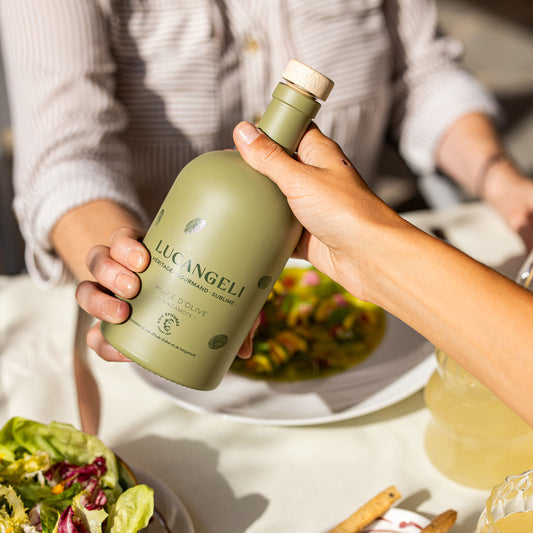
Combining orange and lemon olive oil with a fruit salad is like inviting the Mediterranean to your table. This oil, obtained by co-milling oranges, fresh lemons, and olives during extraction, has nothing in common with a simple flavored oil made by adding artificial flavors. Its freshness and fruity bouquet enhance the natural sweetness of seasonal fruits while bringing an originality that few other condiments can offer.
To achieve this perfect match, one must understand the balance between acidity, sweetness, and fragrance. Orange-lemon olive oil enhances yellow and exotic fruits (peaches, nectarines, mango, pineapple), but also knows how to reveal the notes of red fruits or figs. It's an asset for a summer table or a light end to a meal.
By integrating this type of oil into a tasting experience, you can also offer a refined alternative to traditional sweet vinaigrette.

Seasonal fruits to prioritize in September
For a successful fruit salad in September, focus on:
- Peaches and nectarines, still available.
- Figs, with their sweet and fragrant flesh.
- Plums and grapes, perfect for adding crunch.
- The first autumn pears, with a melting texture.
- A touch of citrus, like lemon or orange, to enhance the oil's freshness.
Orange and lemon olive oil pairs particularly well with these fruits, as it brings out their sweetness without masking their natural aromas.
How to use orange-lemon olive oil in your fruit salad
Dosing and adding method
Do not pour the olive oil directly onto the fruits. Prepare a light emulsion:
- Mix a tablespoon of orange-lemon olive oil with a teaspoon of fresh lemon or orange juice.
- Add a dash of honey or agave syrup if the fruits are not very sweet.
- Whisk lightly and drizzle over your fruit salad just before serving.
This method avoids saturating the fruits while preserving the freshness of the whole. You can also add a few mint or basil leaves for an herbaceous note.
Discover orange and lemon olive oil and its uses in cooking.
Pairing mistakes to avoid
- Never use an olive oil that is too intense or bitter: it would overpower the fruit flavors.
- Avoid overly acidic fruits (currants, lime) that could create an unbalanced sensation with the oil.
- Do not mix with strong vinegars or alcohols, at the risk of masking the subtlety of the oil.
Frequently asked questions
How much orange-lemon olive oil should I put in a fruit salad?
One tablespoon for four people is sufficient. It's better to be light-handed to avoid overwhelming the dessert.
Can orange-lemon olive oil be used with red fruits?
Yes, but prefer very ripe strawberries, raspberries, or blackberries to avoid excessive acidity.
What is the difference between an olive oil pressed with citrus and a flavored oil?
Pressed oil is obtained by co-milling fresh fruits with olives, unlike a flavored oil where the aroma is added after extraction. This technique results in a more authentic and natural flavor.

To go further
To vary your pleasures, also try the bergamot olive oil, awarded Épicures d'Argent 2023, or create your own experience on the customization page for home tastings or gifts.




 lucangeli.it