

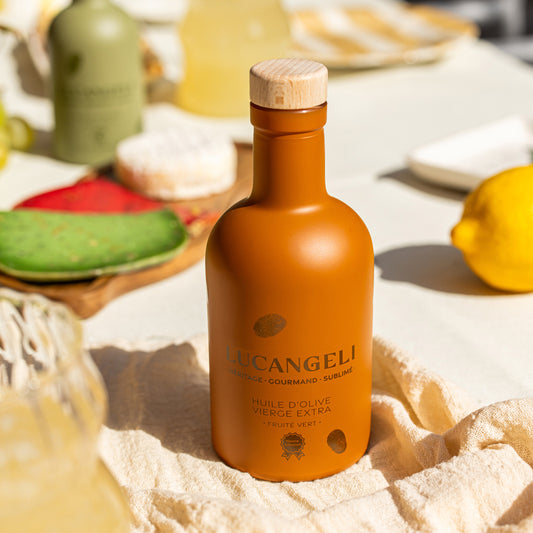
Pairing a green fruity olive oil with goat cheese is one of the truest pairings in Italian tasting. The oil's clean bitterness answers the cheese's lactic acidity, and each one comes forward without masking the other. This guide explains why it works, how to put it into practice and which mistakes to avoid.
Why green fruity oil works so well with goat cheese

Two profiles that complete each other without cancelling each other out
An organic green fruity olive oil comes from olives picked early in the season, before full ripeness. That harvest moment gives it clearly identifiable tasting characteristics: a clean attack on the palate, aromas of fresh grass, artichoke, sometimes green tomato, a sharp bitterness and a peppery kick that linger for a few seconds on the finish.
Fresh goat cheese, for its part, develops a pronounced lactic acidity, a creamy texture and slightly animal notes depending on how long it has been aged. That acidity calls for an aromatic fat that can stand up to it. An oil that is too mild or too neutral disappears in the mouth; a well-built green fruity oil, on the other hand, settles in alongside the cheese and creates an interesting tension on the palate.
This is what professional tasters call a counterpoint pairing: the two products are nothing alike, but their differences bring out the best in each other.
What the olive variety changes about the pairing
Not all green fruity oils behave the same way at the table. Carolea, a Calabrian variety typically harvested early in the season between October and November, produces oils marked by notes of raw artichoke and freshly cut grass, with a moderate peppery kick. It is this signature, clean without being aggressive, that shows particularly well on a fresh or lightly aged goat cheese.
A Coratina from Puglia will bring more intensity and a longer-lasting bitterness: save it for a more mature goat cheese whose flavour is developed enough not to be overwhelmed. An early-season green fruity olive oil remains the safe choice for a balanced pairing.
The most common mistake
Many people taste the olive oil separately from the cheese, in two steps, as if the two products should never touch. That is exactly what not to do if you want to appreciate the pairing. The oil has to be in the same mouthful as the cheese. Drizzle a few drops directly onto the slice or the piece, wait two or three seconds, then taste the whole thing. That is the moment the pairing reveals itself.
How to set up the tasting at home

The cheeses that answer best
The pairing is not universal between any green fruity oil and any goat cheese. Here are the combinations that work best in autumn:
- Fresh or semi-dry goat cheese log: the most obvious pairing, where the lactic softness of the young cheese is carried by the light peppery kick of the oil. One or two drops are enough.
- Young Crottin de Chavignol: its sharper acidity calls for an oil with real bitterness. A green fruity oil from early-harvested olives is ideal.
- Aged goat cheese (two weeks and up): the rind is starting to develop and the flavour is more complex. The oil needs character; this is the moment to use an oil from the duo discovery selection to compare green fruity and ripe fruity on the same cheese.
- Goat tomme: denser, with hazelnut notes. The pairing with green fruity oil works but is less obvious; ripe fruity can take the lead here.
- Goat cheese marinated in oil: here the marinade oil is already part of the product. Avoid adding a second layer; focus on the bread and the accompaniments.
Serving it, step by step
Tasting an oil and cheese pairing does not call for any special equipment, but a few gestures change everything:
- Take the olive oil out of the cupboard an hour before the tasting. An oil that is too cold loses part of its aromas.
- Have the cheese at room temperature for at least thirty minutes. A cold cheese closes up its aromas.
- Use a small pourer or a teaspoon to place the oil directly on the slice of cheese, set on a white plate. The white lets you see the colour of the oil.
- Wait two to three seconds before tasting. The oil starts to melt slightly into the paste of the cheese.
- Take the whole mouthful, cheese and oil together, and focus on how the flavours unfold: the attack, the mid-palate, the finish. The peppery kick of the oil should arrive last, after the lactic notes of the cheese.
- Cleanse your palate between two tastings with a piece of white bread without crust or a simple sip of cold water.
If you want to explore several profiles in the same session, the terracotta trio discovery set lets you compare three oils on the same cheese and watch how the pairing shifts with each profile. It is the fastest way to understand what each variety brings.
What else to put on the table
The oil and goat cheese pairing benefits from being surrounded by things that do not overwhelm it:
- Grilled country bread or lightly toasted baguette, not too salty
- Fresh seasonal walnuts (the first kernels arrive in late September): their vegetal fat extends how long the oil lingers on the palate
- Acacia honey in very small quantities, only on aged cheeses, never on fresh ones where the sugar kills the pairing
- White grapes or a few slices of pear: the fruity acidity refreshes the palate between two mouthfuls
- Avoid gherkins, capers and anything too acidic or too salty: they saturate the palate and break the pairing
Going further: varying the oils and training your palate
Comparing green fruity and ripe fruity on the same cheese
The most instructive exercise is to put the same goat cheese in front of you and pair it first with a green fruity oil, then with a ripe fruity oil. The two experiences are radically different.
Green fruity underlines the acidity of the cheese and creates a dynamic of contrast: the two elements stay distinct in the mouth, each holding its own space.
Ripe fruity, with its aromas of ripe tomato, black olive and dried fruit, wraps around the cheese more. The pairing is rounder, more blended, but less sharp. It suits aged cheeses or pressed goat cheeses better.
It is not a question of one being better than the other: it is a question of style and of what you want to express at the table.
When to serve this pairing
The end of the meal, at the cheese board, is the most natural setting. But the oil and goat cheese pairing also works very well as an aperitif, on small toasts or spoonfuls of fresh cheese. It is an original way to introduce olive oil as a tasting product in its own right, not just as a cooking fat.
If you want to offer this pairing to friends or give it as a tasting experience, the personalisation page lets you create a bottle with a message or a custom design, from 24 units, to mark a particular occasion.
Lucangeli also offers a selection of cheeses to age alongside the house oils. For any board or pairing idea to put together for a professional event, the dedicated professionals area details the formats available.
---
Frequently asked questions
Does a green fruity olive oil go well with every goat cheese?
Not with every one. It is perfect on fresh and semi-dry cheeses, where it creates a bracing contrast. On very mature cheeses or ones with a strong rind, it can compete with flavours that are too intense. In that case, a ripe fruity oil will be more harmonious.
How much oil should go on the cheese for a tasting?
Very little: a few drops, no more than half a teaspoon per portion. The goal is to taste the oil in the mouthful without drowning the cheese. If you are scraping a pool of oil off the plate, it is too much.
Can you warm the oil before pairing it with cheese?
No. A pairing is always tasted with both products at room temperature. Heat changes the volatile aromas of the oil and the taste of the cheese. The pairing has to be built cold, in the same way that a finishing oil is added after cooking.



 lucangeli.it