

What does first cold pressing mean for olive oil?
You have probably already seen the "first cold pressing" label on bottles of extra virgin olive oil or during a tasting at a producer's. This expression, inherited from traditional mills, refers to an extraction method that was long considered the benchmark in Italy and across the Mediterranean basin.
Today, "first pressing" evokes the very first extraction of the olive paste, with no reheating and no reprocessing. "Cold" means that the oil was extracted at a temperature below 27°C. This process preserves the aromas, the colour and the character of the oil. That is what sets a premium oil apart from a standard one.
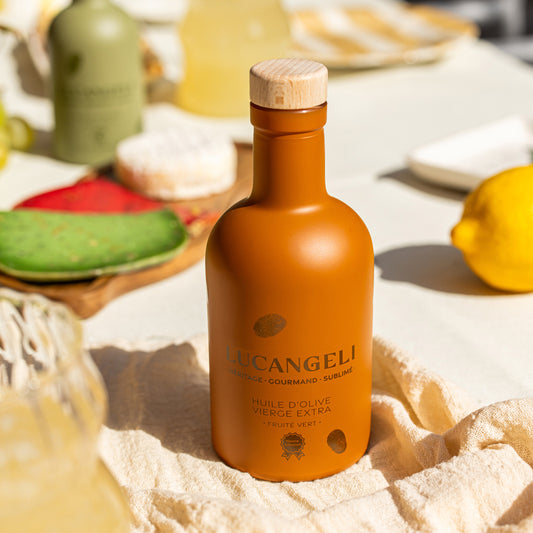
To go further, you can compare different oils made with this method thanks to the 200 ml olive oil trio, ideal for discovering the subtleties of green fruity and ripe fruity profiles.

History and evolution of the "first cold pressing" label
The mills of the past: a mechanical matter
Originally, "first pressing" referred to mills using pressing mats, where the olive paste was mechanically pressed a first time to extract the juice, then possibly a second time (of lower quality) using heat or water. This distinction was essential to guarantee the freshness and the natural quality of the product.
Modern techniques: continuous extraction
Since the 1990s, most Italian mills have used centrifuges or modern extractors, which require only a single cold step. The "first pressing" label has therefore become a linguistic legacy, but "cold" remains a regulated criterion: to earn the "extra virgin" designation, the oil must be extracted at low temperature, without altering the aromas.
To explore this world, discover the discovery duo, two 500 ml bottles, perfect for getting to know the different profiles.
Why is the "first cold pressing" label still used?
A landmark for consumers
The label is reassuring, because it evokes a tradition of quality, even if the technical reality has changed. Many people still associate this indication with a pure, unrefined oil made using ancestral methods.
What it really guarantees today
In Europe, regulations require extra virgin olive oil to be cold extracted, but the "first pressing" label is no longer a technical criterion. It endures nonetheless, because it reassures and adds value to the product. To see things clearly, go for oils that spell out their extraction method and their origin, such as the jeroboam of organic extra virgin olive oil, from the 2023 harvest.
Summary table: what each label means
Frequently asked questions about first cold pressing
1. Is first cold pressed olive oil better?
The label is reassuring, but to choose the best oil, look above all at freshness, origin and aromatic profile. Green fruity and ripe fruity oils each offer a different experience.
2. How can you recognise a genuinely cold extracted oil?
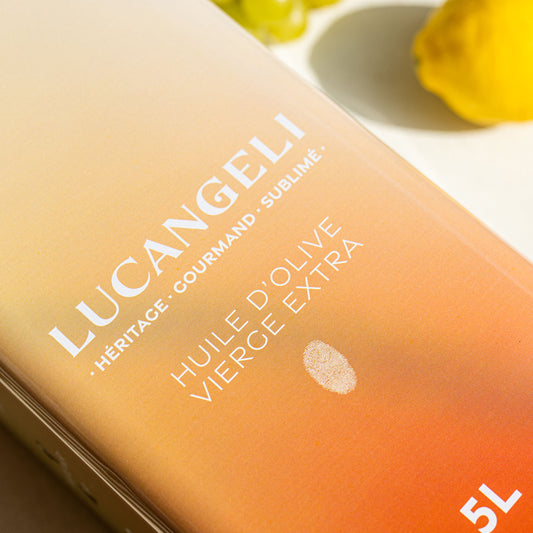
Check that the "cold extraction" wording appears on the label and favour producers who spell out their process. The 5 L tin of organic olive oil lets you keep a quality oil on hand all year round.

3. Can you personalise a bottle of cold extracted olive oil?
Yes, you can create the design of your personalised bottle from 24 units upwards, an ideal option for a gift or a special event.
To go further, explore the professionals area to discover the offers dedicated to restaurants and fine food shops.




 lucangeli.it