
Essential items for an Italian table setting
Setting an Italian table is, above all, a matter of balancing generosity and simplicity. A few well-chosen items, a bottle of olive oil placed in the center, olives in a bowl, balsamic vinegar within reach: the Italian setup revolves around food, not decoration.
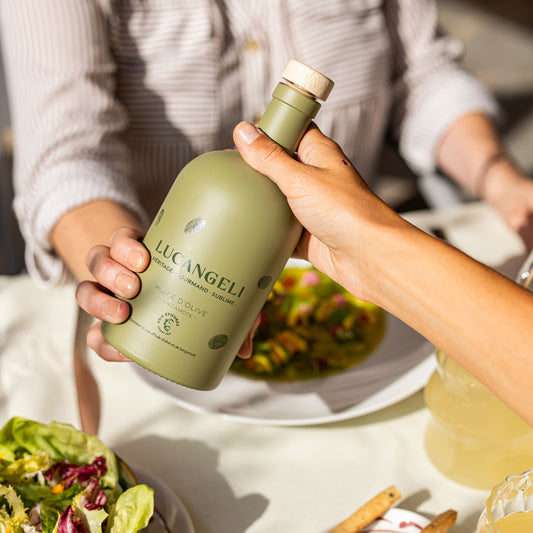
The olive oil bottle: the central object
In Italy, the olive oil bottle is not stored in a cupboard between meals. It is on the table, accessible at all times, like salt or pepper. It is a strong cultural marker: oil is a living condiment, not a cooking ingredient begrudgingly brought out.
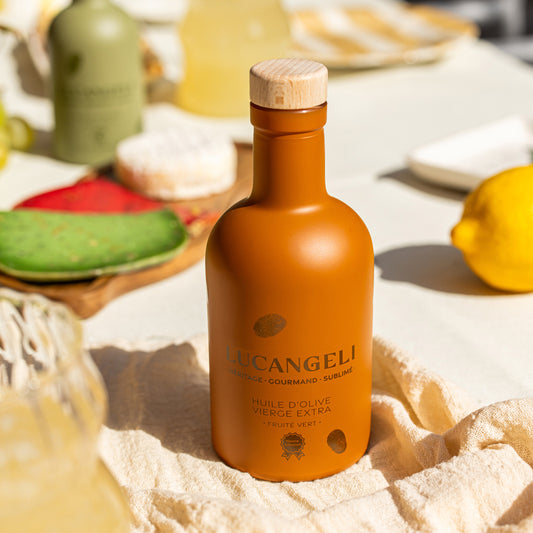
For a successful Italian table, choose a bottle with a beautiful shape and content that lives up to it. A 200ml organic green fruity olive oil is perfect for a table of four to six people: the quantity is just right, the bottle is elegant, and the oil is replenished often enough to stay fresh. If you are hosting more people, the 500ml discovery duo allows you to offer two different profiles, green fruity and ripe fruity, side by side.
A technical detail to know: the Carolea variety, grown in Calabria, produces an oil with a fruity and slightly bitter profile that holds up particularly well at room temperature. Unlike more delicate varieties that lose some of their aromatic character when warmed, Carolea retains its intensity even when placed on a table in the middle of summer. This is one of the reasons why this variety is traditionally used for table service in southern Italy.

Other essential elements
Beyond the oil, an Italian table calls for a few simple accompaniments. Olives are a must: a bowl of pitted black olives in extra virgin olive oil placed among the guests is enough to create the atmosphere. Balsamic vinegar is the second essential table condiment: an IGP balsamic vinegar from Modena Gold collection in a small carafe or directly in its bottle, next to the oil, forms the classic duo of the Italian table.
Here are the six items to gather for a complete setup:
- A bottle of extra virgin olive oil, placed within reach
- A bowl of olives or a spread (tapenade, pesto)
- An IGP balsamic vinegar for seasoning at the table
- Bread, preferably focaccia or country bread
- Deep plates or bowls for antipasti
- A drip-free pourer on the oil bottle for precise dispensing
The atmosphere and arrangement of an Italian table
Italian aesthetics: simplicity and generosity
The Italian table does not seek formal perfection. It seeks sincere abundance. Natural linen tablecloths, white or terracotta ceramic plates, simple stemmed glasses: everything is chosen to highlight the food, not to impress. The dominant colors are white, beige, olive green, and terracotta, shades that evoke the Mediterranean landscape.
The space between dishes is kept to a minimum. On an Italian table, there is no emptiness: dishes follow one another, bowls are shared, bottles circulate. It is a table designed for sharing, not for staging. If you want to offer this experience to your guests as a gift set, the customizable gift box allows you to combine oil, vinegar, and spreads in one set.
The place of food on the table
In Italy, antipasti are not served in the kitchen before being brought to the table: they are placed directly on the table, along with the bread, as soon as guests arrive. This habit completely changes the dynamic of the meal. Guests begin to eat as soon as they sit down, without waiting, without ceremony.
To recreate this effect at home, prepare in advance a set of four tapenades arranged in small bowls, with sliced bread and an open bottle of oil. The sun-dried tomato tapenade and the black olive tapenade are two classics that work in all contexts, from informal aperitifs to festive dinners.
Adapting the Italian table for every occasion
The everyday Italian table
On a daily basis, the Italian table is minimalist in form but generous in content. A tablecloth or fabric placemat, two or three small bowls, a bottle of oil, and bread: that's enough to transform an ordinary meal into a moment of sharing. The 200ml organic ripe fruity olive oil is ideal for everyday use: its soft, round profile suits all dishes, from pasta to grilled vegetables.
To compare the two styles, here are the differences between an everyday table and a festive Italian table:
- Tablecloth: natural linen for everyday, white or embroidered tablecloth for celebrations
- Olive oil: 200ml bottle for everyday, carafe or jeroboam for celebrations
- Olives and antipasti: one bowl for everyday, several varied bowls for celebrations
- Balsamic vinegar: optional for everyday, present in a carafe for celebrations
- Bread: country bread for everyday, homemade focaccia or ciabatta for celebrations
- Flowers: none for everyday, a few simple flowers or fresh herbs for celebrations
The festive table and special occasions
For a festive Italian table, the volume and variety increase, but the spirit remains the same: everything is on the table, everything is shared. The jeroboam of organic extra virgin olive oil is the ideal table item for special occasions: its three-liter size makes it a visually central piece, and it allows you to serve a whole table without ever running out of oil.
For professional events, restaurants, and hotels wishing to offer an authentic Italian table experience, the professional space allows for bulk orders and personalized support. It is also possible to create your own bottle design for a personalized table, starting from 24 bottles.
The trio of 200ml olive oils is another option for large tables: three different profiles, three bottles placed side by side, inviting guests to compare and choose. It's a simple way to turn olive oil service into a shared tasting moment, without any special equipment.
Frequently Asked Questions
What do you put on an Italian table?
An Italian table always includes a bottle of olive oil within reach, bread, olives or antipasti in bowls, and often balsamic vinegar. Dishes are placed directly on the table as soon as guests arrive, without waiting for service.
What olive oil should you put on the table?
For an Italian table, choose a quality extra virgin olive oil, preferably in a small 200 or 500 ml bottle to keep it fresh. A green fruity profile adds liveliness to dishes, while a ripe fruity profile is better suited for milder, family-style tables. The ideal is to offer both.
How to personalize an olive oil bottle for a festive table?
It is possible to create a personalized label using the online configurator, starting from 24 bottles. This option is used for weddings and baptisms as well as for restaurants wishing to offer a bottle with their name on each table.




 lucangeli.it