

What is olive oil decantation for?
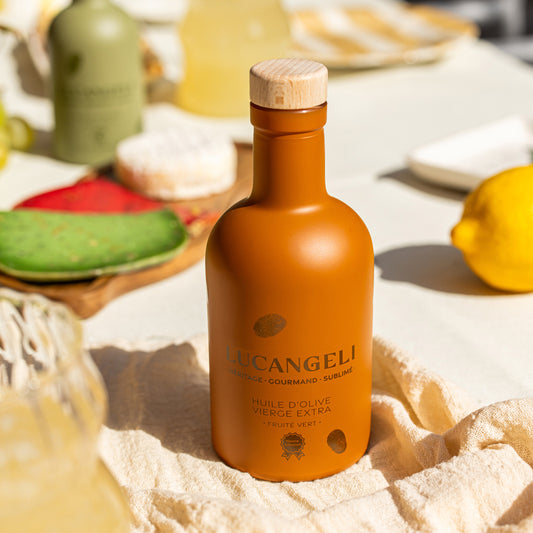
Olive oil decantation consists of letting the oil rest after extraction to naturally separate suspended particles and residual water. This process improves the clarity, stability, and purity of the oil. Many enthusiasts are unaware that decantation also influences taste and preservation. By allowing the oil to clarify, a clearer texture and a more precise aromatic profile are obtained, as offered by Organic Ripe Fruity Olive Oil 200 ml.
Decantation is particularly important for oils extracted by co-milling with fresh fruits, such as lemon olive oil, because fruit particles can cloud the oil if not removed. This point is often overlooked during home tastings, yet it makes all the difference in fully enjoying the aromas.
To go further, discover how to personalize your tasting experience with a custom olive oil bottle.

How is olive oil decantation carried out?
The main stages of decantation
- Rest in stainless steel tanks: After extraction, the olive oil is placed in stainless steel tanks, away from light and air.
- Natural sedimentation: For several days to several weeks, heavy particles and water settle at the bottom.
- Transfer (racking): The clarified oil is gently racked, without disturbing the sediment.
This process is rarely detailed on bottles, but it is followed by most artisan millers. Some oils, particularly Calabrian monovarietals, such as Carolea, benefit from slow decantation to preserve their delicate aromas.
For catering professionals, the advantage is twofold: clear oil enhances presentation and limits sediment in table oil cruets. More information on the professional area.
Decantation or filtration?
Decantation is a gentle alternative to mechanical filtration. While filtration retains all particles by passing them through a filter, decantation allows time to do its work. This choice influences the final profile: a decanted oil sometimes retains a slight opalescence and develops more complex aromas.

When should you decant your olive oil at home?
Decanting an artisanal olive oil, when and why?
If you buy an unfiltered artisanal olive oil, it is advisable to let the bottle stand upright, away from light, a few days before opening. This allows any residues to settle at the bottom. When serving, pour gently so as not to disturb the oil. This precaution is particularly useful with lemon-pressed oils, whose plant matter can accentuate the sediment.
List of good practices for home decantation
- Always store your bottles upright.
- Avoid shaking the oil before use.
- Use a drip-free pourer to limit movement.
- If a deposit appears, do not pour it into the plate.
For a varied discovery, try the Olive Oil Trio 200 ml and compare the clarity according to the profiles.
Frequently asked questions about olive oil decantation
What is olive oil decantation for?
It clarifies the oil, improves its stability, and allows you to fully appreciate its aromas.
Can the sediment at the bottom of the bottle be consumed?
It is not dangerous but it can alter the texture and taste. It is best not to mix it with the oil when serving.
Decantation or filtration: which method to choose?
Decantation respects the natural structure of the oil, filtration offers immediate clarity. The choice depends on your preferences and usage.




 lucangeli.it