

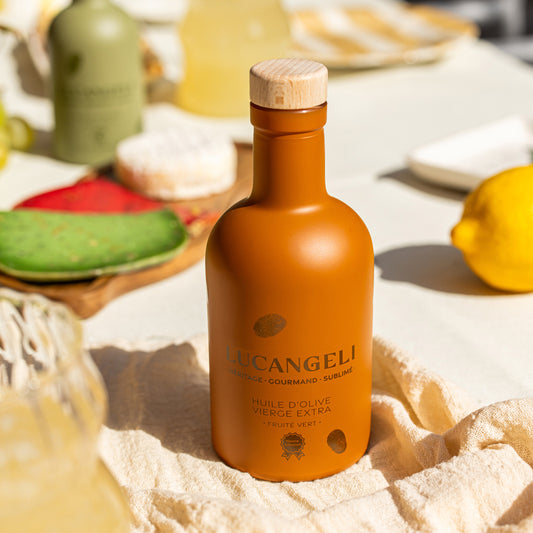
An anti-drip pourer for olive oil is the small accessory that changes everything when serving: no more drips on the tablecloth, no more waste, and precise dosing every time. Here's how to choose the right model and use it correctly.
Why an anti-drip pourer changes olive oil serving
Pouring olive oil without a pourer often means pouring too much, too quickly, and leaving a trail on the edge of the bottle. It's not a matter of clumsiness: it's a matter of physics. Oil is viscous, it clings to the glass, and the final drop doesn't fall, it drips.
An anti-drip pourer solves this problem by cutting off the flow at the precise moment you straighten the bottle. The mechanism is simple: an internal tube creates a surface tension break that prevents the last drop from escaping. The result: the bottle stays clean, the table too, and you control the exact quantity poured.
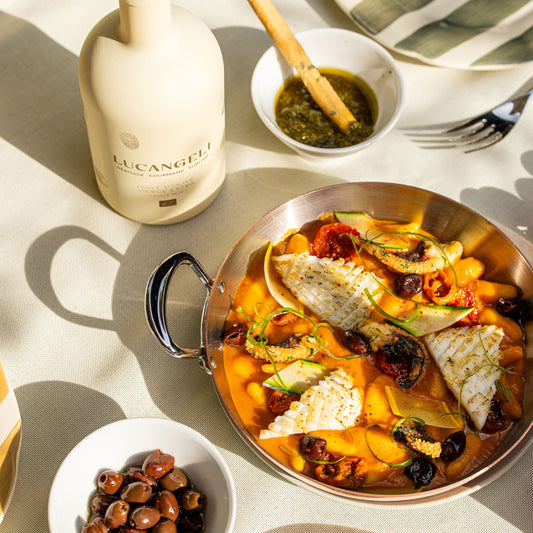
This is particularly useful when you use an organic green fruity olive oil as a finish on a hot dish: a few grams are enough, and every gram counts.
How to choose an anti-drip pourer for olive oil

Materials: stainless steel, plastic, or cork
The market offers three main types of pourers. Here are their main characteristics:
- Stainless steel: durable, taste-neutral, easy to clean, compatible with all bottle sizes from 200 ml to 750 ml. This is the best choice for daily use at home.
- Food-grade plastic: lightweight and economical, but less durable over time. Suitable for occasional use.
- Cork with internal tube: aesthetic and traditional, but less precise on the flow rate. Suitable for display bottles.
For daily use, stainless steel is the best option. It doesn't retain odors, doesn't deform, and fits most standard bottles.
The neck diameter: a step not to be skipped
Before buying a pourer, measure the inside diameter of your bottle's neck. Olive oil bottle necks vary between 18 mm and 22 mm depending on the manufacturer. A pourer that is too wide leaks, a pourer that is too narrow won't fit. Most universal models cover the 18-21 mm range, but always check before ordering.
If you use a discovery duo in 500 ml bottles, note that large capacity bottles often have a slightly wider neck than 200 ml sizes.
Filtered or unfiltered oil: an often-overlooked criterion
This is the point most guides omit: unfiltered oils, which contain suspended particles, tend to clog pourers faster than filtered oils. If you use cloudy oil, clean your pourer with hot water every two weeks to prevent the internal tube from becoming obstructed.
Filtered oils, like the organic ripe fruity vintage in 200 ml, pass easily through all pourer models on the market.
How to use your anti-drip pourer at the table
The right gesture for precise dosing
The ideal dose of finishing oil at the table is between 3 and 8 grams per plate, depending on the dish. That's not much: a teaspoon weighs about 4 grams. The anti-drip pourer helps you stay within this range by slowing the flow and cutting it off cleanly at the end of the pour.
The technique is simple:
- Tilt the bottle to 45 degrees, not vertically.
- Pour in a continuous, steady motion.
- Straighten the bottle with a quick motion to cut the flow.
- Wait a second before setting the bottle down: the internal tube absorbs the last drop.
Flavored oils and the pourer
Flavored oils deserve special attention. A bergamot olive oil or a organic garlic and chili olive oil have intense aromatic profiles: a few grams are enough to flavor a dish. The anti-drip pourer is even more useful here than with a neutral oil, as it prevents you from exceeding the dose and masking the other flavors of the dish.
Rinse the pourer between different oils if you use several at the table: aromas easily migrate from one oil to another.
Maintenance and lifespan
A well-maintained stainless steel pourer lasts several years. A few simple rules:
- Do not put it in the dishwasher: heat and detergents can damage the seal.
- Rinse it with hot water after each use if you change oils.
- Let it air dry before putting it back in place.
- Replace it as soon as the anti-drip mechanism no longer cuts off cleanly: a worn pourer will drip and lose its purpose.
If you manage an establishment and wish to equip several tables with bottles branded with your image, the customized bottles for restaurants or hotels option allows you to order bottles with your design starting from 24 units. For large volumes, the 5-liter jerrycan allows you to refill serving bottles without multiplying purchases. The professionals section details supply conditions.
For individuals who wish to create a bottle with their own design for an event or a gift, the custom bottle configurator allows you to create your design in a few minutes, starting from 24 bottles.
Frequently Asked Questions
Does an anti-drip pourer work with all olive oil bottles?
Most universal models fit necks from 18 to 21 mm, which covers the vast majority of bottles on the market. Check the inside diameter of the neck before purchase. Large capacity bottles (750 ml and more) sometimes have a slightly wider neck.
Do I need a different pourer for flavored oils?
No, the same pourer is suitable. However, rinse it thoroughly between two oils with different aromas to avoid unintentional mixtures. Very fragrant oils, such as bergamot or garlic oils, leave aromatic traces in the tube if it is not cleaned.
How long does a stainless steel anti-drip pourer last?
With regular maintenance (rinsing with hot water, air drying, no dishwasher), a quality stainless steel model can easily last two to four years. The sign that it needs to be replaced: the last drop drips again after straightening the bottle.



 lucangeli.it