

Why the bread and olive oil ritual deserves care
Dipping a piece of bread into a small dish of olive oil is one of the simplest and most genuine gestures of the Mediterranean table. But there's a world of difference between oil straight from the fridge poured into any bowl and a carefully thought-out ritual. This moment, which Italians have practiced for centuries under the name bruschettata or simply as an appetizer before a meal, is also a way to discover an oil in all its complexity.
An ancient gesture, a living practice
In Southern Italy, and Calabria in particular, bread dipped in fresh olive oil is the first gesture of the harvest. When the olives have just been pressed, producers cut a slice of country bread, sometimes pass it over a flame, and dip it into the still cloudy oil from the mill. This is pane e olio in its purest form: no artifice, just the quality of the oil speaking for itself.
At home, this ritual can be carefully replicated. It requires no special equipment or complex technique, but a few well-made choices.
What this ritual reveals about an oil
Bread is the best revealer of an olive oil. Unlike cooking, which transforms aromas, dipped bread allows the oil to express itself as it is: its fruity notes, its bitterness, its pungency at the finish. This is why professional tasters sometimes use neutral bread to evaluate an oil outside of the official test panel.
For this ritual, a Carolea variety oil is particularly suitable. Grown in Calabria, this variety yields a ripe fruity profile with notes of ripe tomato and sweet almond, and a slight pungency at the finish. Its sweetness does not mask the bread: it enhances it. You can discover this profile in our organic ripe fruity olive oil.
How to properly serve olive oil with bread

Serving temperature, the detail everyone forgets
This is the most frequently overlooked point: olive oil is never served cold. Taken from the refrigerator, it loses a large part of its aromas and can even have a slightly thickened texture. The ideal serving temperature is between 16 and 18 °C (60-64 °F), which is the temperature of a cool room or a cellar. If your bottle was in the fridge, take it out at least 20 minutes before serving.
Choosing the right container
A small dish or a shallow plate is preferable to a deep bowl: it allows the oil to spread in a thin layer, which makes dipping easier and allows the aromas to be released upon contact with the air. A ceramic or terracotta dish is ideal, as it does not transmit odors and maintains freshness.
Avoid plastic containers, which can alter the taste, and clear glasses exposed to direct light.
The bread: which to choose?
Not all breads are created equal for this ritual. Here is a ranking from most suitable to least suitable:
- Sourdough country bread: dense and airy, it absorbs oil well and holds up to dipping. This is the ideal choice.
- Ciabatta: light and airy, its open texture makes it a classic pairing with olive oil.
- Toasted bread (bruschetta): crispy and warm, the heat releases the oil's aromas upon contact.
- Traditional baguette: good if fresh from the day, less interesting if stale.
- Industrial sliced bread: not recommended, its soft texture and sweet taste mask the oil's aromas.
Bruschetta, a slice of toasted bread rubbed with garlic, is the best-known version. It works particularly well with garlic and chili olive oil for those who enjoy bold flavors.
Varying the pleasures: flavored oils and unexpected pairings

Flavored oil, another dimension
The bread and olive oil ritual can be adapted with flavored oils, provided you distinguish between two very different categories:
- Co-milled infused oil: the fruit (lemon, bergamot, orange) is crushed together with the olives at the mill. The aroma is integrated into the oil, not added afterwards. The result is finer, more complex.
- Flavored oil with added aroma: the aroma is incorporated after extraction. The result is often more intense but less subtle.
For the bread ritual, a bergamot olive oil obtained by co-milling, awarded at the Épicures d'Argent 2023, brings a citrusy and floral note that completely transforms the experience. It's a particularly successful pairing with a slightly acidic sourdough bread.
Composing a small tasting at the table
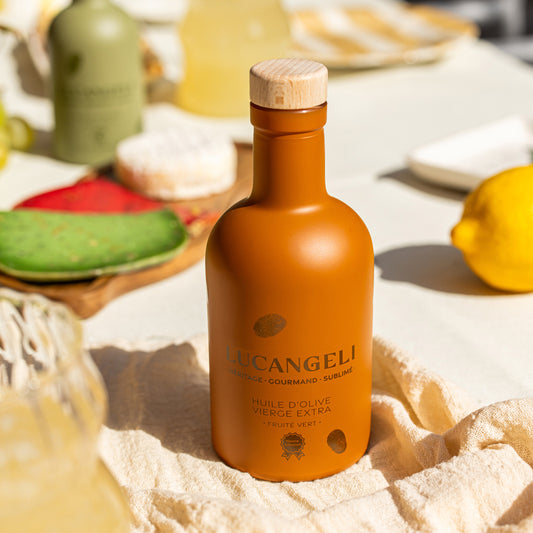
Instead of just one oil, offer your guests two or three dishes with different oils: a green fruity oil for lovers of bitterness and pungency, a ripe fruity oil for those who prefer sweetness, and a flavored oil for curiosity. The trio of olive oils in 200 ml format is designed specifically for this type of table tasting.
Add a pinch of fleur de sel to each dish, some fresh herbs if you wish, and the ritual becomes a true moment of sharing.
The table ritual in restaurants
In establishments that pay attention to their service, bread and olive oil can advantageously replace butter in the bread basket. It's a strong editorial choice: it says something about the cuisine, about the suppliers, about the identity of the establishment. Restaurants wishing to offer a bottle with their name on the table can consult the dedicated professional section or create their own design via the custom bottle configurator.
Frequently Asked Questions
Which olive oil to choose for dipping bread?
For this ritual, a ripe fruity oil is generally more accessible: its sweet notes of tomato and almond do not overpower the bread. A green fruity oil, more bitter and pungent, is better suited for those who appreciate character. In both cases, choose a quality extra virgin olive oil with a recent harvest date.
Should salt or spices be added to the dish?
A pinch of fleur de sel is classic and welcome. Some add black pepper, thyme, or rosemary. The key is not to mask the oil: the aromatics should complement, not cover. If you are using a flavored oil, start without adding anything to appreciate its own aromas.
Can the oil dish be prepared in advance?
Yes, but not too far in advance. Oil poured into a dish and exposed to air begins to oxidize after about an hour. For an aperitif, pour the oil at the last minute. If you are preparing several dishes for a tasting, cover them with film until serving. To go further in tasting, the trio of olive oils allows you to compare three different profiles in a single serving.



 lucangeli.it