

Dipping a piece of bread in good olive oil is one of the simplest and most revealing gestures of Mediterranean cuisine. However, you still need to know how to choose the oil, serving temperature, container, and bread for this bread and olive oil ritual to become a true dining experience.
The bread and olive oil ritual: what Italians really do

Bruschetta, Pinzimonio, and Semplice Intingolo
In Italy, bread and olive oil are enjoyed in three distinct ways, depending on the region. Bruschetta is a slice of grilled country bread, rubbed with garlic and drizzled with raw olive oil. Pinzimonio is a dipping sauce for raw vegetables, made with olive oil, salt, and pepper. Semplice intingolo, literally "simple dip," is the most common practice in Southern families: a shallow bowl, a drizzle of oil, and fresh or toasted bread.
These three practices share one commonality: the olive oil is always added raw, at the last moment, so that its aromas are not altered by heat. This is a rule that Southern Italian cooks instinctively apply, and it is found in Calabrian green-fruited olive oils, whose aromatic intensity is fully expressed at room temperature.
Which olive variety for this ritual?
Not all oils are equally suited to the bread ritual. A ripe-fruited oil, with notes of tomato and sweet almond, will be rounder and more accessible. A green-fruited oil, with its frank bitterness and pungency at the finish, will be more complex and interesting to taste alone on bread.
The Carolea variety, cultivated in Calabria, is particularly suitable for this ritual. It is the dominant variety in Calabrian olive groves. It yields an intense green-fruited oil, with notes of fresh grass, artichoke, and a marked pungency that gradually reveals itself on lightly toasted country bread. This is precisely the type of profile found in an organic ripe-fruited olive oil or in the 200 ml discovery trio, which allows you to compare both profiles on the same bread.
How to serve olive oil at the table: the container, temperature, and quantity

Which container to choose?
This is the detail that most tables neglect. Pouring oil into a white shallow dish is practical, but it exposes the oil to light and air, two factors that accelerate oxidation. For a meal on a summer terrace, the oil can lose some of its aromas in less than twenty minutes in a sun-exposed dish.
Here are the options, ranked by relevance:
- Tinted glass or ceramic oil dispenser: it protects the oil from light and allows for precise dispensing thanks to its pouring spout. This is the most suitable choice for daily use.
- Small thick glass carafe: elegant, it is suitable for a refined table setting, provided it is not left exposed for too long.
- Shallow dish: practical for immediate tasting, to be used in small quantities and refilled rather than left on the table.
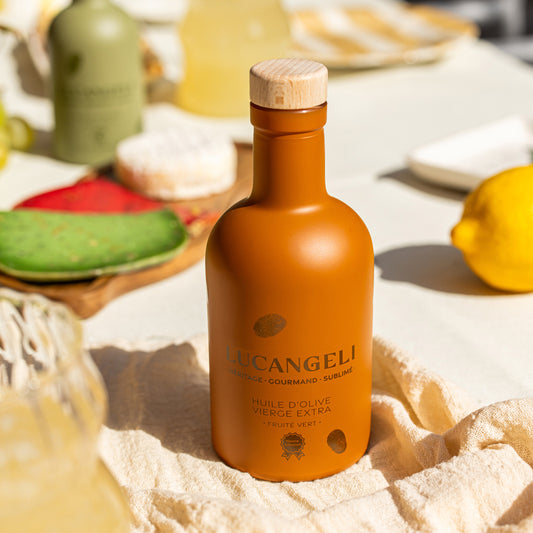
- Original bottle with drip-free pourer: the simplest and most honest solution, especially if the bottle is made of dark glass.
For establishments wishing to offer a bottle with their brand on each table, the custom bottle configurator allows for the creation of a bespoke design starting from 24 bottles.
What serving temperature?
The ideal temperature for serving olive oil at the table is between 16 and 18 °C. Below 10 °C, the aromas are blocked, and the oil may show a slight cloudiness due to the crystallization of natural waxes. Above 25 °C, volatile notes evaporate quickly.
In summer, if the bottle has been stored in a warm cupboard, it is advisable to place it in a cool place an hour before the meal, without putting it in the refrigerator.
What quantity to pour?
For tasting on bread, one tablespoon per person is enough for an initial taste. For bruschetta, count about 8 to 10 ml per slice, which is a generous tablespoon. Pouring too much oil at once drowns the bread and masks the aromas: it is better to add more than to pour too much.
Creating an appetizer platter around bread and oil
Accompaniments that work
The bread and olive oil ritual naturally extends to an appetizer platter. Some elements that pair well:
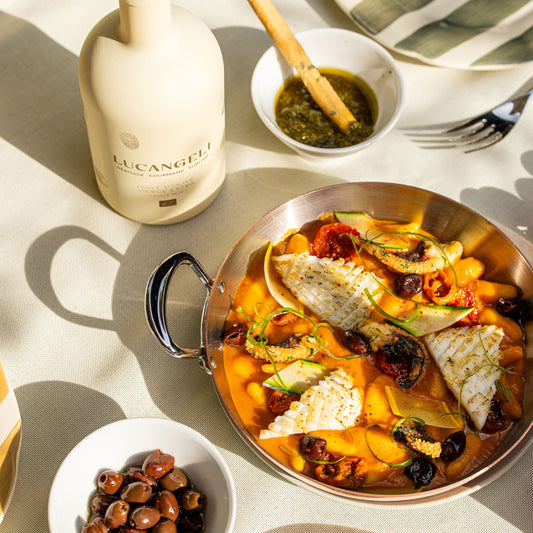
• Pitted black olives in extra virgin olive oil, to stay within the Mediterranean theme. • A sun-dried tomato tapenade, to spread on grilled bread in addition to the oil. • A drizzle of Modena PGI Gold Collection balsamic vinegar, to add as a finishing touch to bruschetta for a sweet and sour contrast. • A bergamot olive oil for a flavored version, obtained by co-crushing the fruit with the olives, which brings a fresh citrus note without added aroma.
The bread: which one to choose?
Country bread with a dense crumb, lightly toasted, is the classic base. It resists the oil without becoming soggy and allows the oil's aromas to express themselves without being masked. Ciabatta, being more airy, absorbs more and is better suited for a mild oil. White sandwich bread should be avoided: its crumb is too soft and its neutral taste adds nothing to the ritual.
In Calabria, the traditional bread used for bruschetta is pane di casa, a sourdough bread with a thick crust, baked in a wood-fired oven. Its dense and slightly acidic crumb is the ideal base for an intense green-fruited oil. Catering professionals who wish to structure this ritual as a dining experience can consult the space dedicated to cafes, hotels, and restaurants for formats and conditions adapted to table service.
Frequently asked questions
Which olive oil to use for dipping bread?
An extra virgin olive oil with a green fruitiness and good pungency at the finish is the most interesting for this ritual. It reveals its complexity on toasted bread, unlike a mild oil that would go unnoticed. The Carolea variety from Calabria, with its intense green fruitiness, is particularly suitable. You can discover both profiles, green-fruited and ripe-fruited, with the trio of organic olive oils in 200 ml.
Should I add salt or spices to the oil for dipping bread?
In Italy, the traditional ritual is done with oil alone, possibly a pinch of sea salt. Adding spices or balsamic vinegar is an acceptable variation, but it masks the aromas of the oil. If you really want to taste the quality of an oil, start by tasting it alone on bread, with nothing else.
How to prevent olive oil from going rancid on the table during the meal?
Pour a small amount of oil into the serving container, and replenish it rather than leaving a large quantity exposed to air and light. A tinted glass or ceramic oil dispenser slows down oxidation. In summer, avoid leaving the bottle in direct sunlight: heat and light are the two main factors of degradation. The organic green-fruited olive oil bottle in dark glass is designed to limit this effect.



 lucangeli.it