


What Smoke Point Really Means
The Exact Definition
Smoke point is the temperature at which a fat begins to break down and continuously emit visible smoke. At this stage, the volatile compounds in the oil evaporate and degrade. The oil loses its taste qualities and gives off a pungent odor that transfers to the food. For our organic green fruity oil, as with any quality extra virgin oil, this threshold is much higher than the category's reputation suggests.
Why the Value Varies from One Oil to Another
Three main factors explain the difference between 160 °C and 210 °C for the same extra virgin category.
- Free acidity: the lower it is, the higher the smoke point. An oil with 0.2% acidity withstands heat better than an oil with 0.7%, even if both are legally extra virgin.
- Presence of impurities: an unfiltered oil contains suspended particles that burn at a lower temperature. A filtered oil is more heat-stable.
- Freshness: a recent oil, from the current year's harvest, is more stable than an oil stored for eighteen months. The harvest date on the label is therefore a useful indicator.
If you want to explore both cooking profiles, the 500 ml discovery duo allows you to compare a green fruity and a ripe fruity side-by-side.
Debunking the Myth: Extra Virgin Olive Oil Can Be Used for Cooking

The Role of Free Acidity
Free acidity measures the proportion of free fatty acids in the oil, i.e., molecules that have detached from their glycerol. The more there are, the more fragile the oil is to heat. European regulations set the extra virgin threshold at a maximum of 0.8%, but the best oils fall well below that.
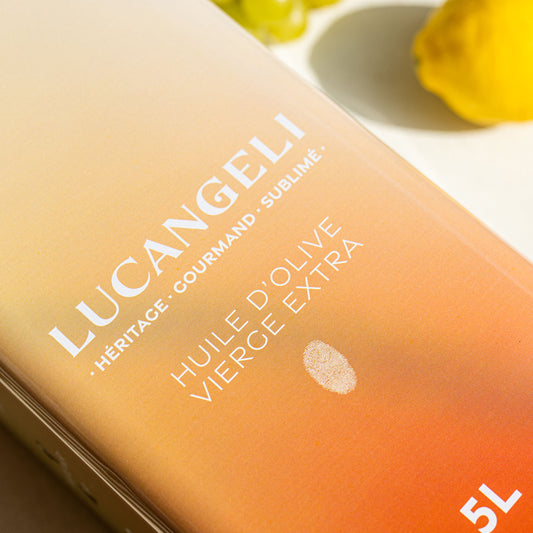
The Carolea variety, cultivated in Calabria and harvested at the beginning of the campaign between October and November, regularly produces oils with free acidity below 0.3%. At this level, the smoke point exceeds 200 °C, placing these oils in a high thermal stability category. This is a fact that generic tables never mention. For large-scale daily cooking, the 5 L container offers this Calabrian quality at a controlled cost.
Smoke Points According to Oil Quality
Here are the indicative thresholds according to the type of olive oil.
- Standard extra virgin olive oil (acidity 0.5% to 0.8%): smoke point between 160 °C and 180 °C.
- Superior quality extra virgin olive oil (acidity 0.2% to 0.4%): smoke point between 185 °C and 200 °C.
- Extra virgin olive oil with very low acidity, such as Calabrian Carolea (less than 0.3%): smoke point between 200 °C and 210 °C.
- Non-extra virgin olive oil (acidity 0.8% to 2%): smoke point between 150 °C and 170 °C.
- Refined olive oil (acidity reduced after refining): smoke point between 220 °C and 240 °C.
This classification shows that the extra virgin category covers very different realities. Choosing an oil based solely on the label without looking at the acidity or harvest date is like buying a car without looking at the engine.
What Really Happens When the Threshold is Exceeded
When oil begins to smoke, two things happen. First, the aromatic compounds that give a good extra virgin oil its valuable taste disappear. Second, degradation compounds form and give a bitter and pungent taste to the food. The dish is spoiled before it is even served.
Good practice is simple: watch the pan, start on medium heat, and add the food before the oil gets too hot. An oil that is lightly simmering around 150 °C is ready for gentle cooking. An oil that begins to ripple on the surface is approaching 180 °C. Smoke indicates that the threshold has been exceeded. The 200 ml organic ripe fruity oil is particularly suitable for gentle cooking where you want to preserve the aromas in the dish.
Which Olive Oil for Which Cooking Method?

Gentle and Medium Cooking up to 180 °C
This is the natural territory of extra virgin olive oil. Sautéed vegetables, eggs, pan-fried fish, simmering sauces, risottos: all these preparations remain below 180 °C under normal conditions. A common quality extra virgin oil is perfectly sufficient. A superior quality oil also adds its aromas to the dish.
For low-heat cooking where oil is added at the end of cooking or directly to the plate, the 1 L limited edition bottle is the ideal format: large enough for regular use, small enough to be consumed before the oil oxidizes.
High Heat Cooking and Searing from 180 °C to 200 °C
Searing meat in a pan, roasting vegetables in the oven at 200 °C, homemade pizza: these cooking methods reach temperatures where only a low-acidity extra virgin oil remains stable. This is where the quality of the oil makes a real difference. An oil with 0.8% acidity will start to smoke, an oil with 0.2% will hold up without issue.
Restaurateurs and professional chefs who work at these temperatures regularly can consult the professional section for formats and conditions adapted to intensive use.
What to Avoid
Two situations should be avoided with extra virgin olive oil, regardless of its quality.
- Repeated deep frying at 180 °C with the same oil: each heating cycle lowers the smoke point. An oil used multiple times degrades faster.
- Leaving the oil to heat empty in a very hot pan: without food to absorb the heat, the temperature quickly rises beyond the smoke point in a few seconds.
For establishments that wish to offer quality olive oil at the table with their own visual identity, personalized bottles allow them to showcase this choice to their guests.
Frequently Asked Questions
At what temperature does extra virgin olive oil start to smoke?
It depends on its quality. Standard extra virgin oil starts to smoke between 160 °C and 180 °C. An oil with very low acidity, such as those from the Calabrian Carolea variety harvested early in the campaign, can reach 200 °C to 210 °C before degrading.
Can extra virgin olive oil be used for frying?
For occasional frying at 170 °C-175 °C, a good quality extra virgin oil is suitable. For repeated frying or at high temperatures, a refined oil is more appropriate because its smoke point is higher and its heat stability is superior.
How do I know if my olive oil has reached its smoke point?
The most visible sign is bluish smoke rising from the pan. Before this stage, the oil begins to ripple on the surface and gives off a slight pungent odor. If you observe these signs, immediately reduce the heat or remove the pan from the heat. Oil that has smoked should not be reused for subsequent cooking.




 lucangeli.it