


The smoke point of extra virgin olive oil is around 190 °C, according to all tables. But this value is an average, not a constant. It varies depending on the free acidity, filtration level, and vintage freshness. Understanding these nuances truly changes how you cook.
What we mean by smoke point, and why it's more complex than a single number

The smoke point is the temperature at which an oil begins to decompose and emit visible smoke. Beyond this threshold, volatile compounds evaporate, the oil blackens, and its taste becomes bitter.
Why the value varies from one bottle to another
For extra virgin olive oil, tables generally show between 185 °C and 210 °C. This 25-degree difference is not insignificant. It is explained by three main factors:
- Free acidity: the lower it is, the more stable the oil is to heat. An extra virgin oil with 0.2% acidity resists better than one with 0.7%, even if both meet the legal threshold of 0.8%.
- Filtration: an unfiltered oil contains suspended vegetable residues, water, and pulp particles, which burn at low temperatures and lower the effective smoke point.
- Vintage: a fresh oil from the current harvest is more stable than a two-year-old oil, even if stored in good conditions.
The olive variety also plays a role
This is the point that generic tables completely ignore. The Carolea variety, cultivated in Calabria, naturally produces an oil with a ripe fruitiness and often less than 0.3% free acidity. This varietal characteristic gives it superior thermal stability compared to an extra virgin oil blended from various varieties. If you're looking for a ripe fruity olive oil for everyday cooking, the varietal origin is as relevant a criterion as the acidity level shown on the label.
Cooking oil or finishing oil: two uses, two products

This is the most useful distinction in practice, yet it is rarely explained clearly.
For a pan over medium heat (140-170 °C), a sauté pan, or an oven dish, you need a stable, filtered oil with low acidity. A large-format organic extra virgin olive oil is perfect for this daily use. It withstands heat without degrading, and its taste remains neutral during cooking.
For deep frying at 180-190 °C, extra virgin olive oil is technically usable if its acidity is very low and it is well filtered. In practice, many cooks prefer to reserve extra virgin for finishing and use ordinary olive oil for repeated frying, for reasons of cost and yield.
Cooking oil: what it must withstand
For a pan over medium heat (140-170 °C), a sauté pan, or an oven dish, you need a stable, filtered oil with low acidity. A large-format organic extra virgin olive oil is perfect for this daily use. It withstands heat without degrading, and its taste remains neutral during cooking.
Finishing oil: when taste is paramount
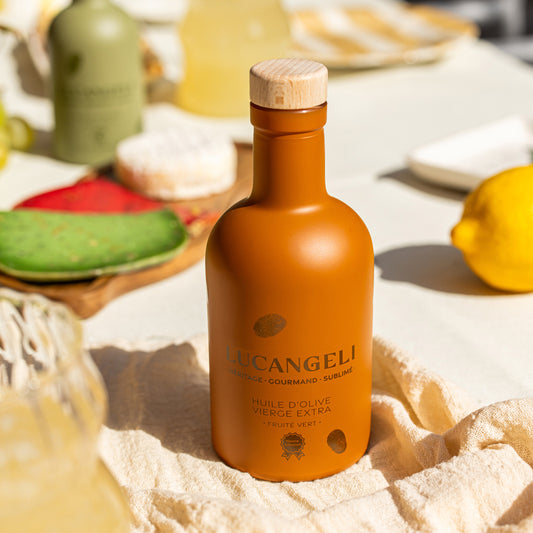
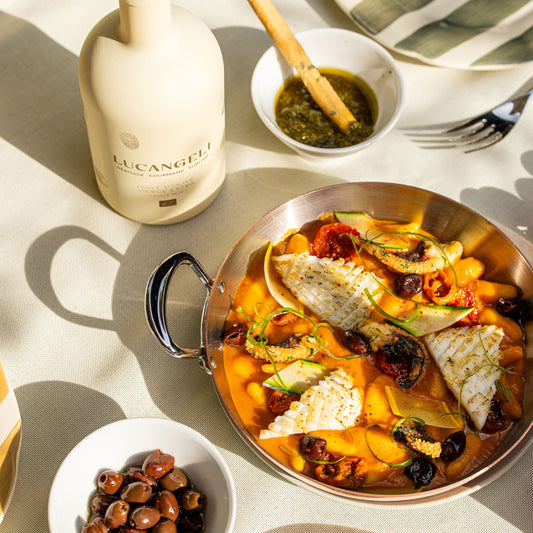
Finishing oil is added off the heat, at the time of plating or just before serving. This is where the aromatic profile truly matters. A green fruity organic oil, with notes of fresh grass, artichoke, and slight bitterness, enhances a carpaccio, bruschetta, or grilled vegetables. A ripe fruity oil, with notes of ripe tomato, almond, and butter, pairs better with pasta, legumes, or white fish.
Which oil for which cooking: the practical guide
Here's how to guide your choice based on the technique used:
- Vinaigrette and cold marinade: green fruity or ripe fruity, unfiltered possible.
- Pan over low heat (100-130 °C): filtered extra virgin, ripe fruity preferably.
- Sauté and pan over medium heat (140-170 °C): filtered extra virgin, acidity less than 0.5%.
- Oven and braised (160-200 °C): filtered extra virgin, low acidity.
- Light frying (160-180 °C): filtered extra virgin or virgin olive oil.
- High-temperature frying (180-200 °C): virgin olive oil or neutral oil.
- Finishing and plating off heat: green fruity or ripe fruity depending on the dish.
How to read a label to choose the right cooking oil
The mentions that really matter
On an olive oil bottle, three pieces of information help you assess its heat resistance:
- Free acidity level: if indicated (not mandatory), prefer a value below 0.4% for cooking.
- The mention "filtered": a filtered oil is more heat-stable than a cloudy or unfiltered oil.
- Harvest date: the fresher, the more stable the oil. A current year's harvest is always preferable to an oil close to its best-before date.
What the label doesn't say
The label does not indicate the olive variety in most cases, except for monovarietal oils or appellations of origin. Yet this is valuable information. To explore the differences between a green fruity and a ripe fruity before choosing, the trio of organic olive oils allows you to compare three profiles side-by-side, a concrete way to understand how each oil performs in cooking.
For professionals: the question of format
In catering, the thermal stability of cooking oil is also a matter of stock rotation. An oil opened for several weeks in a hot kitchen degrades faster than fresh oil. The professional section offers formats adapted to kitchen volumes, with advice on conservation and replenishment.
Frequently Asked Questions
Can extra virgin olive oil be used for frying?
Yes, provided the oil is well filtered and its free acidity is low. Light frying at 160-180 °C is perfectly compatible with a quality extra virgin oil. For repeated high-temperature frying, a virgin olive oil is often more suitable for reasons of cost and stability.
Why does my olive oil smoke at low temperatures?
Several possible reasons: the oil is unfiltered (vegetable residues burn first), it is old or poorly stored, or its free acidity is close to the legal threshold of 0.8%. A fresh, filtered oil with low acidity smokes much less quickly.
What is the difference between smoke point and flash point?
The smoke point is the temperature at which the oil begins to decompose and smoke. The flash point is higher: it is the temperature at which the emitted vapors can ignite in contact with a flame. In domestic cooking, the flash point is never reached under normal conditions of use.




 lucangeli.it