

A well-constructed antipasti board in a restaurant means an aperitif service that sells itself, builds customer loyalty, and enhances your menu without overburdening setup. Here's how to compose it, present it, and efficiently manage its turnover on the patio.
At the end of the summer season, patios are in full swing. The aperitif service is often the customer's first contact with your cuisine. A well-designed Italian-style antipasti board transforms this moment into a strong signal: that of an establishment that carefully selects its products.
What a restaurant antipasti board should contain

The four product families
A balanced antipasti board relies on four complementary families. Each plays a role in the progression of flavors and the visual clarity of the platter.
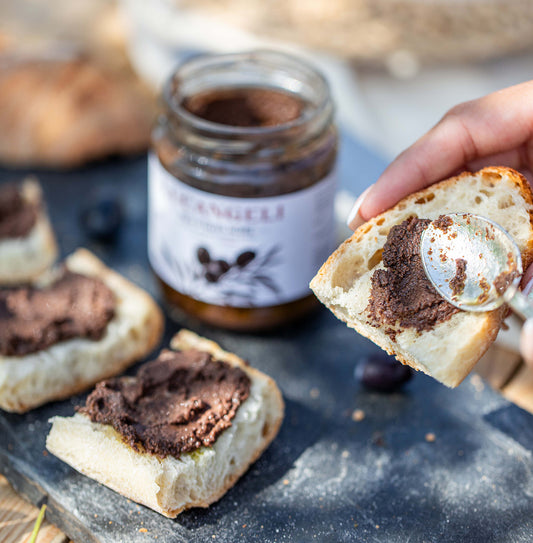
- Spreadable dips: black olive tapenade, sun-dried tomato caviar https://www.lucangeli.co/products/caviar-de-tomates-sechees-tartinable, basil DOP pesto https://www.lucangeli.co/products/pesto-au-basilic-dop-a-l-huile-d-olive. These preparations provide aromatic depth and allow each guest to compose their bite.
- Olives: served whole or pitted, they visually structure the board. Pitted black olives in olive oil https://www.lucangeli.co/products/olives-noires-denoyautees-a-l-huile-d-olive-extra-vierge are served directly in small bowls or arranged on the board without additional preparation.
- Breads and accompaniments: grissini, toasted bread, thinly sliced focaccia. They must be replenished mid-service to remain crispy, especially on the patio in hot weather.
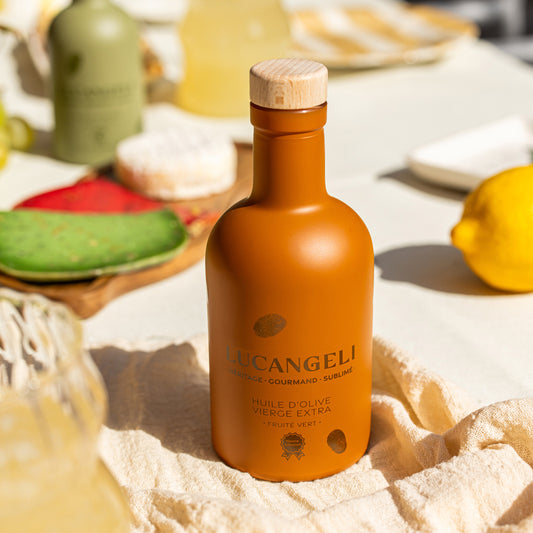
- Finishing oil: a small bowl of extra virgin olive oil for dipping bread. This is the simplest and most memorable gesture of the service. A fruity green olive oil https://www.lucangeli.co/products/huile-dolive-fruite-vert-bio-200-ml, with its herbaceous notes and ardence on the finish, is particularly well-suited for this role.
Proportions per cover
The sizing of the board depends on the number of covers and the service positioning. Here are the usual benchmarks in catering:
For 2 people: 2 to 3 types of spreadable dips (30 g each), 40 to 50 g of olives, 6 to 8 pieces of bread, 1 small bowl of 20 ml oil.
For 4 people: 3 to 4 types of spreadable dips (40 g each), 70 to 80 g of olives, 12 to 14 pieces of bread, 1 small bowl of 30 ml oil.
For 6 to 8 people: 4 to 5 types of spreadable dips (50 g each), 100 to 120 g of olives, 18 to 22 pieces of bread, 2 small bowls of 20 ml oil each.
These volumes are indicative for an aperitif service before a meal. For a dinner aperitif service or a shared starter board, multiply the quantities by 1.5.
The most frequent error in professional service
The antipasti board is often prepared too far in advance. On the patio, exposure to heat and direct light rapidly degrades olive oil-based spreads. The practical rule: never prepare more than 15 minutes before service. Products packaged in small individual formats help limit waste and better control rotation. For establishments looking to simplify their supply, the four-spreadable dip kit https://www.lucangeli.co/products/kit-tartinables-apero-en-famille-entre-amis offers a consistent, ready-to-use base.
Presentation and plating: the touches that make a difference

The choice of platter
The wooden board remains the visual standard for Italian antipasti. It provides warmth and clarity. On the patio, prefer boards with rims or trays with raised edges to prevent slipping during service. Slate is suitable for establishments with a more contemporary positioning, but it heats up quickly in direct sun: reserve it for shaded patios.
The arrangement of elements follows a simple logic: spreadable dips in small bowls or ramekins in the center, olives in a separate bowl, bread accompaniments arranged fan-like on the sides. The finishing oil bowl is placed at the end of the board, with a small piece of toasted bread propped against it.
Showcasing olive oil
The finishing oil deserves special attention in the presentation. Served in a white or terracotta bowl, it invites the gesture. Some establishments choose to offer two oils in parallel: a fruity green oil for those who appreciate character, and a bergamot olive oil https://www.lucangeli.co/products/huile-dolive-bergamote-200-ml-epicures-argent for a citrusy and original note. The latter, awarded at the Épicures d'Argent 2023, consistently sparks curiosity and conversation at the table, which is precisely the desired effect in aperitif service.
The bottle on the table: personalization and visual identity
Placing a bottle of olive oil with your name on the table transforms a condiment into a signature. Bottle personalization https://www.lucangeli.co/pages/personnalisation is available starting from 24 bottles, with a design created directly by the establishment via the online configurator https://www.lucangeli.co/pages/configurateur. For hotels and restaurants that wish to go further, the professionals' area https://www.lucangeli.co/pages/professionnels allows for defining a supply program adapted to volumes and formats.
Stock rotation and patio logistics
Managing product opening
- Open spreadable dips at the last moment, never at the beginning of service.
- Store unopened products away from direct light, ideally in a closed service cabinet.
- Note the opening date on each opened jar and observe a consumption period of 48 to 72 hours after opening for olive oil-based spreads.
- Never put an opened product back in the cold room without an airtight lid.
Formats and packaging suitable for catering
The choice of format directly impacts material cost and waste management. In catering, formats of 90 g to 180 g per reference are most suitable for spreadable dips: they allow serving two to four boards per jar without risk of spoilage. For finishing oils, 200 ml formats are ideal for table service or in small bowls. Lucangeli offers all these formats in its dedicated area for catering professionals https://www.lucangeli.co/pages/professionnels.
Anticipating service peaks
On summer patios, aperitif service peaks occur between 6:30 PM and 8:30 PM. Prepare your setups in advance: pre-portioned bowls, pre-arranged blank boards (without the spreadable dips), bread accompaniments in reserve. The final plating then takes only two minutes per table. For establishments wishing to offer a consistent and ready-to-use selection, the spreadable dip kit https://www.lucangeli.co/products/kit-tartinables-apero-en-famille-entre-amis is designed for this type of use.
Frequently Asked Questions
What is the difference between an antipasti board and a classic aperitif platter?
The Italian-style antipasti board is distinguished by the coherence of its products: spreadable dips, olives, finishing oil, and toasted bread form a whole designed to be shared and progressively enjoyed. A classic aperitif platter can mix products without a logical aromatic progression. The antipasti board engages the customer more in a tasting experience.
How to calculate the material cost of an antipasti board in a restaurant?
For a board for two covers, count approximately 30 to 40 g of spreadable dip per reference (two to three references), 40 to 50 g of olives, six to eight pieces of toasted bread, and 20 ml of finishing oil. The raw material cost is generally between 2.50 euros and 5 euros depending on the products chosen, for a recommended selling price between 8 euros and 14 euros depending on the establishment's positioning.
Can an antipasti board be offered for lunch service on the patio?
Yes, provided the volumes are adjusted. For lunch service, the antipasti board works well as a shared starter or a light lunch formula. Reduce quantities by 20 to 30% compared to the evening aperitif service, and favor spreads with a fresher profile, such as basil DOP pesto https://www.lucangeli.co/products/pesto-au-basilic-dop-a-l-huile-d-olive or black olive tapenade https://www.lucangeli.co/products/caviar-dolives-noire-a-l-huile-d-olive-extra-vierge, which pair better with seasonal dishes.





 lucangeli.it