

What is the AB label on organic olive oil?
The AB label (Agriculture Biologique) is a key marker for choosing an olive oil that respects the environment and the land it comes from. It guarantees that the olives are grown without synthetic pesticides, without chemical fertilisers and following practices that protect biodiversity. To obtain this label, the producer has to meet a strict set of specifications, checked every year. This certification covers both the groves and the mill where the oil is extracted.
- The AB label requires complete traceability of the olives, all the way to the bottle.
- The checks also cover storage, bottling and transport.
- Certified organic olive oils can be identified by the green AB logo and the certification body number on the label.
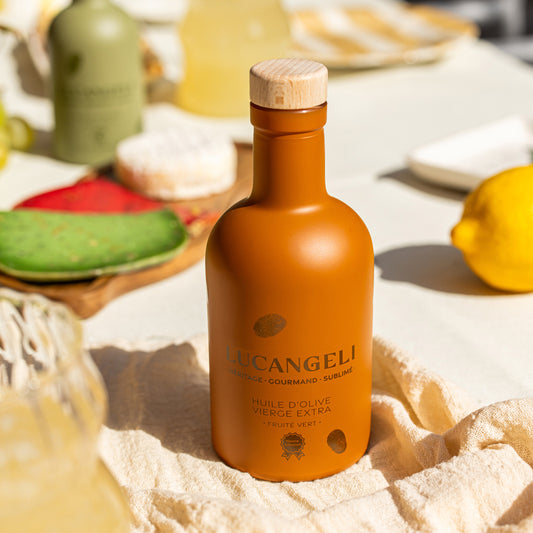
Take a look, for example, at the organic green fruity olive oil 200 ml, from olive trees grown in Calabria on unspoilt land.

To go further, also explore the professional formats suited to anyone looking to offer an authentic experience at the table or in a restaurant.
How do you recognise a real organic olive oil?
Not all oils displaying the word "organic" are equal. Here are the points to check so you don't get it wrong:
- Presence of the AB logo: it must appear in green, with the certification body number.
- Country of origin stated: provenance is mandatory, and it is better to go for a clearly identified region.
- Olive varieties mentioned: a genuine organic producer often specifies the variety or varieties used (e.g. Carolea, Frantoio).
- Harvest or bottling date: a freshly pressed oil offers more aroma.
- No mention of "natural flavouring": an organic oil should contain nothing but olive oil.
For an informed choice, also take a look at the discovery duo, two 500 ml bottles, which lets you compare different aromatic profiles.
You can also personalise your bottle with a message or a unique design through the personalisation service, ideal for gifting or marking an occasion.
Uses and tips for getting the most out of organic olive oil
Organic olive oil works both raw and cooked, but some uses really bring out its richness:
Raw: seasoning and tasting
- On a salad of seasonal tomatoes, it lifts the freshness of the vegetables.
- With artisan bread, it reveals its notes of fresh grass or ripe fruit.
- As a finishing touch on a hot dish, it brings something authentic and indulgent.
Cooking: what habits to adopt?
- Go for an extra virgin organic olive oil for gentle cooking (sauteed vegetables, fish, white meats).
- For frying or oven cooking, be careful not to go past the smoke point (around 180°C for an extra virgin oil).
- Green fruity, more herbaceous, pairs well with September vegetables, while ripe fruity goes with milder dishes.

You will find these profiles in the 200 ml olive oil trio, ideal for varying the pleasures at the table.
For enthusiasts or large families, the jeroboam of organic extra virgin olive oil is an exceptional format, both practical and elegant.
Summary table: points to check before buying an organic olive oil
Frequently asked questions about organic olive oil
What does the AB label really guarantee on an olive oil?
The AB label ensures cultivation without synthetic pesticides, complete traceability and compliance with strict environmental standards, from the field to the bottle.
How do you recognise a quality organic olive oil on the shelf?
Check for the AB logo, the country of origin, the olive variety and the harvest date. Favour producers who set out their approach in detail.
Can organic olive oil be used for all types of cooking?
Yes, but to preserve its aromas, favour gentle cooking and raw seasoning. Avoid temperatures that are too high so it keeps its taste qualities.




 lucangeli.it