
Why olive oil food cost deserves a rigorous calculation
In many restaurants, olive oil is booked as a kitchen staple, and its real cost per portion is never calculated. It's a common management mistake, and it has two consequences: you underestimate what you actually spend over a whole service, and you miss out on the margin that well-built added value can bring.
The first habit to adopt is to separate two uses that differ both in volume consumed and in quality requirements.
Cooking oil and finishing oil: two cost lines, two logics
Cooking oil is used to sear, roast and pan-fry, and sometimes to make marinades or sauce bases. It gets heated, sometimes to temperatures close to the smoke point of extra virgin oil, which sits between 160 and 190 °C depending on acidity and filtration. It's used in large volumes and its organoleptic qualities are partly dulled by heat. For this line, the main criteria are consistency and the volume-to-price ratio.

Finishing oil is poured raw at plating, over fish, vegetables, a burrata, a soup, a risotto. Its full complexity comes through when tasting: the attack, the bitterness, the pungency. This is the oil that justifies investing in quality, and it's the one the guest notices directly on the plate. For this line, the main criteria are the aromatic profile and traceability, not volume.
Lumping these two lines into a single cost line means either underinvesting in finishing oil — and losing perceived quality — or overestimating the cost of cooking oil and wrongly cutting into your margins.
Calculating cost per portion: a practical method
The basic calculation is simple. It relies on two variables: the purchase price per litre and the average dose per portion.
Common reference doses in professional kitchens:
- Dressing a salad or finishing a plate: between 5 and 10 ml
- Pan-cooking a vegetable or a piece of fish: between 10 and 20 ml
- Marinade for one portion of meat or fish: between 15 and 25 ml
- Bread for dipping at the table, bread on the menu: between 10 and 15 ml per guest
If you buy your cooking oil in a 5-litre tin, the cost per litre is significantly lower than with a 500 ml bottle. Over 5 litres, an 8 ml finishing dose costs a fraction of a cent per plate. Putting this calculation down in black and white changes how you see the investment.
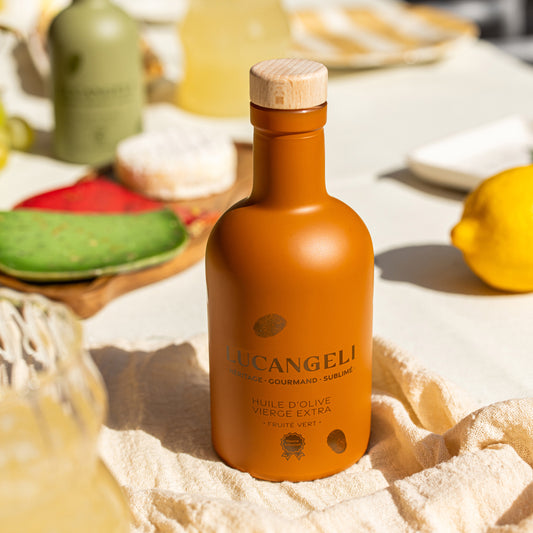
For finishing oil served by the bottle at the table or at plating, the reference format is the 500 ml tinted glass bottle, which protects against photo-oxidation and holds the right amount for the turnover of a service.
---
Choosing the right format for your volume and stock rotation
The question of format is directly tied to rotation. An extra virgin olive oil usually has a best-before date set between 18 and 24 months after bottling, but its organoleptic qualities — aromas, bitterness, pungency — start to change well before that. In a professional kitchen, one simple rule applies: never store more than you use in two months.
Available formats and their uses
Here are the formats best suited to restaurants, depending on how much you use:
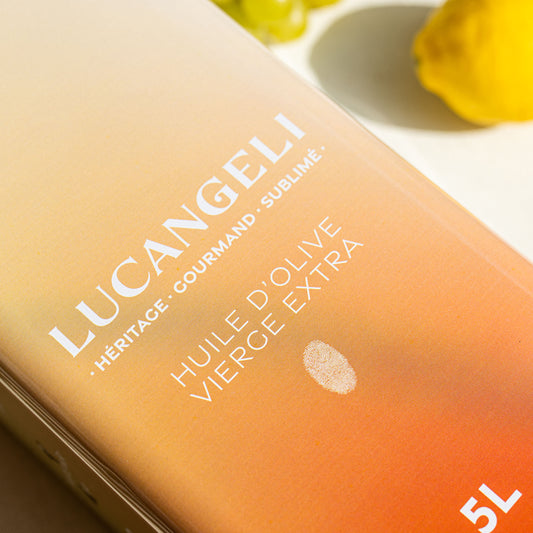
- 5-litre tin: ideal for daily cooking in a kitchen running at full speed. Economical and easy to store, it prevents running out mid-service and lowers supply costs. Use it within two to three months of opening. The organic 5-litre tin is the best solution for cooking in a high-volume restaurant.
- 2.5-litre jeroboam: an intermediate format, suited to restaurants with moderate volume or kitchens that use the same oil for both cooking and finishing. The organic extra virgin olive oil jeroboam also works well on display in the dining room, with a strong visual presence.
- 500 ml bottle: the finishing and table format. With fast turnover during service, it keeps the product fresh and makes presentation easy. The 500 ml discovery duo gives you two profiles — green fruity and ripe fruity — so you can match the finish to the dish.
- 200 ml bottle: the table format par excellence, suited to guided tastings, an oil menu or room service. Best kept for establishments that showcase oil as part of the guest experience.
Oxidation, rotation and waste: the real hidden cost factors
Real food cost isn't just the purchase price divided by the number of portions. It also includes losses from poor stock management: oil that has oxidised because the bottle stayed open too long, oil left exposed to light on a worktop, a tin stored near a heat source.
Oil that goes rancid before it's used is a direct cost — and a risk during service. The basic rules to avoid it:
- Store away from light and heat, ideally between 14 and 18 °C.
- Never leave a bottle open for more than three weeks in service.
- Match the size to your consumption: a small restaurant has no reason to open a 5 L tin if it uses less than two litres a month.
- Choose tinted glass bottles, or food-grade aluminium tins for cooking oil, which limit photo-oxidation.
- Use bottles in the order they were opened, never based on which label looks best.
To put these practices in place in your restaurant and get support on formats and restocking frequency, the professionals area lets you contact our sales team directly.
---
Adding value to your investment: turning food cost into a selling point
This is where the logic shifts. A quality olive oil isn't just a cost to optimise: it's a lever for perceived value, as long as you make it visible.
Showcasing the oil on the plate and in the dining room

When the finishing oil is poured in front of the guest, when the server can name the olive variety used — a Carolea harvested in Calabria, co-milled with the olive at the moment of extraction — or mention that the oil comes from this autumn's harvest, the way the dish is perceived changes. It's no longer an anonymous oil: it's an identified, traceable ingredient that becomes part of the dish's story.
This kind of showcasing costs nothing extra. It adds value to an investment you've already made. And it justifies, in the guest's eyes, a dish price slightly above the competition's.
Building a signature dish around new-season oil
In October, the harvest is under way. It's the only time of year when you can offer your guests a dish or a pairing built around new-season oil — a fresh, grassy oil with notes of artichoke and tomato leaf, not yet oxidised. It's a strong seasonal selling point, just like Beaujolais nouveau or the first truffle.
A signature dish built around this moment — a bruschetta with new-season oil, an octopus carpaccio finished with harvest oil — creates a sense of rarity and a reason to come back. Your supply needs to be ready before the season opens: the professionals area lets you plan your orders ahead and secure a spot in the first deliveries.
The personalised bottle as a loyalty tool
For restaurants that want to take the experience further, the personalised olive oil bottle with your logo or restaurant name is a format that turns table oil into a branded object. Guests take photos, share them and remember. The cost of personalisation is marginal compared with the perceived value it creates — and it starts from 24 bottles, a threshold within reach of any mid-sized restaurant.
---
Frequently asked questions
What size of olive oil should a mid-volume restaurant kitchen choose?
For a kitchen that uses between three and eight litres of oil a week, the most efficient combination is a 5-litre tin for cooking and 500 ml bottles for finishing and the table. This split avoids losses from oxidation and lets you keep two distinct quality levels without complicating your supply.
How much does a portion of quality finishing oil cost?
With an organic extra virgin olive oil bought in a suitable professional format, an 8 ml finishing dose costs between €0.05 and €0.12 depending on the range you choose. That's a very small investment compared with the perceived value it creates on the plate, especially when the oil is identified and named in the dining room.
How do you justify buying a premium olive oil to your management or business partner?
The right argument isn't the price per bottle, but the cost per portion compared with the value it adds to the dish. An identified finishing oil, from a named variety and a dated harvest, helps you stand out on the menu, build loyalty among quality-conscious guests and justify a slightly higher average spend. The return on investment rarely lies in the product itself: it lies in the experience that product helps you build.




 lucangeli.it