

What is olive oil decanting?
Decanting refers to a natural or assisted stage in olive oil production. After extraction, the oil still contains micro-particles of olive and a little vegetation water. Letting the oil rest in large stainless steel or stoneware tanks allows these residues to settle slowly at the bottom, giving a clearer, more stable oil. This method, chosen by many Italian producers, aims to preserve the oil's aromas and clarity as well as possible.
To go further into production techniques, explore the page dedicated to foodservice professionals.
Why is decanting important for quality?

Preserving freshness and aromas
A well-decanted oil retains fewer particles and less water, which limits the risk of fermentation and rancidity. This keeps the fruity notes, whether green or ripe, for longer depending on the variety used. For example, a lemon-pressed olive oil, obtained by co-milling olives with fresh lemons, also benefits from this stage to preserve its liveliness.
Discover the lemon olive oil, a perfect example of an aromatic oil made with this technique.
Limiting sediment in the bottle
Even after decanting, a light sediment may appear in unfiltered bottles. This sediment is natural, does not affect quality and signals an oil that has been handled very little. For enthusiasts, it is a mark of authenticity.
To better understand the difference between filtration and decanting, read our article on olive oil filtration.
How do you store decanted olive oil at home?
Best practices
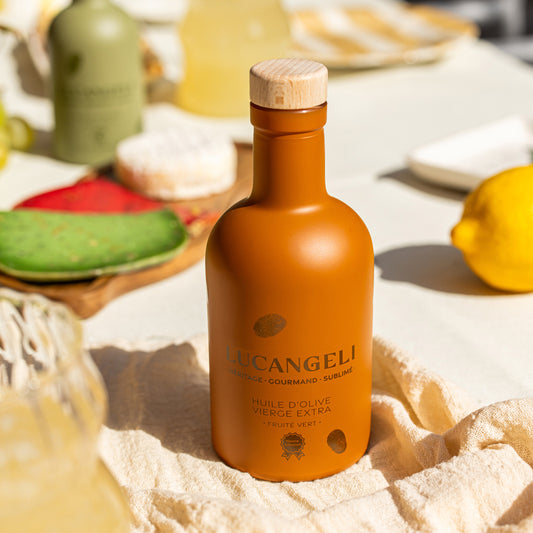
- Keep your bottle away from light and heat.
- Close it carefully after each use.
- Use a drip-free pourer to limit oxidation.
- Choose dark or metal containers for better preservation.
Find our advice on packaging and choosing the right container.
Shelf life
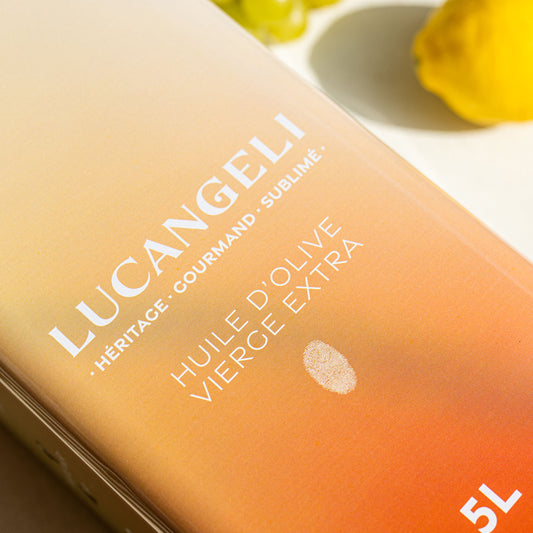
A decanted olive oil, properly stored, generally keeps for 12 to 18 months after extraction. Always check the best-before date on the label, and feel free to vary the pleasure by building your own oil cellar. For large families or enthusiasts, the 5 L tin is a practical option.
Frequently asked questions
How can I tell whether my olive oil has been decanted?
It is not always stated on the label, but an unfiltered oil that is slightly cloudy or has sediment has often been decanted. Ask the producer for details.
Decanting or filtration: which should you choose?
Decanting respects texture and aroma best. Filtration gives a clearer oil that stays stable over time. The choice depends on how you use it.
Does decanting change the taste of the oil?

It preserves the purity of the flavours without altering the oil's aromatic profile. It highlights the terroir and the variety, as with lemon-pressed oils.




 lucangeli.it