

What happens inside olives after picking
As soon as an olive is detached from the tree, an enzymatic process kicks in. The fruit's cells, cut off from their vital flow, start releasing enzymes that break down fatty acids. If the olives are piled up in crates, the heat generated by their own mass speeds up this degradation. The more time passes, the higher the free acidity of the potential oil climbs.
This mechanism is not an abstract theory. In Calabria, the most rigorous mills require milling within 24 hours of picking the local varieties — Carolea, Roggianella, Tondina — to preserve the volatile aromatic compounds that give the oil its grassy notes and its light pungency. Beyond 48 hours, the fermentation of piled-up olives can trigger a measurable rise in free acidity, sometimes enough to tip an oil from "extra virgin" status down to "virgin" status.
The threshold that changes everything: 0.8% free acidity
European regulations set 0.8% as the maximum free acidity level for an oil to be classified as extra virgin. That figure may sound abstract, but its consequence is concrete: an oil harvested too ripe or milled too late can no longer claim the title, whatever the qualities of the olive it came from.
A short delay between harvest and mill is therefore the first guarantee of low acidity and an intact aromatic profile. That is why serious producers organise their logistics around this single imperative: cutting the olives' waiting time down as far as possible.
Why small batches of olives fare better
Large estates that harvest mechanically across several hundred hectares struggle to guarantee a short delay. The quantity of olives to process often exceeds the capacity of the local mill. The olives wait — sometimes several days — before being pressed.
Small producers who work in single batches, harvest by hand and take their pickings to the mill the same day offer a guarantee that industrial volumes cannot keep. That is one of the reasons hand-picking remains associated with superior quality: it allows the control over timing that large-scale mechanisation makes difficult.
What you should look at (and what the label does not always say)
The harvest date is the most useful piece of information. It lets you work out how old the oil in the bottle is and deduce the production season. The best-before date, often the only one visible on the label, is calculated from bottling — not from the harvest. It can hide several months of intermediate storage.
Some producers state the milling date itself, proof of full traceability. When that information is missing, a few clues help you assess the quality of the process:
- A batch number that can be traced back with the producer.
- A precise harvest date (month and year, not just the year).
- An indication of cold extraction, which implies a mill equipped to work fast and at a controlled temperature.
- A producer who names the varieties and the region: the more precise the information, the more carefully the traceability chain is handled.
What it changes in the glass
An olive milled quickly after harvest gives an oil with clean, complex aromas: cut grass, artichoke, fresh almond, peppery notes at the back of the throat. This is the so-called "green fruity" profile, typical of oils made from olives picked before full ripeness and processed without delay.

An olive that has waited develops rounder notes, sometimes buttery or ripe fruit, with softened pungency and higher acidity. That is not necessarily a flaw — some enthusiasts and some culinary preparations prefer this profile — but it is the result of a different process, and you should know what you are buying.
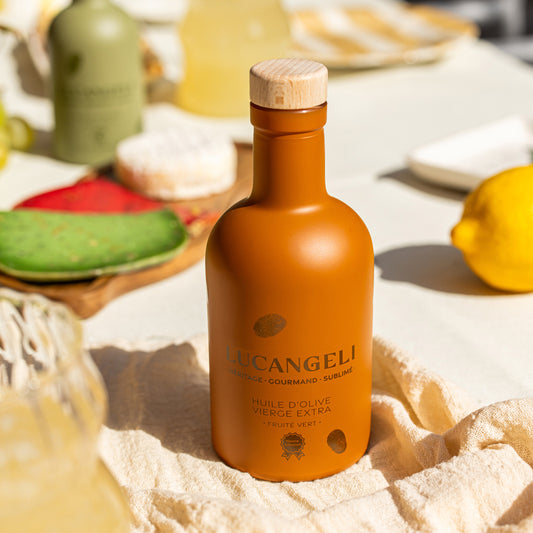
If you like lively oils with character, go for an organic green fruity from early harvests. If you prefer softer, more enveloping oils to finish a slow-cooked dish or dress cold meat, an organic ripe fruity suits that use better.
The questions to ask before buying
At what point in the harvest was the oil extracted?
The first weeks of harvest (October in Calabria, sometimes September in certain higher-altitude areas) give the most aromatic and least acidic oils. The further the season goes, the riper the olives and the more the oil's profile shifts. Some producers offer an early-season batch and an end-of-season batch with very different characters.
Does the packaging protect the oil from light?
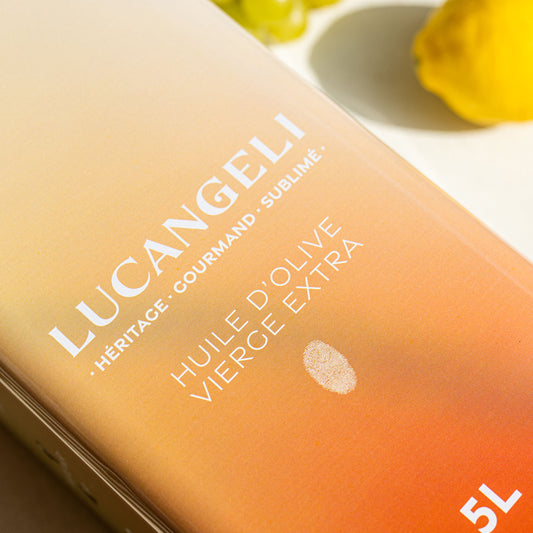
The delay before milling is the first quality factor, but storage after extraction counts just as much. A quality oil kept in a clear bottle exposed to light degrades faster than a lesser oil stored properly. A dark bottle, an opaque tin and storage away from heat extend the optimal tasting window. For regular family use, the 5-litre tin offers a good balance between protection, practicality and packaging savings.
Is the large format right for my use?
The temptation of the large format is real, but an opened oil oxidises as it is used. For a two-person household, a 200 ml format often makes more sense than an open litre that will age badly. For large families or sustained daily use, litre or jeroboam formats make sense provided you finish them within six to eight weeks of opening.
---
Summary table: delay and impact on quality
---
Frequently asked questions
Can an olive oil lose extra virgin status after harvest, before it is even pressed?
Yes. If the olives stay piled up too long before milling, heat and enzymes push the free acidity up. If it goes above 0.8%, the oil can no longer be sold as extra virgin, however carefully it was picked.
How can you tell whether a producer mills their olives quickly?
The first clue is a precise harvest date on the label or on the producer's site. The second is the possibility of traceability by batch number. Some producers state directly "milled within 24 hours". Failing that, just ask: a good producer always answers that question.
Does green fruity mean the oil is better?
Not necessarily better — but different. An intense green fruity is the sign of olives picked early and milled quickly, with a high concentration of aromatic compounds. A ripe fruity comes from olives further along in their ripening, with a rounder profile. Both can be of excellent quality; what matters is that the producer masters the process from start to finish. You can compare the two profiles with a discovery duo and work out which one fits your uses.
---
For hospitality professionals who want to add oils with full traceability and verifiable harvest information to their menu, the section dedicated to cafés, hotels and restaurants gives access to the formats and terms suited to front-of-house or kitchen use.




 lucangeli.it