


Why new-harvest oil deserves its own place on your autumn menu
New-harvest olive oil isn't just a "fresh" oil. Its aromatic profile is fundamentally different from the one you use in January or March. The volatile compounds haven't had time to fade yet: the grassy notes are intense, bitterness and pungency are pronounced, and the colour leans towards deep green. That intensity is exactly what some of your guests are looking for — and what your competitors don't offer yet.
In Calabria, the harvest usually starts between 10 and 25 October, depending on the altitude of the groves and the year's weather. The olives are milled within hours of picking, which keeps the aromas intact. The first oils of the 2026 harvest reach professional channels in November. That's a short window: it means you need to plan ahead carefully.
In your establishment, new oil can play several roles. It works as a finishing oil — a drizzle over a carpaccio, pan-fried root vegetables, a pulse soup — where it brings an aromatic presence that cooking oil simply can't reproduce. It can also appear on your oil menu as an identified seasonal product, with the harvest date shown to your guests. That's the approach several fine-dining restaurants have taken over the past few seasons.
Visit the dedicated professional area to find the ordering terms that suit your establishment.
Formats and volumes available for professional foodservice

Managing your olive oil supply isn't the same whether you run a 40-cover fine-dining restaurant or a 200-cover brasserie. The available formats cover all of these needs.
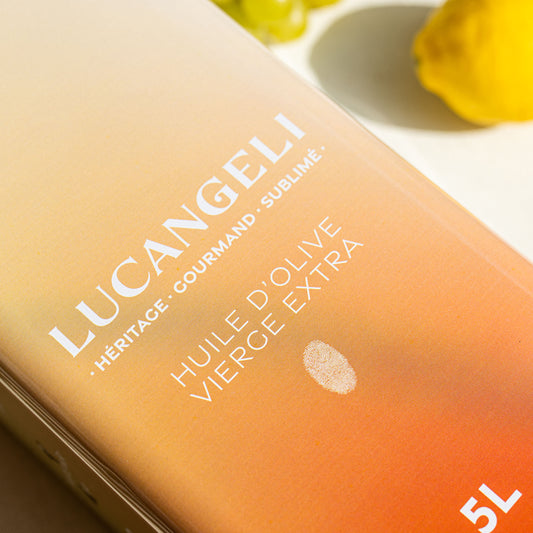
The 5-litre tin
This is the go-to format for production kitchens. It limits stock-outs, reduces handling and makes portioning easier for the brigade. It's especially suited to establishments using more than 3 litres of finishing oil a month. The 5-litre tin of organic olive oil lets you standardise your purchases over several weeks without placing order after order.
The 2.5-litre jeroboam
The jeroboam of organic extra virgin olive oil is the in-between format, especially suited to establishments that want to showcase the bottle in the dining room — on the service trolley, on the table, or presented during service. Its unusual size catches the eye and starts a conversation between the guest and the front-of-house team.
The 1-litre bottle
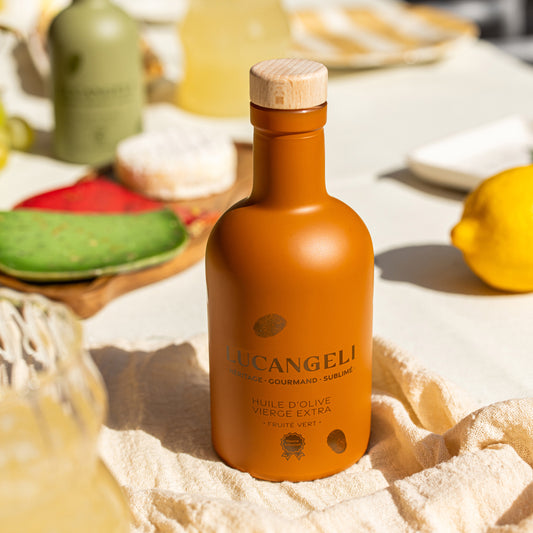
For fine-dining restaurants that change oil with the seasons or with the chef's creations, the limited-edition 1-litre bottle of ripe fruity olive oil gives you the flexibility to test an aromatic profile before committing to a larger volume.
Combining production oil and finishing oil
An effective strategy is to split your purchasing into two separate lines:
- A base oil, in tins, for cooking, marinades and basic preparations.
- A new-harvest finishing oil, in bottles, for plating and dining-room service.
This split lets you control food cost on volume while keeping the quality your guests can actually taste on the plate.
Order ahead so you don't run out

The main pitfall when sourcing new oil is ordering too late. The first batches of the harvest are limited in volume and go quickly to the establishments that planned ahead.
The timeline to follow
Here are the steps to put in your planning calendar from October to November:
- First half of October: review your current stock and estimate your consumption for the next six weeks.
- Third week of October: place your order with your supplier to get priority on the first batches.
- Early November: receive and check the delivery, then add it to your menu or seasonal menu.
- Late November: restock if consumption is faster than expected, before the year-end orders that tie up logistics capacity.
For orders in 5-litre tins or jeroboams, preparation and shipping take three to five working days. An order placed in the third week of October will arrive before the end of the month, so you can add the new oil to your November menu right from the start of the season.
Stock rotation in the dining room and kitchen
New oil is more sensitive to oxidation than oils that have aged a few months: its aromas are intense precisely because the compounds haven't had time to settle. That calls for careful management:
- Keep your reserve away from light and heat, at a temperature between 14 and 18 °C.
- Only keep in the open kitchen what will be used within the week.
- In the dining room, carafes or service bottles shouldn't stay out for more than one service.
If you're setting up an olive oil service in your dining room, the personalisation page also lets you consider a screen-printed bottle in your establishment's colours — an approach several hotels and restaurants use to strengthen their table identity.
Frequently asked questions
What's the difference between new olive oil and regular olive oil for a restaurant?
New oil is made from olives of the current harvest, pressed within days of picking. It has a more intense aromatic profile, with marked grassy and fruity notes, and more pronounced bitterness and pungency on the finish. These characteristics fade naturally over the months. In restaurants, it's mainly used for finishing on the plate or for dining-room service, where guests notice its qualities directly.
When are the first oils of the 2026 harvest available to professionals?
In Calabria, olive milling usually starts between mid-October and early November depending on the area. The first deliveries to professionals arrive in November. To be among the first served, it's best to order from the third week of October. Get in touch through the professional area to confirm availability and lead times for your establishment.
Is it better to order 5-litre tins or bottles for restaurant use?
It depends on the use. The 5-litre tin suits production kitchens — cooking, marinades, preparations — where volume comes first. Bottles, especially the 2.5-litre jeroboam, are better suited to dining-room service and presentation to guests. Most establishments combine both formats depending on where the oil is used.




 lucangeli.it