

New harvest olive oil arrives in the dining room every autumn, between October and December, and most restaurants do nothing more with it than swap one reference for another. Yet this changeover is one of the few seasonal food events you can actually stage at the table, with the right words, gestures and objects, to create a guest experience your diners will remember.
New harvest oil: a dining room event, not just a product

What changes from one harvest to the next
New harvest olive oil is not simply a fresh oil. Its aromatic profile shifts week by week over the first eight to twelve weeks after milling. Early in the season, around October, oils from varieties picked green — such as Carolea, the dominant Calabrian variety in quality blends — show a pronounced pungency at the back of the throat, a clean bitterness and aromas of raw artichoke, fresh grass and sometimes green tomato. That profile gradually softens: by December, the same olives, picked at a more advanced ripeness, give rounder oils with notes of ripe fruit and sweet almond.
This is not a producer's anecdote. It is information your guests don't have, that your floor team can pass on in a single sentence, and that turns a bottle of oil into a conversation.
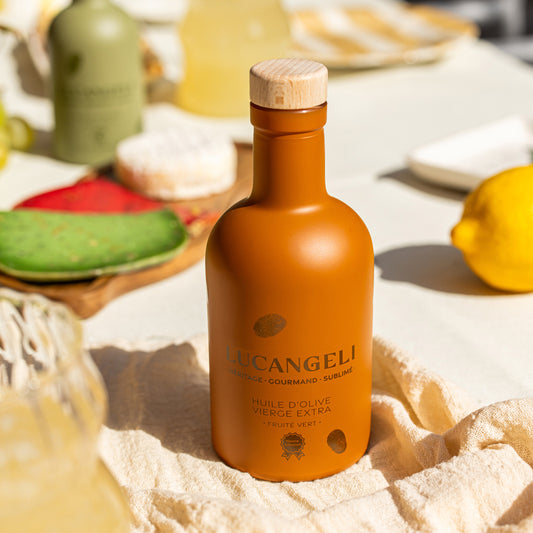
To offer this kind of experience, start by selecting two complementary references: an organic green fruity olive oil for guests who like lively, herbaceous profiles, and a limited edition ripe fruity olive oil for those who prefer softness and roundness. Serving both side by side early in the season lets you tailor the recommendation to the dish and to the guest.
Why autumn is the ideal season to build this ritual
In October and November, your guests are looking for new flavours after the summer. The olive harvest is a natural, verifiable event, anchored in a precise agricultural calendar, which gives it a legitimacy that promotional pushes don't have. In Calabria, harvesting generally starts between mid-October and early November depending on altitude and variety. The new oil it produces can be bottled and delivered within two to four weeks, which means you can put it on the table as early as November.
This seasonality is comparable to what Beaujolais nouveau represents on a wine list: an arrival that is announced, awaited, talked about. The difference is that new harvest oil enjoys no tradition of collective promotion in French restaurants. That is precisely why you can get ahead here.
For volume, the 2.5-litre large format suits simultaneous kitchen and service use, limiting the number of bottles to handle and reducing oxidation through frequent rotation.
Objects and service: how to showcase new harvest oil at the table
Choosing the right vessel for service
The quality of a new harvest oil doesn't show on a plastic bottle and isn't perceived in an industrial oil cruet. The vessel you put on the table sends a signal before the guest even brings the oil to their mouth.
Here are the criteria to respect:
- Dark glass or stainless steel, to limit exposure to the light that degrades aromas within a few hours
- A volume matched to service rotation: a 100 to 200 ml capacity ensures the oil is renewed frequently and doesn't sit
- A non-drip pourer, for clean, controlled service, with no marks on the tablecloth or the plate
- A label or presentation slate, stating at minimum the origin, the variety and the harvest date
The act of filling is itself a moment of service: a waiter who opens the bottle in front of the guest, briefly comments on the harvest under way and offers a tasting on bread before the meal creates a human contact the menu alone cannot.
Building new harvest oil into your mise en place
Olive oil should not turn up at the end of the meal, set down on the table like a forgotten condiment. Here is how to bring it in from the welcome onwards:
- Serve quality bread with a tasting of new harvest oil as soon as the guest is seated, before the order is even taken
- Introduce the oil out loud: origin, variety, harvest date, profile of the moment (pungent and herbaceous in October, rounder in December)
- Offer two options — green fruity and ripe fruity — and let the guest choose according to their own taste
- Keep the bottle visible on the table throughout the meal, rather than putting it away after the appetiser
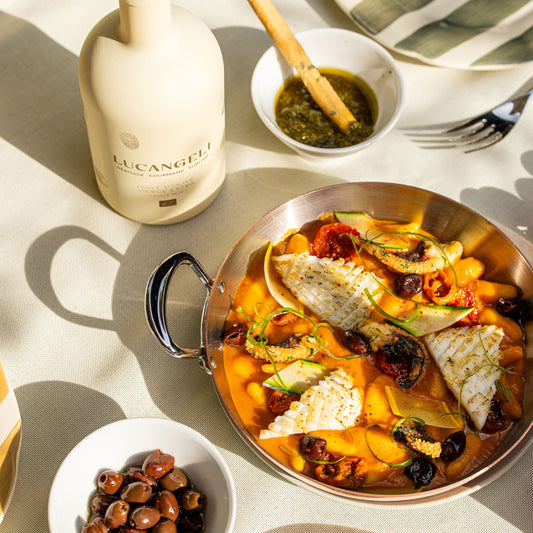
- Suggest using it as a finishing oil on hot dishes, particularly seasonal vegetables and white meats, and train the team to mention it during service
This protocol calls for no heavy investment in equipment. It calls for a decision and for training the team, which is two to three hours of work upstream.
The menu and pricing
New harvest oil can be presented as a seasonal reference on your menu. It justifies premium positioning, provided the service lives up to it. A few principles:
- Don't list it with a price per litre: offer it as a tasting experience, included in the meal or charged per portion of bread
- Avoid generic wording such as “extra virgin olive oil”: state the variety, the origin and the harvest year
- Refresh the mention on the menu every month: “new harvest oil from Calabria, October 2026 harvest” in November, then “November harvest, ripe profile” in December
The dedicated space for professionals gives you access to the formats and terms suited to your establishment, with support in selecting according to your menu and your service volume.
Training the team and creating the ritual: words and gestures
What your floor team needs to know how to say
Staging new harvest oil rests almost entirely on what the waiter says. Here are the essentials to pass on in a thirty-minute team briefing:
- The difference between a new harvest oil and a stock oil: the milling date, the evolving profile, the aromatic freshness
- Accessible tasting vocabulary: pungency (the sensation in the throat), bitterness (along the sides of the tongue), green fruity (grass, artichoke, green tomato), ripe fruity (almond, butter, ripe fruit)
- Two set phrases to introduce the oil: “Our olive oil has just arrived from Calabria, it was harvested three weeks ago, the profile is very lively right now — this is the oil you only find in autumn” or “We've just received the 2026 harvest, now is the time to taste it before it rounds out”
- What to avoid: vague superlatives, nutritional promises, advertising language
This training work is also a way to raise the skill level of your floor team. A waiter who talks about olive oil with precision is talking about gastronomy, not groceries.
Creating a repeatable service routine
A ritual only works if it is repeatable from one service to the next, from one waiter to the next. Here is how to structure it:
- Appoint an oil lead for each service, responsible for checking the level in the cruets, the opening date of the bottles and the quality of the oil before every rush
- Set a maximum shelf life once the bottle is open: seven days in a cruet kept out in the dining room, closed between services
- Write the opening date and the use-by date on the bottle
- Build new harvest oil into the spec sheets for your appetisers and seasonal starters
To consider a bottle in your own name or screen-printed in your colours for the table, the customisation configurator lets you create your design from 24 bottles. It's a relevant option for establishments that want oil on the table to be part of their visual identity, particularly as end-of-year dinners approach.
Finally, if you'd like to offer your guests something to take away, the olive oil discovery trio in a terracotta box is a new reference available in retail format, ideal for a counter sale or a guest gift at the end of the meal.
Frequently asked questions
From when is new harvest oil available to establishments?
The Calabrian harvest starts between mid-October and early November depending on variety and altitude. After milling and bottling, the first deliveries to professionals are generally available in November. Place your order from mid-October onwards to secure availability in time for your autumn menu.
Does new harvest oil keep less well than a standard oil?
No: the best-before date is still set at eighteen to twenty-four months from milling, depending on the producer. Its aromatic profile does evolve faster in the first few weeks, however, which is exactly what makes it interesting to serve in season. Once open, a bottle used in dining room service should be finished within seven days to preserve quality.
How can I distinguish new harvest oil on the menu without adding references?
A single mention at the bottom of the menu, updated each month, is enough: origin, variety, harvest date, profile of the moment. Two references at most — one green fruity, one ripe fruity — cover every table use without complicating management. Spoken service fills in what the menu alone cannot convey.




 lucangeli.it