


The winter season transforms our relationship with vegetarian cuisine. Far from summer salads, winter invites us to rediscover the art of enhancing seasonal vegetables. In this quest for authentic flavors, olive oil becomes the precious ally that reveals the unsuspected richness of squash, cabbages, and other treasures from our winter gardens.
The art of revealing the hidden flavors of winter vegetables

Winter unfurls a palette of vegetables with strong characters: the velvety sweetness of squash, the noble bitterness of cabbages, the generous earthiness of root vegetables. These vegetables, often perceived as rustic, actually contain an aromatic complexity that only needs to be revealed by skillful seasoning.
When olive oil transforms the ordinary into extraordinary
Olive oil has this unique ability to magnify natural flavors without masking them. A simple drizzle of organic green fruity olive oil on roasted vegetables instantly transforms their taste perception. The herbaceous notes and characteristic freshness of this oil bring a liveliness that harmoniously contrasts with the caramelized sweetness of cooked vegetables.
The secrets of Mediterranean seasoning
Mediterranean tradition teaches that olive oil is not just a fat: it is a true condiment. The organic ripe fruity olive oil reveals deeper aromas, with notes of almond and dried fruits, which pair perfectly with slow-cooked winter vegetables. This aromatic richness transforms a simple vegetable soup into a memorable culinary experience.
Authentic olive oils: keystones of vegetarian cuisine

In the sunny hills of Calabria, the Lucangeli family has perpetuated the art of traditional olive growing for generations. This region of southern Italy, bathed in Mediterranean light, offers an exceptional terroir where olive oils with distinct personalities are born.
Green fruity oil: freshness and liveliness
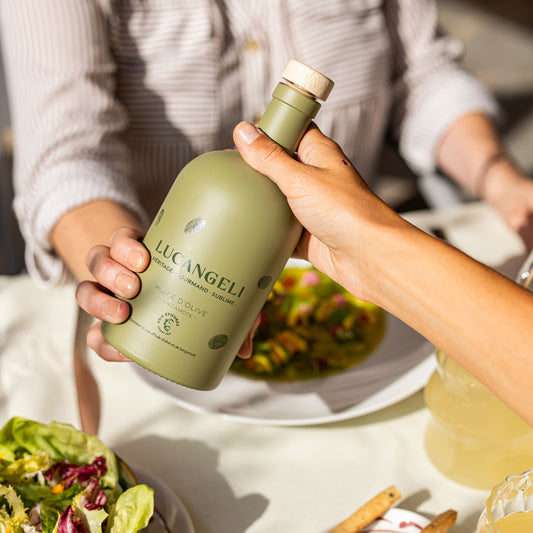
Harvested before full ripeness, the olives destined for green fruity oil retain all their youthful vigor. This oil is distinguished by its pronounced herbaceous notes and its slight pungency at the finish. It excels in seasoning raw or steamed vegetables, bringing that precious freshness to winter dishes. The olive oil trio allows you to discover this variety alongside its counterparts.
Ripe fruity oil: roundness and depth
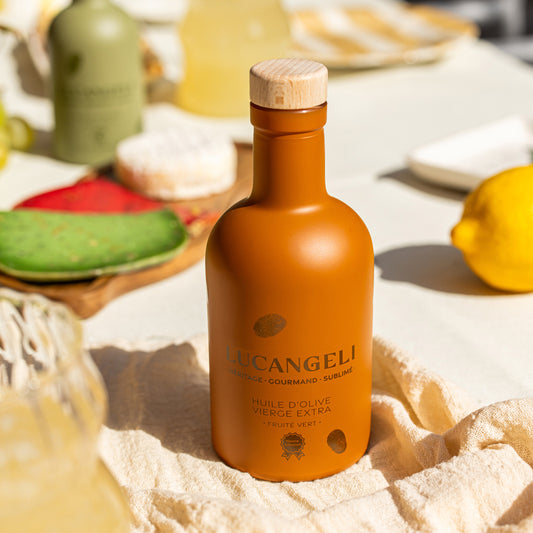
Ripe fruity oil is made from olives harvested at perfect ripeness. Its golden color and more complex aromas make it the ideal accompaniment for slow-cooked preparations. It coats vegetables with a silky creaminess that reveals their character without altering it. This oil finds its place in gratins, velvety soups, and confit vegetables.
Bergamot oil: Calabrian elegance
Bergamot, this small citrus fruit emblematic of Calabria, brings a unique olfactory dimension to olive oil. Bergamot olive oil marries the roundness of the olive with the subtle citrus notes of bergamot. This original creation particularly enhances grilled vegetables and winter salads, bringing an unexpected freshness that awakens the taste buds.
Composing a symphony of vegetarian flavors
Winter vegetarian cuisine finds its conductor in authentic olive oil. Each variety brings its part to the composition of a balanced and flavorful meal.
The harmony of textures and aromas
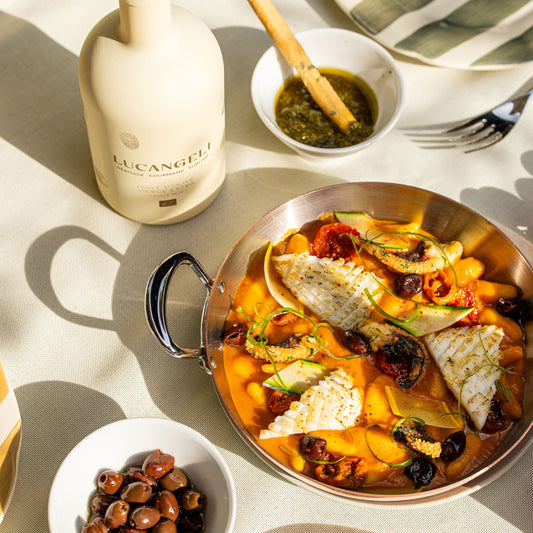
The art of winter vegetarian cuisine lies in the balance of textures and the complementarity of flavors. Black olive tapenade adds an umami dimension that enriches plant-based preparations. Spread on croutons accompanying a vegetable soup, it creates a contrast of textures and remarkable depth of flavor.
Perfect pairings for winter
Winter vegetables naturally pair with Mediterranean flavors. DOP basil pesto transforms a simple squash gratin into a refined dish. Its herbaceous notes and aromatic richness create a bridge between winter rusticity and Mediterranean elegance. A few spoonfuls are enough to transform a root vegetable purée into a gastronomic delight.
Vegetarian winter thus takes on a new dimension thanks to authentic olive oil. These Calabrian nectars reveal the hidden nobility of seasonal vegetables, transforming each meal into a sensory journey to the heart of the Mediterranean. Italian culinary art teaches us that simplicity, enhanced by exceptional products, often reaches the pinnacles of gastronomy.




 lucangeli.it