

The chestnut in Italy: a fruit rooted in the autumn landscape
In Italy, the *castagna* is harvested between mid-September and the end of November, depending on altitude and region. The mountainous areas of the Mezzogiorno, particularly Calabria and Campania, are among the oldest chestnut-growing territories on the peninsula. In Calabria, the towns of Soriano Calabro, Serra San Bruno and Mongiana have kept up a harvest tradition since the Middle Ages, one that leads every autumn to *sagre* — village festivals — devoted to this fruit.
The chestnut long played a strategic role in feeding the rural populations of the South. Flour, soup, chestnuts roasted over a wood fire: for centuries, the *castagna* made up for the scarcity of wheat in high-altitude areas. Today it has become a prized local product, one that contemporary kitchens are putting back at the centre of the autumn table. To go further with the Calabrian products worth discovering this season, take a look at the professionals area.
The Italian varieties worth knowing
Not all chestnuts are alike. In Italy, several varieties are recognised under protected geographical labels:
- Castagna di Montella IGP (Campania): small, very sweet, with a thin skin. It works just as well roasted as in confectionery.
- Marrone di Castel del Rio IGP (Emilia-Romagna): larger, with firm flesh and little internal division, ideal for marrons glacés.
- Castagna del Monte Amiata IGP (Tuscany): harvested on the slopes of Monte Amiata, known for its low tannin content and natural sweetness.
- Farina di Neccio della Garfagnana DOP (Tuscany): flour made from a local chestnut, dried and milled, the base of *castagnaccio*, the region's emblematic cake.
- Marroni della Calabria: not yet protected by a single IGP label but recognised for their rustic, slightly more tannic character, which stands up very well to long cooking.
Knowing these differences helps you choose according to use: Calabrian chestnuts are perfect for soups and purées, while Castel del Rio marroni are the obvious choice for sweet preparations where holding up to cooking is essential.
---
The *Sagra della Castagna*: when the village celebrates the harvest

In Calabria as throughout central and southern Italy, the autumn *sagre* built around the chestnut are community events you cannot miss. In Soriano Calabro, the festival usually takes place in October and brings together local producers, artisans and cooks around stalls where the chestnut appears in every form: roasted in the *caldarrosta* (a perforated pan set on embers), boiled with wild fennel — the method known as *a ballotta* — or turned into *necci* (chestnut flour pancakes).
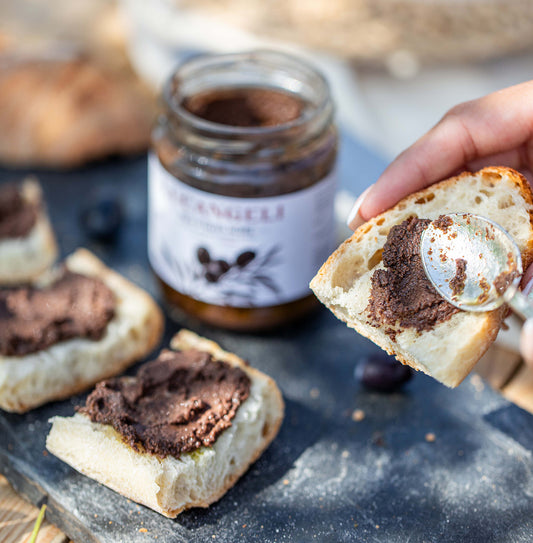
These festivals are not simple markets. They carry on gestures handed down from one generation to the next: picking by hand in the chestnut groves, drying on wooden racks, and milling at the stone mill. For autumn cooking rooted in these traditions, pitted black olives in olive oil make a natural addition to a seasonal aperitivo board.
*Castagnaccio*: the Tuscan recipe that travels across regions
*Castagnaccio* is the best-known example of chestnut flour in Italian cooking. Made with chestnut flour, water, extra virgin olive oil, pine nuts, walnuts and fresh rosemary, it is baked in a shallow tin. The texture is dense, slightly moist, and the taste sits somewhere between natural sweetness and a vegetal bitterness.
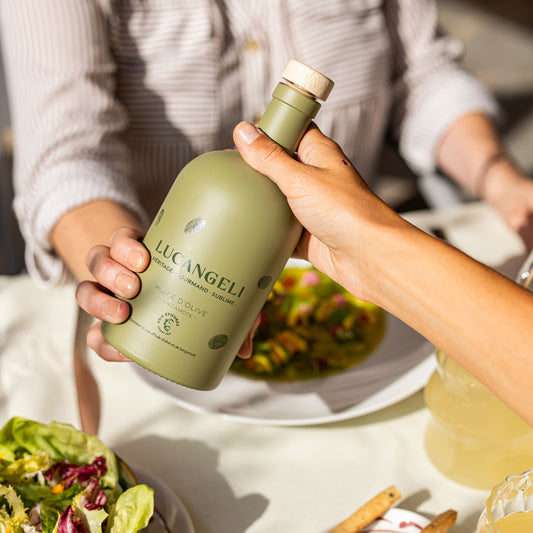
Getting it right depends largely on the choice of olive oil: an organic green fruity olive oil brings a herbaceous note that contrasts with the sweetness of the chestnut flour, while a ripe fruity oil offers a rounder, less sharp result. The oil goes into the mixture before baking, then is drizzled over the surface as the cake goes into the oven to help form a crisp crust.
Calabrian-style chestnut soup
In Calabria, the chestnut often goes into autumn soups with pulses: lentils, cannellini beans or chickpeas join rehydrated dried chestnuts, all simmered in a vegetable broth scented with bay leaf and dried chilli. To finish, a drizzle of organic garlic and chilli olive oil — obtained by crushing the fresh ingredient together with the olives at the moment of extraction, not by adding flavouring — lifts the whole dish and recalls the flavours of the Calabrian hinterland.
---
Flavour pairings: the chestnut off the beaten track

The chestnut is not limited to traditional recipes. Its aromatic richness — sweet, earthy, slightly bitter — makes it an excellent base for contemporary pairings, savoury as well as sweet.
Chestnut with balsamic vinegar
The natural sweetness of the chestnut goes remarkably well with the gentle acidity of a well-balanced balsamic vinegar. A few drops of Gold collection PGI balsamic vinegar of Modena poured over warm roasted chestnuts or over a chestnut purée bring an unexpected aromatic depth. The same pairing works beautifully on a bruschetta topped with crushed chestnuts and aged sheep's cheese.
For a more original pairing, red onion PGI balsamic vinegar — Épicures 2025 medal — brings a candied, slightly sharp note that contrasts with the soft texture of chestnuts cooked *a ballotta*.
Chestnut with sweet spreads
The chestnut and chocolate pairing is a classic. Cocoa and Piedmont hazelnut spread goes straight onto slices of chestnut flour bread for a remarkably rich autumn snack or brunch. More surprising: pistachio spread accompanies roasted chestnuts with a green freshness that cuts through their woody side. It is a pairing you find in certain pastry shops in southern Italy, where pistachio and chestnut sit together in autumn desserts.
Chestnuts in the seasonal gift box
In autumn, the chestnut can serve as a common thread for putting together a gourmet gift box: artisan chestnut flour bread, finishing olive oil, nut spread. The gourmet box with olive oil and pistachio and cocoa hazelnut spreads fits this use naturally, with products that match the flavours of the season directly.
---
Frequently asked questions about the Italian chestnut
What is the difference between a chestnut and a marrone?
The distinction is both botanical and culinary. A marrone is a selected chestnut whose fruit is not divided inside — a single kernel per burr — and whose flesh stays firm when cooked. Most Calabrian *castagne* are technically multi-lobed chestnuts, more rustic and less regular than Castel del Rio marroni or Piedmontese marrons glacés. In practice, the word marron is often used in French cooking for both, but in Italy a clear distinction is made between the *castagna* (the common chestnut) and the *marrone* (the selected variety).
How do you keep fresh chestnuts at home?
Fresh chestnuts keep badly at room temperature: three to five days at most. The traditional Calabrian method is to soak them in cold water for eight to nine days, changing the water every day — this is the *novena*, literally the nine days. Soaking removes any parasites and extends keeping time to two or three weeks in the fridge. You can also freeze them after a quick pre-cooking.
Can you replace wheat flour with chestnut flour in recipes?
Not directly and not in equal parts. Chestnut flour contains no gluten, which changes the texture of what you make: leavened doughs do not work with pure chestnut flour. It does, however, blend in very well as a partial substitute — up to 30 % in a pancake batter, a soft cake or flatbreads. For an authentic *castagnaccio*, chestnut flour is used on its own, with no wheat flour added. 100 % Piedmont hazelnut butter can be worked into chestnut flour preparations by professionals wanting to reinforce the aromatic roundness of their autumn desserts.





 lucangeli.it