


What is the peroxide value and why does it matter?
The peroxide value of an extra virgin olive oil must be less than or equal to 20 meq O2/kg according to European regulations — but the best oils show less than 10. This figure measures the initial oxidation level of the oil at the time of bottling, and it says a lot about the harvesting, milling, and storage conditions.
Specifically, peroxides are compounds that form when the unsaturated fatty acids in oil come into contact with oxygen. This phenomenon, called auto-oxidation, is natural and inevitable — but it can be significantly slowed down or accelerated depending on how the oil was produced and stored. The lower the initial value, the more room the oil has before it degrades.
To choose a quality organic green fruity olive oil, the peroxide value is one of the three chemical parameters to look at first, along with free acidity and spectrophotometric extinction coefficients K232 and K270.
What European regulations say
European Regulation No. 2568/91 and its revisions set the following thresholds for extra virgin olive oils. For each parameter, the first figure is the regulatory threshold, the second is the level of excellence observed among the best producers:
- Free acidity: regulatory threshold ≤ 0.8%, excellence level < 0.3%
- Peroxide value: regulatory threshold ≤ 20 meq O2/kg, excellence level < 10 meq O2/kg
- K232: regulatory threshold ≤ 2.50, excellence level < 2.00
- K270: regulatory threshold ≤ 0.22, excellence level < 0.15
A peroxide value between 10 and 20 meq O2/kg is legally compliant, but it indicates an oil that has already begun its oxidation process. A fresh, well-produced oil generally ranges between 3 and 8 meq O2/kg.
What makes the peroxide value rise: the real causes

The delay between harvest and milling
This is the most critical factor. Every hour that passes between olive picking and milling increases the peroxide value. Olives are living fruits: once detached from the tree, they continue to breathe and oxidize. A 48-hour delay can increase the value from 5 to 15 meq O2/kg.
The Carolea variety, dominant in Calabria, naturally produces oils with very low peroxide values when harvested at the beginning of veraison and milled within 24 hours of picking. This is a real logistical constraint: small Calabrian mills work at night during the harvest to meet this deadline. This rigor is directly reflected in the analysis figures.
Storage conditions before and after bottling
Light, heat, and contact with air are the three enemies of olive oil. Storage in stainless steel tanks under a nitrogen atmosphere, at a controlled temperature between 14 and 18 °C, keeps the peroxide value stable for several months. Conversely, a poorly sealed tank or one exposed to temperature variations can raise the value by several units in a few weeks.
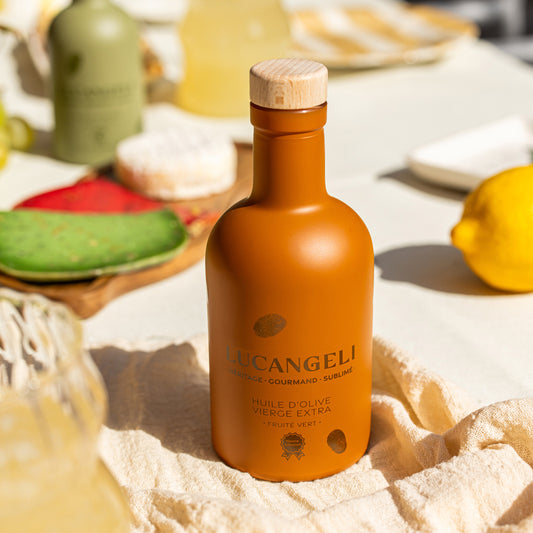
For an organic ripe fruity olive oil, a dark glass bottle plays the same protective role at home: it blocks ultraviolet rays that accelerate oxidation.
What happens once the bottle is opened
The peroxide value measured on the label or technical sheet corresponds to the oil at the time of bottling. Once you open the bottle, oxidation resumes. With each use, a small amount of air enters the bottle. This is why an opened bottle should be consumed within four to six weeks, stored away from light and heat, with the cap tightly closed.
How to read the peroxide value in practice

On the label or technical sheet
The peroxide value is not mandatory on the consumer label — only the mention "extra virgin" guarantees that it is less than 20 meq O2/kg at the time of bottling. To access precise figures, you need to consult the batch analysis sheet, which serious producers make available on request or on their website.
If you are buying in bulk for professional use, always ask for the technical sheet for the batch. The professionals section allows access to this information and to place orders accordingly.
What a good number actually means
A low peroxide value does not translate to a neutral taste — it's often the opposite. A fresh, little-oxidized oil fully expresses its aromas: cut grass, artichoke, fresh almond for a green fruity; ripe tomato, fig, black olive for a ripe fruity. Oxidation, on the other hand, brings rancid, cardboard, or old fat notes that mask these nuances.
To explore the difference between the two aromatic profiles, the organic olive oil trio allows you to compare them side by side with oils whose analysis sheets are available.
When the peroxide value is not enough
A low peroxide value is necessary but not sufficient. An oil can have a compliant peroxide value and still have organoleptic defects detected only by a sensory panel test. This is why European regulations require both: a chemical analysis and a sensory evaluation by an approved panel. Both criteria must be met for an oil to be classified as extra virgin.
If you are considering customizing bottles for an event or establishment, the customization page details the available formats and order conditions.
Frequently Asked Questions
Is the peroxide value visible on all olive oil bottles?
No. The mandatory information on the label is only the category (extra virgin, virgin, olive oil). The peroxide value appears in the batch analysis report, which you can request from the producer or distributor. Some producers publish it directly on their website or on the packaging.
Is an oil with a peroxide value of 18 meq O2/kg bad?
It is legally compliant with the extra virgin classification, but it has already begun its oxidation process. It will not keep as long and its aromas will be less intense than an oil at 5 meq O2/kg. For daily cooking use, it is acceptable. For tasting or a raw finish, prefer an oil with a value below 10.
How can you slow down the oxidation of an opened bottle at home?
Three simple rules: store the bottle in a closed cupboard, away from the stove and any heat source; re-seal it immediately after each use; consume it within four to six weeks of opening. A 200 ml bottle is ideal to avoid waste if you use little oil daily.




 lucangeli.it