

Extra virgin, virgin, refined: what are the differences?
Extra virgin category, the highest quality level
Not all olive oils are created equal. European regulations distinguish several categories according to the extraction method and acidity level. Extra virgin olive oil is the highest category: it is obtained solely by mechanical processes, without chemical treatment, and has an acidity level below 0.8%. This low level guarantees the freshness of the olives used and the quality of the pressing. To cook with an olive oil that respects the taste of the ingredients, this is the category to prioritize.
Virgin vs extra virgin: an important nuance
Virgin olive oil (without the word "extra") is also obtained by mechanical processes, but its acidity level can reach 2%. It has slight organoleptic defects that distinguish it from extra virgin. As for refined olive oil, it undergoes chemical or thermal treatments to correct its defects: it then loses a large part of its natural aromas. In everyday cooking as well as in gastronomy, extra virgin remains the reference choice.
How to read a label
On a quality olive oil bottle, several mentions should be looked for: "extra virgin", "cold extraction" or "cold pressing", the harvest date (and not just the best-before date), and the precise geographical origin of the olives. Be wary of vague labels simply mentioning "blend of olive oils from the European Union" without specifying the country or region of production.
Aromatic profiles: green fruity, ripe fruity, black fruity
Green fruity: intensity and freshness
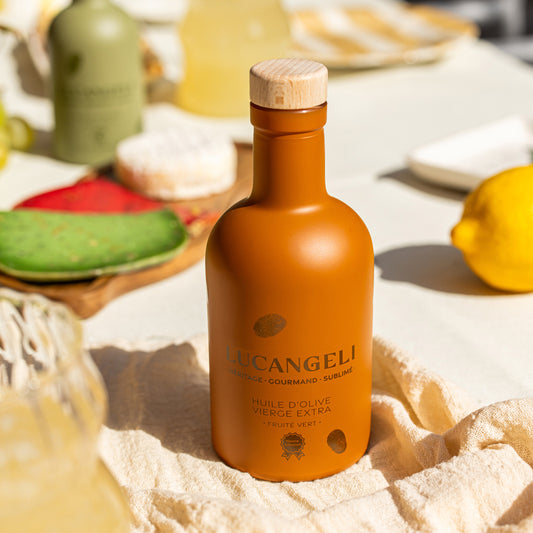
Green fruity olive oil is obtained from olives harvested before full maturity. It is distinguished by intense aromas of fresh grass, artichoke, tomato leaf, and sometimes a slight bitterness at the end of the palate. It is a vibrant oil, ideal for dressing salads, carpaccios, raw vegetables, or tartares. It adds character without masking the flavors of the ingredients. The organic green fruity olive oil from the Lucangeli family's Calabrian olive groves is a fine example: hand-harvested at the beginning of the season, it expresses all the vivacity of Southern Italy's terroir.
Ripe fruity: sweetness and roundness

Ripe fruity olive oil is produced from olives harvested at full maturity. It offers softer and more enveloping aromas: notes of fresh almond, ripe tomato, sometimes butter or dried fruits. Its rounder aromatic profile makes it versatile: it accompanies white meats, fish, pasta, and desserts equally well. The organic ripe fruity olive oil is often favored by cooks looking for a generous oil, capable of enhancing a dish without overpowering it.
Black fruity and flavored oils
Black fruity is a rarer category, obtained by a slight fermentation of the olives before pressing. This results in aromas of cocoa, mushroom, and undergrowth, highly appreciated in certain cuisines of southern France and Italy. Alongside these three classic profiles, there are also naturally flavored olive oils, such as bergamot olive oil, awarded at the Épicures 2023. Bergamot, a rare citrus fruit cultivated almost exclusively in Calabria, brings a unique floral and tangy note, ideal for fish, citrus salads, or desserts.
How to properly store and use your olive oil?
Storage: light and heat, the two enemies
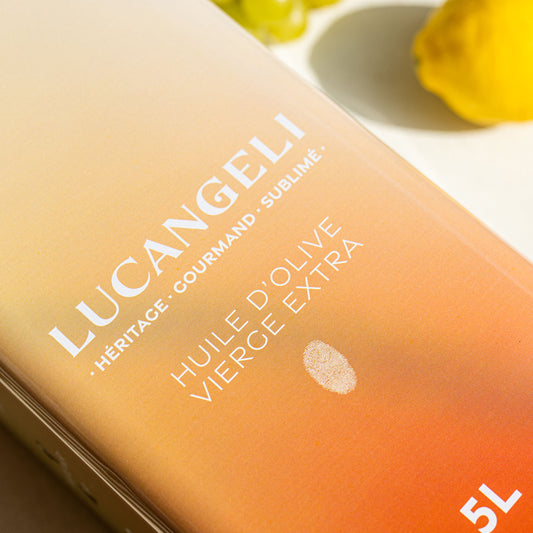
Unlike wine, olive oil does not improve with age. It oxidizes and loses its aromas on contact with light, heat, and air. To store it in good conditions, it must be kept in a cool and dark place, away from heat sources (cooktops, sunny windows). Prefer tinted glass bottles or opaque metal containers. A good olive oil is ideally consumed within 12 to 18 months following harvest. For regular family use, the 5L organic olive oil container is a practical and economical option, provided it is consumed within a reasonable period.
Which oil for which use?

Extra virgin olive oil tolerates cooking at moderate temperatures (up to approximately 180 °C). For high-temperature cooking, it is best to avoid very fruity oils whose delicate aromas would be destroyed by heat. On the other hand, for raw seasoning — vinaigrettes, drizzling over a hot dish, marinades — that's where extra virgin olive oil best expresses its qualities. To discover the differences between green fruity and ripe fruity, the 200ml olive oil trio allows for an ideal comparative tasting. The 500ml discovery duo is perfect for introducing oneself to the two main aromatic profiles.
Giving or treating yourself to a fine olive oil
Quality olive oil also makes a refined gourmet gift. For lovers of beautiful bottles, the limited edition jeroboam of olive oil is a rare piece, designed for large tables and exceptional moments. To create a personalized gift set around olive oil and other Italian terroir treasures, the customizable gift box offers complete freedom in product selection.
Choosing an extra virgin olive oil is primarily about learning to read labels, understanding aromatic profiles, and respecting storage conditions. Whether it's green fruity for those who like character or ripe fruity for those who prefer sweetness, a good olive oil transforms the simplest dishes into memorable taste experiences — especially when it comes from a sunny region like Calabria.




 lucangeli.it