

Extra virgin, virgin, refined: what's the difference?
Not all olive oils are created equal. On a label, you might read "extra virgin," "virgin," or simply "olive oil"—three designations that correspond to distinct quality levels. Understanding these differences is the first step to making an informed choice.
Extra virgin, a guarantee of quality
The designation extra virgin is the most demanding. It refers to an oil obtained solely by mechanical processes—without chemical treatment or excessive heating—and whose free acidity level does not exceed 0.8%. This acidity level is a key indicator of the freshness and quality of the olives at the time of harvest. The lower it is, the higher the oil's quality is considered. Virgin oil, on the other hand, tolerates an acidity level up to 2%, while refined olive oil has undergone industrial treatments that cause it to lose much of its natural aromas.
Organic label, a criterion for traceability
Choosing an organic extra virgin olive oil means opting for an oil produced from agriculture free of pesticides and synthetic fertilizers. The organic label (certified by organizations such as Ecocert in France) guarantees the traceability of production, from the olive tree to the bottle. This is an important criterion for those who want to know the precise origin of what they consume. Lucangeli offers organic green fruity olive oils and organic ripe fruity olive oils certified organic, produced from olive trees cultivated in Calabria, southern Italy.
How to read an olive oil label
Several pieces of information should be checked on the label before purchasing:
- Quality designation: extra virgin is the highest level.
- Acidity level: the lower it is (ideally below 0.5%), the fresher and higher quality the oil.
- Geographical origin: an oil from an identified terroir (Calabria, Tuscany, Crete…) generally offers more guarantees than a "blend of oils of community origin."
- Harvest date: not to be confused with the expiration date. Recently harvested oil will be more aromatic.
- Extraction method: the mention "cold pressed" or "cold extracted" indicates that the temperature did not exceed 27°C during extraction, which preserves the aromas.
Green fruity or ripe fruity: how to choose according to your tastes?

Once the extra virgin quality and organic label are verified, the choice of taste profile remains. In olive oil, there are mainly two main families: green fruity and ripe fruity. This choice primarily depends on your preferences and how you will use it in cooking.
Green fruity, intense and vegetal
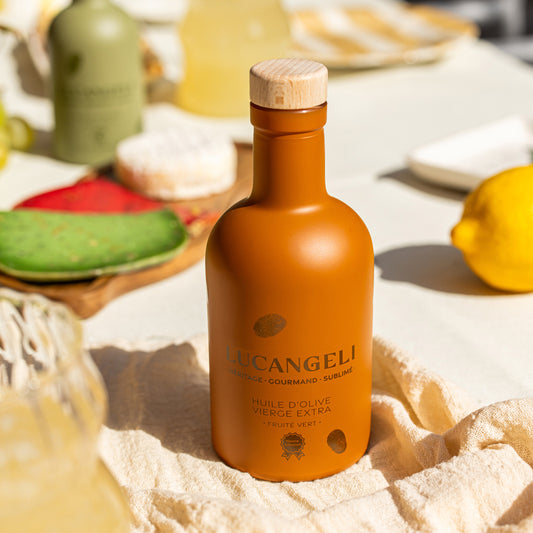
Green fruity is obtained from olives harvested early in the season, before full maturity. It is characterized by intense aromas of fresh grass, artichoke, sometimes green almond, with a slight bitterness and a peppery finish. It's an oil with character, ideal for enhancing a tomato salad, topping a bruschetta, seasoning grilled vegetables, or finishing a fish carpaccio. The organic green fruity olive oil from Calabria fully expresses this vegetal and vibrant profile, typical of olive trees cultivated under the southern Italian sun.
Ripe fruity, soft and enveloping

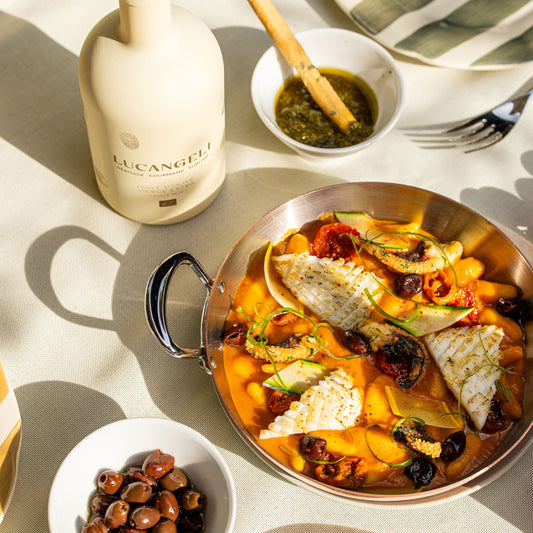
Ripe fruity oil is made from olives harvested at full maturity. Its profile is softer, rounder, with notes of dried fruit, fresh butter, or ripe tomato. The bitterness and spiciness are very subdued, making it an accessible and versatile oil. It is perfect for pasta, risottos, oven-roasted vegetables, or to accompany fresh cheese. Organic ripe fruity olive oil is often the preferred choice for those discovering quality olive oils, as it pleases without overpowering the palate. To explore both profiles at the same time, the organic olive oil trio allows for easy comparison.
Flavored oils, another way to explore
Beyond classic profiles, flavored olive oils offer an original way to enrich your cooking. They are obtained by infusing or co-crushing natural ingredients with olives, which gives them specific aromas without additives. Bergamot olive oil—awarded the Épicures Argent 2023—brings a bright citrus note, perfect on white fish or a summer salad. Organic basil olive oil enhances Mediterranean dishes, while organic garlic & chili olive oil adds a distinctive character to pizzas, pasta, and sautéed vegetables.
How to use olive oil in cooking?
Organic extra virgin olive oil is a versatile condiment, but some uses are better suited than others. Here are the main uses to know.
For seasoning and finishing
This is the most valuable use for a quality extra virgin olive oil. A drizzle of oil to finish a soup, a pasta dish, a burrata, or grilled vegetables allows its aromas to be fully expressed. For this use, choose a green fruity oil for dishes that can handle a vegetal and pungent note, or a ripe fruity oil for a softer, more enveloping touch. The 500ml organic discovery duo is ideal for having both profiles at hand.
For gentle cooking
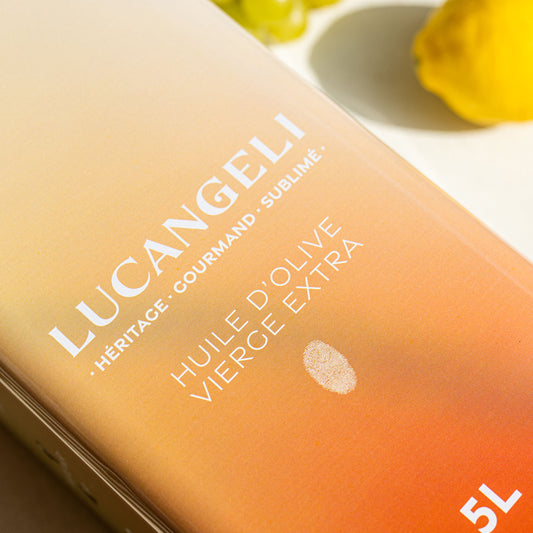
Contrary to popular belief, extra virgin olive oil handles low to medium heat cooking well. Its smoke point is around 180°C, making it suitable for sautéing, low-temperature oven cooking, and marinades. However, for high-temperature frying, it is better to opt for a more neutral oil. For daily cooking, the 5L organic olive oil jerrycan format is practical and economical.
Storage and formats
Olive oil should be stored away from light, heat, and air. Once opened, it should ideally be consumed within 3 to 4 months to fully enjoy its aromas. Avoid storing it near a heat source (cooktop, sunny window) or in a transparent container exposed to light. Tinted glass bottles or opaque cans are the most suitable formats for good preservation. To offer a selection of quality olive oils, the customizable gift set allows combining several references according to the recipient's tastes.




 lucangeli.it