

In a restaurant, every detail contributes to the customer's experience. The tableware, the tablecloths, the wine list — and the olive oil on the table. This gesture, often seemingly insignificant, says a lot about a restaurant's standards. Choosing quality extra virgin olive oil sends a clear signal: here, products are cared for, from the beginning to the end of the meal.
Olive oil on the table: much more than a condiment
Olive oil is one of the few products found both in the kitchen and on the table, visible to the customer. As such, it plays a dual role: a working ingredient for the chef, and a quality marker for the diner. In establishments that focus on Mediterranean, Italian, or simply local cuisine, the bottle of olive oil on the table is a staging element in itself.
A strong signal sent to the customer
A customer who sees a carefully chosen bottle of extra virgin olive oil on their table — with a legible label, identified origin, and design consistent with the establishment's universe — immediately perceives a higher level of expectation. Conversely, a generic bottle, with no indication of origin or quality, can harm the image of a restaurant that nevertheless works with quality products in the kitchen. Olive oil on the table is a detail that speaks volumes even before the dish arrives. For professionals who wish to explore the available options, the professional space centralizes useful information on ranges and formats suitable for catering.
Generic olive oil vs. quality olive oil: what the customer sees
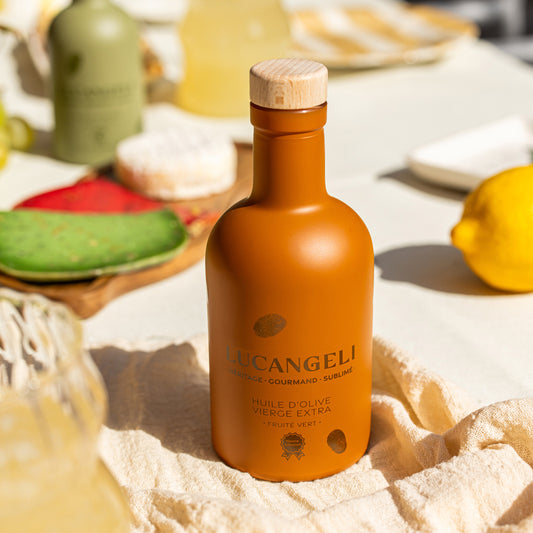
The difference between supermarket olive oil and extra virgin olive oil from an identified terroir is immediately perceptible — in color, smell, and of course taste. A ripe fruity organic olive oil with sweet and enveloping notes, or a green fruity organic olive oil with vegetal and peppery aromas, offer a taste experience that the customer notices and remembers. These oils, from family olive groves in Calabria, are cold-pressed and organically certified — criteria increasingly sought after by customers attentive to the quality and origin of products.
Balsamic vinegar, the natural complement
On a well-set table, olive oil often finds its complement in quality balsamic vinegar. Offering both together — an extra virgin olive oil and a Gold PGI balsamic vinegar from Modena — allows the customer to compose their own seasonings and explore flavor combinations. The Silver PGI balsamic vinegar is a more accessible alternative, equally elaborated according to the specifications of the Modena PGI. This oil-vinegar duo has become a classic on Italian and Mediterranean tables, appreciated for both appetizers and main courses.
How to choose olive oil for professional use?

The choice of olive oil for catering use is not made in the same way as for domestic use. Volumes, aromatic profiles, formats, and logistical constraints come into play.
Selection criteria: origin, label, aromatic profile
Three criteria are essential for a professional: geographical origin, quality label, and aromatic profile. An extra virgin olive oil from an identified terroir — such as Calabria, renowned for the quality of its olive groves — offers traceability and consistency that blended oils cannot guarantee. The organic label is an increasingly valued argument among customers, especially in establishments that communicate their commitment to natural and responsible products. Finally, the aromatic profile must be chosen in coherence with the cuisine offered.
Ripe fruity or green fruity: which profile for which cuisine?
The choice between a ripe fruity and a green fruity depends on the style of cuisine and the dishes served. The ripe fruity organic olive oil, with its sweet, floral, and slightly fruity notes, is perfect for white meats, delicate fish, cheeses, and desserts. The green fruity organic olive oil, more intense, herbaceous, and slightly peppery on the finish, pairs well with grilled vegetables, salads, pasta, and spicy Mediterranean dishes. For establishments that wish to offer several profiles to their customers, the trio of 200 ml organic olive oil — ripe fruity, green fruity, and bergamot — is an elegant solution to vary gustatory experiences. The bergamot olive oil, awarded at the Épicures 2023, brings a floral and lemony note particularly suitable for fish, seafood, and desserts.
The adapted format: 200 ml, 500 ml bottle or 5L canister
The bottle format must be adapted to its use. For the table, a 200 ml bottle is ideal: it is easy to handle, elegant, and allows regular product renewal to guarantee its freshness. For cooking, a larger format is preferable. The 5L organic olive oil canister is designed for bulk use — cooking, marinades, preparations — while maintaining the quality of an organic extra virgin olive oil from the Calabrian terroir.
The personalized bottle: a communication tool for professionals
Beyond product choice, bottle personalization is a communication opportunity often underestimated by catering professionals.
Screen printing and design: creating a bottle in the image of your establishment
An olive oil bottle screen-printed with the name, logo, or colors of an establishment becomes a communication object in its own right. Placed on the table, it reinforces the restaurant's visual identity and creates coherence between the dining room's atmosphere and the quality of the products served. It can also be offered to customers at the end of the meal, or for sale in a delicatessen. The personalized bottle configurator allows you to create your own design online, choosing colors, text, and visuals, for a professional and tailor-made result.
From how many bottles can one personalize?
Personalization is accessible from 24 bottles, making it suitable for small establishments as well as hotel groups or restaurant chains. For large orders or specific projects, the personalized bottle information page details available options, deadlines, and ordering conditions. A dedicated contact person supports each project to ensure a result that meets the establishment's expectations.
Customer gifts, events, seminars: uses of the personalized bottle
The personalized bottle is not limited to the restaurant table. It can be used as a gift for loyal customers, as a souvenir at a private event organized in the establishment, or as a communication tool at a seminar or professional fair. It is a useful, durable, and value-laden object — quality, terroir, authenticity — that extends the establishment's image well beyond the meal.

Olive oil on the table is a modest investment for a real impact on the customer's perception of quality. Well-chosen, well-presented, and possibly personalized, it becomes an integral part of the gastronomic experience offered by an establishment.




 lucangeli.it