


What is orange and lemon pressed olive oil?
Orange and lemon pressed olive oil, often called citrus olive oil, is distinguished by its artisanal production method: fresh oranges and lemons are crushed together with the olives at the time of extraction. This process, called co-milling, results in a naturally flavored oil, without the addition of artificial aromas. Unlike an oil simply flavored after extraction, the pressed version preserves the intensity and complexity of the fresh fruit flavors.
Understanding the difference between a pressed oil and a flavored oil is essential to appreciate the quality of the product. To learn more about this technique, consult the page co-milling, the authentic technique.
How is this oil made?

Ingredient selection
- Selection of ripe olives, often in late summer or early autumn, depending on the variety and terroir.
- Oranges and lemons harvested at full maturity, from Mediterranean orchards.
- The fruits are washed, then simultaneously crushed during milling.
The co-milling process
- Olives and citrus fruits are kneaded together, allowing the essential oils of citrus to blend with the olive oil.
- The resulting paste is then pressed or centrifuged to extract the oil.
- No essences or flavors are added: all the flavor comes from the fruit.
This know-how, passed down from generation to generation, guarantees an oil of great freshness. To discover an authentic orange and lemon pressed olive oil, explore the range's flagship product.
Culinary uses and tips for use

When and how to use citrus pressed olive oil?
- On a fennel or raw vegetable salad for a lively touch.
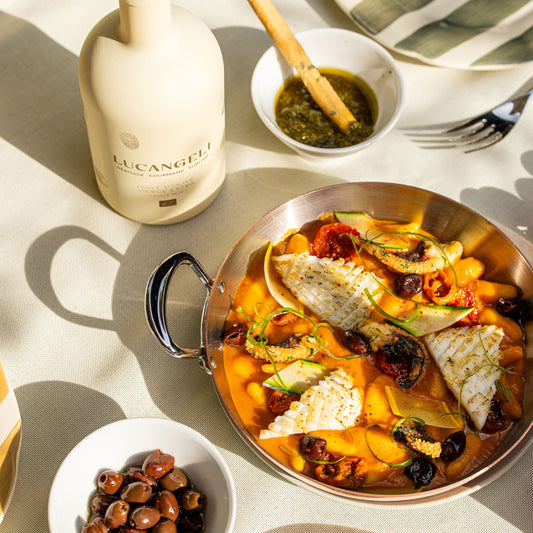
- As a finishing touch on white fish or seafood.
- In a fruit salad or on a dark chocolate dessert.
- To season burrata or mozzarella.
Its aromatic profile, both tangy and floral, enhances both savory and sweet dishes. Try it on an Italian appetizer platter with pitted black olives in extra virgin olive oil to surprise your guests.
Good to know: storage and format
- Store the oil away from light and heat to preserve its aromas.
- Choose a 200 ml or 500 ml format for regular use, or discover the discovery duo to vary the pleasures.
Summary table: pressed oil vs flavored oil
For an informed choice, always prefer an oil whose manufacturing method is clearly indicated on the label. For more advice on selection, consult the olive oil buying guide.
Frequently asked questions
How to recognize a real orange and lemon pressed olive oil?
Look for "co-milled" or "pressed with citrus" on the label. The absence of added flavors is a sign of quality.
What is the difference between pressed oil and flavored oil?
The former is obtained by simultaneous crushing of fruits, the latter by adding flavor afterwards. The taste and quality are affected.
Which dishes to enhance with this oil?
Try it on raw fish, fennel salads, or even on a summer fruit salad.
For bottle customization or use in restaurants, discover the customized bottle service.




 lucangeli.it