


Green fruity or ripe fruity: whether on store shelves or a gourmet website, this distinction might seem technical. Yet, it completely changes how an olive oil expresses itself on the plate. Understanding these two aromatic profiles means learning to choose the right oil depending on the dish, the season, and one's own tastes.
Green fruity and ripe fruity: two distinct aromatic profiles

Extra virgin olive oil comes in several taste families, defined by the olives' stage of ripeness at harvest time. The two most common — and most useful to know — are green fruity and ripe fruity. They are not opposites; they complement each other, and each has its place in a well-thought-out cuisine.
Green fruity: intensity and vegetal freshness
Green fruity is obtained from olives harvested early in the season, before their full maturity. Extraction occurs within hours of picking, preserving all the fruit's vivacity. On the nose, one finds notes of fresh grass, artichoke, tomato leaf, sometimes green bell pepper. On the palate, the oil is frank, slightly bitter, with a pungent sensation at the end of the tasting — a sign of a fresh, quality oil.
The organic green fruity olive oil from Calabria perfectly expresses this profile: hand-harvested on the hills of Southern Italy, it reveals a rare aromatic intensity, ideal for those who appreciate character.
Ripe fruity: sweetness and roundness on the palate
Ripe fruity oil comes from olives harvested later, when they have reached full maturity. The extracted oil is softer, rounder, with aromas of ripe fruit, fresh almond, sometimes butter or hazelnut. The bitterness and pungency are very subdued, making it an accessible and versatile oil.
The organic ripe fruity olive oil from the Calabrian terroir offers this characteristic sweetness, with a beautiful length on the palate. It is suitable for both beginner cooks and the most demanding palates.
How to choose between green fruity and ripe fruity for your dishes?
The choice between these two profiles primarily depends on the dish you are preparing and the desired effect. Here are some practical guidelines to help your decision.
Green fruity pairs well with dishes that tolerate intensity
Green fruity olive oil is made for preparations that can accommodate a vegetal and slightly bitter note. It enhances without overwhelming, structures without dominating. Some examples of successful pairings:
- Raw vegetable salads: tomatoes, arugula, fennel, cucumber — green fruity adds depth.
- Grilled fish or carpaccio: the oil's intensity dialogues with the delicate flesh of the fish.
- Oven-roasted vegetables: zucchini, eggplant, bell peppers — the oil caramelizes slightly and intensifies the flavors.
- Bruschetta and tartines: a few drops of organic green fruity olive oil on a slice of toasted bread rubbed with garlic is the simplest and most authentic antipasto.
Ripe fruity pairs well with delicate dishes and gentle cooking
Ripe fruity olive oil is more enveloping. It does not seek to impose itself but to accompany. It is particularly suited for:
- Pasta and risottos: a spoonful of organic ripe fruity olive oil as a finish on a pasta dish is the touch that makes all the difference.
- White meats and poultry: roasted chicken, veal Milanese — the oil's sweetness harmonizes with the meat's tenderness.
- Desserts and pastries: ripe fruity oil is used in cakes, madeleines, or creams, bringing a subtle roundness.
- Soups and veloutés: a few drops as a finish on a summer vegetable soup, and the dish takes on a whole new dimension.
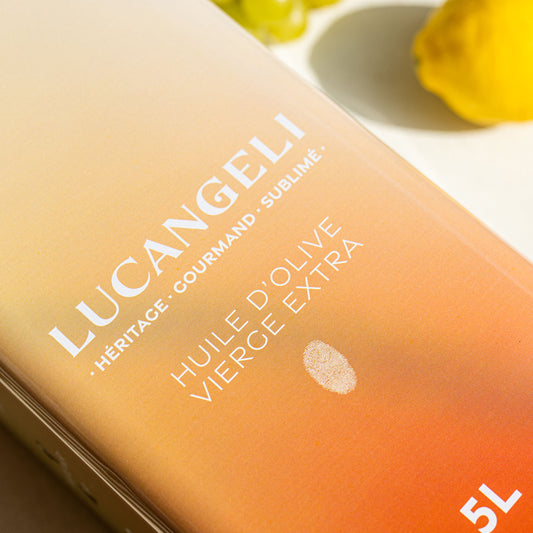
For large quantities — daily cooking, catering, intensive family use — the organic 5L olive oil container is a practical and economical option, without compromising on quality.
What if you don't know which one you prefer yet?
The best way to understand the difference between green fruity and ripe fruity is to taste them side by side. The organic olive oil discovery duo 500ml allows precisely this direct comparison, with two 500ml bottles to explore both profiles in your own kitchen.
Beyond green fruity and ripe fruity: bergamot olive oil, a third path

There is a third option, less known but just as interesting: bergamot-flavored olive oil. This emblematic Calabrian fruit, cultivated almost exclusively on the Ionian coast between Reggio Calabria and Locri, gives the olive oil a citrusy, floral, and slightly tart note, opening up new culinary perspectives.
An original pairing for summer dishes
The bergamot olive oil — Épicures Silver Medalist 2023 — is used as a finish on cold or warm dishes: scallop carpaccio, octopus salad, fresh cheeses, citrus desserts. It brings a unique, immediately recognizable aromatic signature.
A rare terroir, limited production
Bergamot is a capricious fruit, cultivated on a coastal strip about a hundred kilometers long. Its production is naturally limited, making it a rare ingredient in gastronomy. Associating it with an organic extra virgin olive oil from the same Calabrian terroir creates a coherent and singular regional pairing.
Explore all three profiles with a gift set
For those who wish to discover all the aromatic expressions of Calabrian olive oil — green fruity, ripe fruity, and bergamot — the organic olive oil trio brings together all three bottles in one set. It is also a popular gift idea for lovers of Italian gastronomy.
For those who wish to stock up on ripe fruity oil long-term, the limited edition 1L ripe fruity olive oil offers a generous format, ideal for cooks who use their oil daily.
In summary: green fruity for dishes that demand character and vegetal freshness; ripe fruity for delicate preparations, finishes, and desserts. And bergamot for those looking to venture off the beaten path. Three profiles, one terroir: Calabria.




 lucangeli.it