


Filtered or unfiltered olive oil: the difference lies in a single production step, but it changes the appearance, taste, and shelf life of the oil. Here’s what that means for your daily life.
When you open a bottle of organic green fruity olive oil and notice it's perfectly clear, that's the result of filtration. Conversely, a slightly cloudy oil with sediment at the bottom of the bottle is unfiltered oil, sometimes called "sur lie" oil. Both versions can come from the same olives, the same mill, the same vintage. What distinguishes them is only what happens after centrifugation.
What filtration truly changes in oil

The process in a nutshell
After olive crushing and centrifugation, the oil still contains fine pulp particles, micro-droplets of vegetation water, and suspended organic residues. Filtration involves passing the oil through a filter, most often made of cellulose or cotton, to remove these elements. What remains is a clear, stable oil whose composition will not evolve rapidly.
What remains in unfiltered oil
Unfiltered oil retains these suspended particles. This is what gives it its characteristic cloudy appearance and the sediment you might observe at the bottom of the bottle after a few weeks. These residues contain aromatic compounds that contribute to the intensity of the flavor profile, especially in the first few weeks after harvest. This is why a new harvest unfiltered oil can seem more expressive, more vibrant, more herbaceous than a filtered oil from the same batch.
What it changes for preservation
This is where the difference becomes truly practical. The organic particles present in an unfiltered oil continue to react with oxygen and humidity. They accelerate the oxidation process. As a result, unfiltered oil should be consumed more quickly. For Carolea, an olive variety typical of Calabria harvested between October and November, producers who filter with cellulose obtain a stable oil for up to 18 months after harvest. The same unfiltered oil should ideally be consumed within 6 to 8 months after crushing to remain at its best taste level.
Filtered or unfiltered: the practical differences

Here are the seven criteria that concretely distinguish the two types of oil:
- Visual aspect: filtered oil is clear, golden or green; unfiltered oil is cloudy, hazy.
- Sediment at the bottom: absent in filtered oil, present after a few weeks in unfiltered oil.
- Aromatic intensity upon opening: stable and balanced for filtered, very expressive and vibrant for unfiltered.
- Optimal shelf life: up to 18 months for filtered, 6 to 8 months after crushing for unfiltered.
- Heat stability: good for filtered, slightly lower for unfiltered.
- Ideal use: filtered is suitable for daily use, cooking, and finishing; unfiltered is best for tasting, bread, and raw vegetables at the beginning of the season.
- Filtration method: cellulose or cotton for filtered, none or simple decantation for unfiltered.
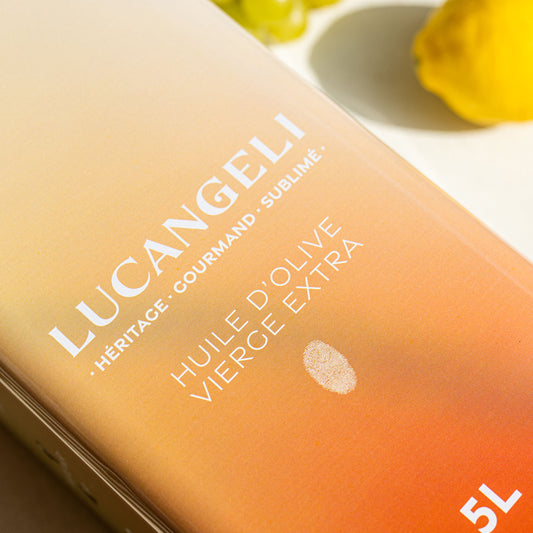
If you consume a 500 ml bottle in two to three weeks, both types are suitable. If you buy in larger volumes, for example, a 5-liter jerry can for everyday cooking, the filtered version is more appropriate: it resists repeated opening and air exposure better.
The misconception to debunk: unfiltered isn't necessarily better
The myth of mill-fresh
There's a widespread idea that unfiltered oil is more authentic, more natural, and therefore better. This is an oversimplification. The quality of an extra virgin olive oil depends primarily on the olive variety, the harvest time, the delay between picking and crushing, and storage conditions. A filtered oil made from hand-picked olives, crushed within 24 hours, will always be superior to an unfiltered oil made from olives harvested late or stored for several days before crushing.
When unfiltered truly makes sense
Unfiltered oil is most valuable in a specific context: the first few weeks after harvest, when the oil is still very fresh and its aromas are at their peak. This is when a new harvest green fruity oil reveals its full vibrancy. Outside of this window, the aromatic advantage fades, and the conservation drawbacks take over.
What professionals do
Professional kitchens work almost exclusively with filtered oils, for practical reasons: stock stability, controlled rotation, and taste consistency from one delivery to the next. If you manage an establishment and are looking to structure your supply, the dedicated professional section will provide you with information on formats and conditions suitable for restaurant use.
How to choose based on your usage
If you want to explore both profiles before deciding, the discovery duo in 500 ml bottles allows you to compare a green fruity and a ripe fruity side-by-side. For a first approach in a smaller format, the trio in 200 ml bottles is a good introduction. In both cases, the oils are filtered: this is a deliberate choice to guarantee stability until it reaches your table, regardless of the opening date.
The organic ripe fruity olive oil is particularly suitable if you are looking for a mild finishing oil to drizzle over roasted vegetables, cheeses, or stews. Its filtration ensures good shelf life, even if you use it over several weeks.
If you are considering offering a personalized bottle for an event or professional use, the personalization page presents the available options starting from 24 bottles.
Frequently Asked Questions
Why does my olive oil have sediment at the bottom of the bottle?
Sediment at the bottom of an olive oil bottle is normal and does not mean the oil is spoiled. It consists of pulp particles or natural olive wax that settle through decantation. This is a sign that the oil has not been filtered, or has been lightly filtered. Simply turn the bottle gently before use.
Is cloudy olive oil of better quality?
Not necessarily. Cloudiness simply indicates that the oil has not been filtered. Quality primarily depends on the olive variety, harvest time, and crushing conditions. A high-quality filtered oil far surpasses an unfiltered oil made from lower-quality olives.
How long can unfiltered olive oil be stored?
Unfiltered oil is ideally stored for 6 to 8 months after the crushing date. Beyond that, suspended particles accelerate oxidation, and the aromatic profile degrades. For longer storage, choose a filtered oil and store it away from light and heat.




 lucangeli.it