


You can recognize rancid olive oil in a few seconds: an old, greasy smell, a flat or acrid taste, and a dull straw-yellow color. These three signals are enough to tell if your oil is still good to use.
Rancidity is not inevitable. It almost always results from an identifiable cause: exposure to air, light, or heat. Understanding these mechanisms means understanding how to avoid them and choose an oil that lasts over time.
The 3 signs of rancid olive oil
The nose: the most reliable indicator
Fresh oil releases clear aromas: cut grass, artichoke, almond, green tomato, depending on the fruity profile. An organic green fruity oil harvested early in the season presents frank and persistent vegetal notes. Rancid oil, however, smells like old grease, wet cardboard, or wax. The smell is dull, flat, sometimes slightly acrid.
This olfactory defect is called the "rancid" defect in the official panel test vocabulary. It is evaluated by juries trained according to the standards of the International Olive Council. An oil with this defect cannot be classified as extra virgin.
The taste: bitterness gone or old taste
A quality extra virgin oil presents three sensations in the mouth: fruitiness (aromas), bitterness (slight, in the middle of the mouth), and pungency (a tingling sensation in the throat). These last two sensations are the sign of fresh and well-extracted oil. When they disappear and give way to a flat, greasy, or unpleasantly slightly bitter taste, the oil has begun to degrade.
To compare profiles, the oil trio allows you to compare three different expressions side by side and calibrate your palate on fresh oils.
The color: a secondary indicator

The color of olive oil naturally varies from intense green to golden yellow depending on the variety, ripeness of the olives, and filtration. It is not a criterion of quality in itself. However, an oil that turns a very light straw yellow or has an unusual cloudy appearance (for a filtered oil) deserves to be checked by nose and taste.
Why olive oil goes rancid: the three causes
The rancidity of olive oil results from three distinct, often combined, mechanisms.
- Oxidation by air: as soon as a bottle is opened, the oil comes into contact with oxygen. The process is slow at first, then accelerates. This is the most common cause of degradation.
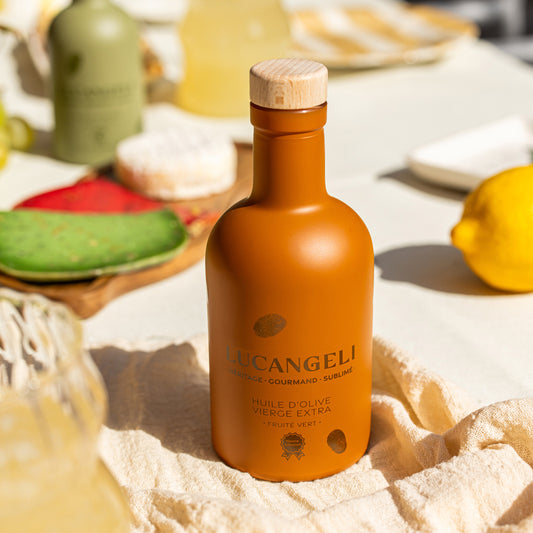
- Photo-oxidation: light, even diffuse, accelerates the degradation of the oil's aromatic compounds. This is why packaging in dark bottles is a quality requirement, not an aesthetic choice. A transparent bottle exposed to daylight can see the quality of its contents degrade in a few weeks, whereas a dark bottle in a closed cupboard preserves the oil for several months.
- Thermal oxidation: heat accelerates all oxidation reactions. Storing a bottle near a cooktop or oven is one of the most common mistakes.
Initial quality: a decisive factor
An oil that starts with a high peroxide value will go rancid faster than a fresh oil. The best Calabrian oils are milled within 24 hours of harvesting, which guarantees a very low initial peroxide value. Carolea, the main variety in Calabria, is harvested early in the season, before the olives are fully ripe, precisely to preserve this freshness. An oil that has waited several days between harvesting and milling starts with a handicap that the best storage cannot erase.
The discovery duo in two 500 ml bottles allows one bottle to remain closed while the other is consumed, limiting air exposure. For establishments that consume large volumes, the 5-liter container is designed for rapid stock rotation. Professionals can consult the dedicated section for supply conditions adapted to their needs.
How to properly store your olive oil
- Store the oil in a closed cupboard, away from direct light and heat sources (oven, cooktop, sunny window).
- Close the bottle after each use. Residual air in the bottle is enough to trigger oxidation.
- Prefer smaller formats if you consume little. A 200 ml organic ripe fruity oil is consumed in two to three weeks for daily use, without risk of rancidity.
- Do not store oil in the refrigerator. Cold can cause temporary crystallization without damaging the oil, but repeated temperature variations accelerate degradation.
- For large quantities, the limited edition jeroboam is designed to be gradually transferred into a serving bottle, limiting the main volume's exposure to air.
Frequently asked questions
How do I know if my olive oil is still good?
Smell it before using. Fresh oil has clear, vegetal aromas. If it smells like old grease, cardboard, or wax, it's rancid. Then taste it: the absence of bitterness and pungency is a sign of advanced degradation.
Is rancid olive oil dangerous to consume?
Rancid oil is not strictly toxic, but it has lost its gustatory and aromatic qualities. It can cause slight digestive irritation in sensitive individuals. It is best not to use it in cooking.
How long does an opened bottle of olive oil keep?
An opened bottle, well-sealed and stored away from light and heat, will keep for four to six weeks under good conditions. The best-before date indicated on the label applies to an unopened bottle.





 lucangeli.it