

Two Uses for Olive Oil in Pizzerias: Why Confusing Them Is Costly
In pizzerias, olive oil serves two distinct functions that do not require the same product or the same budget. Dough oil contributes to volume and consistency; finishing oil, on the other hand, speaks directly to the customer. Knowing how to distinguish between them means controlling your olive oil pizza ingredient cost while building a differentiating argument.
Confusing the two uses is the primary mistake observed in pizzerias looking to reduce costs. Using high-end finishing oil in the dough means spending three to four times more than necessary on an item where the customer perceives no difference. Conversely, finishing a pizza with industrial cooking oil negates all the work put into the dough, toppings, and baking in a matter of seconds.
Oil in the Dough: Consistency and Neutrality Above All
Neapolitan pizza dough incorporates between 2% and 5% oil relative to the flour weight. For a 280-gram dough ball, this represents between 5 and 14 grams of oil, a quantity that blends into the mass and whose aromatic profile is largely attenuated by fermentation and high-temperature baking.
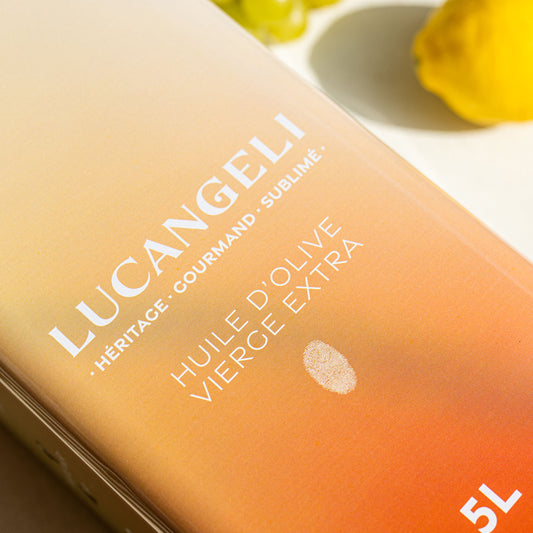
For this use, the critical criteria are heat stability, relative aromatic neutrality, and batch-to-batch consistency. An Italian extra virgin olive oil in professional packaging meets these requirements without increasing the ingredient cost. The 5-liter professional container is the most suitable format for this use in pizzerias: it minimizes handling, reduces the risk of oxidation between openings, and offers a consistent cost per liter for daily high-volume use.
Finishing Oil: The Touch That Makes the Difference
Finishing is when olive oil fully expresses itself. Applied raw, in a drizzle, just before serving or straight out of the oven, it imparts its aromas to the toppings without thermal degradation. This is where the choice of variety and aromatic profile becomes crucial.
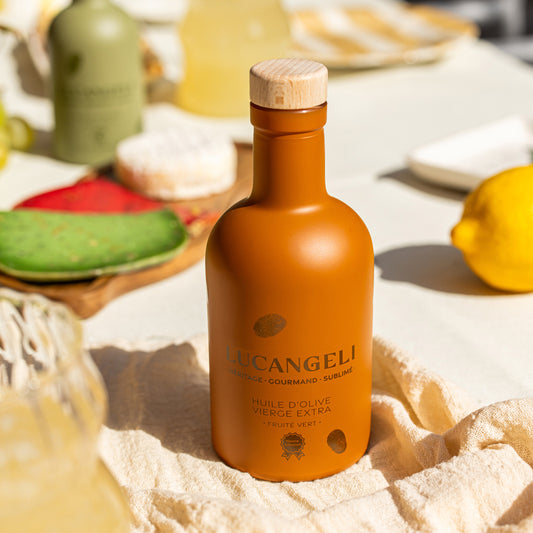
The Carolea variety, a Calabrian cultivar with a mild mature fruitiness, is particularly well-suited for finishing pizzas. Its aromatic profile—notes of ripe tomato, sweet almond, slight pungency—complements toppings without overpowering them. It is the main variety of Calabrian PGI olive oils, a designation that guarantees origin and production conditions. The organic mature fruity oil in 200 ml precisely expresses this Carolea profile and is ideal for finishing white pizzas, grilled vegetable pizzas, or cheese pizzas.
For fresh tomato or seafood pizzas, a green fruity profile brings more vibrancy and aromatic tension. The organic green fruity oil in 200 ml is suitable for this use: its more pronounced pungency and herbaceous notes contrast with the sweetness of mozzarella and enhance iodine-rich toppings.
Calculating Olive Oil Pizza Ingredient Cost: Quantified Benchmarks by Use

Here are the per-portion ingredient cost benchmarks for the two uses, based on a standard pizza. These ranges are indicative and vary depending on the supplier and the volume ordered.
- Dough (incorporation): 5 to 14 g per pizza, or €0.03 to €0.08 per portion. Recommended profile: neutral mature fruity, extra virgin. Recommended format: 5 L container.
- Finishing (raw): 5 to 8 g per pizza, or €0.05 to €0.15 per portion. Recommended profile: green fruity or mature fruity depending on the topping. Recommended format: 200 ml or 500 ml bottle.
- Total per pizza: 10 to 22 g, or €0.08 to €0.23 total.
These figures show that even when opting for a high-quality finishing oil, the extra cost per portion remains less than €0.10 compared to a standard oil. This is the most profitable item to highlight in your customer argument.
Stock Rotation and Oxidation: The Often Overlooked Point
Extra virgin olive oil degrades once the container is opened. In pizzerias, rotation must be planned based on weekly volume. An opened 5-liter container should be consumed within four to six weeks to maintain its qualities. A 200 ml finishing bottle, used at a rate of 5 to 8 grams per pizza, covers approximately 25 to 40 pizzas: at a normal pace, it rotates in one to two weeks, which is perfect.
For high-volume establishments, the jeroboam of organic extra virgin olive oil offers an intermediate alternative between the cooking container and the serving bottle: it can be used for finishing at the table or in the kitchen for high-volume finishing, while remaining a visually striking object that enhances the service.
Referencing an Olive Oil Supplier for Your Pizzeria
The choice of an olive oil supplier for a restaurant is based on three practical criteria: product traceability (origin, variety, vintage), batch consistency from one order to the next, and the ability to deliver on time without prohibitive minimum order quantities. A supplier who cannot tell you the olive variety or harvest date does not allow you to build a coherent narrative for your customers.
To discover available formats and supply conditions adapted to catering professionals, consult the dedicated space for cafes, hotels, and restaurants.
Highlighting Olive Oil to Your Customers: Three Concrete Levers
A drizzle of finishing oil doesn't just speak for itself. It tells a story. Here are three levers that the most differentiated pizzerias use to transform this gesture into a sales argument.
Naming the Oil on the Menu
Indicating "Calabrian extra virgin olive oil, Carolea variety" on the menu or on a table insert costs nothing and changes everything. The customer who reads this mention understands that it is not a generic oil. They perceive intent, a choice. This is enough to justify a slightly higher pricing position than the competition.
Offering a Personalized Bottle on the Table
Some pizzerias choose to place a bottle with their name on each table, similar to gourmet restaurants. This is a strong signal: it indicates that the establishment has selected its oil, that it stands by it, and that it showcases it. The personalization service allows you to create a bottle with your establishment's identity, starting from 24 units, with a design created by you using the online configurator.
Training the Team to Present the Oil
A server who knows how to say, "This is a Calabrian, mature fruity oil, it pairs particularly well with our grilled vegetable pizza" creates a memorable experience. This isn't long training: two accurate sentences are enough. The discovery duo in 500 ml is a practical tool to introduce your team to the two main aromatic profiles before choosing your finishing reference. To go further in training your teams, Lucangeli offers resources and support via the professionals' space.
Frequently Asked Questions
What olive oil should be used in pizza dough?
For dough, an Italian extra virgin olive oil in a professional container is sufficient. The aromatic profile is secondary because fermentation and high-temperature baking attenuate nuances. Prioritize batch consistency and product stability. The 5-liter container is the most suitable format for daily use in pizzerias.
How much does olive oil cost per portion in a pizzeria?
The olive oil pizza ingredient cost ranges from €0.03 to €0.08 for dough incorporation, and from €0.05 to €0.15 for raw finishing. The total per pizza rarely exceeds €0.23, even with a high-quality finishing oil. This is the least expensive item to highlight in your offering.
How can I justify high-end olive oil to my pizzeria customers?

The extra cost of a qualitative finishing oil is less than €0.10 per pizza. However, the impact perceived by the customer is immediate: aroma, texture, care taken with the product. Naming the variety on the menu, placing an identified bottle on the table, and training the team with two presentation sentences are enough to transform this marginal cost into a sustainable differentiating argument.




 lucangeli.it