


In a Neapolitan pizzeria, olive oil is used at three distinct stages: in the dough, during cooking, and as a finishing touch. Each use requires a different quality, variety, and format. Here's how to structure your procurement.
Olive oil in pizza dough: technological role and dosage

Why traditional Neapolitan pizza doesn't contain it — and why some add it
The specifications for Neapolitan pizza STG (Specialità Tradizionale Garantita) do not include olive oil in the dough. The official recipe consists of flour, water, salt, and yeast. Oil is absent from the basic dough, and this is a deliberate choice: the crumb must remain airy, light, and slightly moist, without the greasy texture that an incorporated fat could induce.
That said, many professional pizzaiolos add a small amount of extra virgin olive oil to their dough, outside the STG framework. The reasons are technical: the oil slightly slows fermentation, improves the extensibility of the dough ball, facilitates shaping, and gives the crust a more even color when baked. It also acts as a natural preservative, which can be useful for dough balls prepared in advance and stored cold for 24 to 72 hours.
For this purpose, a large-format extra virgin olive oil is the logical choice: the aromatic profile matters little at this stage, as high-temperature cooking (400 to 500 °C in a wood-fired oven) neutralizes the taste notes. What matters is the chemical quality — free acidity below 0.8%, absence of defects — and the regularity of supply.
When and how much to add depending on the pizza style
The dosage varies depending on the style of pizza served in your establishment:
- Classic Neapolitan pizza (STG): no oil in the dough. Oil is used only as a topping and for finishing.
- Contemporary Neapolitan pizza: 2 to 3% of the flour weight, or 20 to 30 ml per 1 kg of flour. Incorporated at the end of kneading, after full hydration.
- Pizza in teglia (pan pizza): 3 to 5% of the flour weight. Oil is also used to grease the pan before spreading the dough.
- Pizza fritta (fried pizza): no oil in the dough, but the frying oil must be renewed regularly to prevent oxidation.
In all cases, the oil is incorporated last, once the gluten network has formed. Adding it too early disrupts gluten development and weakens the dough structure.
Cooking oil in a pizzeria: criteria and professional formats
Smoke point and wood-fired or electric oven
A Neapolitan pizzeria's wood-fired oven reaches 430 to 500 °C at the dome. At this temperature, extra virgin olive oil is not in direct contact with the heat source: it is incorporated into the dough or placed on the topping before baking. The pizza cooks in 60 to 90 seconds, which limits the oil's thermal exposure.
For electric or gas ovens, which operate between 280 and 350 °C, the cooking time is longer (4 to 8 minutes). The oil placed on the topping is more exposed to heat. In this case, a good quality extra virgin oil, with a smoke point above 180 °C, remains suitable. A poor quality or too old oil, with high free acidity, will have a lower smoke point and release undesirable compounds during cooking.
The practical rule: the oil placed on the pizza before baking must be extra virgin quality, but not necessarily your best finishing oil. Reserve that for post-baking.
Formats adapted to a pizzeria's volume
The choice of format directly impacts your material cost and inventory management. Here are some guidelines based on your service volume:
- Less than 50 pizzas per day: 500 ml or 1 L bottles. Advantage: rapid turnover, preserved quality upon opening.
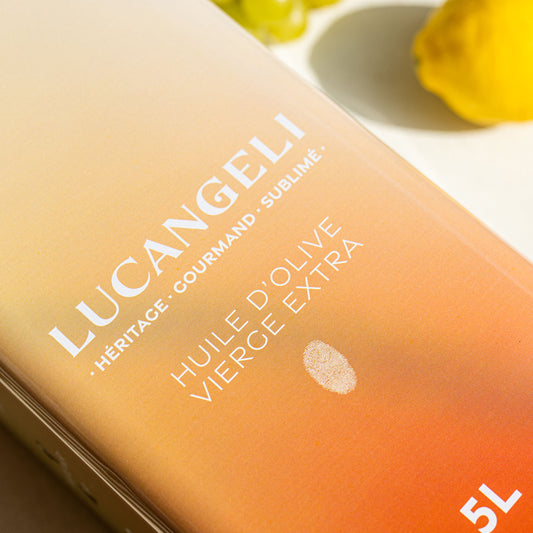
- From 50 to 150 pizzas per day: 5 L can. Advantage: reduced cost per portion, fewer manipulations for the staff.
- More than 150 pizzas per day: 5 L can on a regularly planned order. Advantage: negotiation on volumes, anticipated supply.
For a medium-volume pizzeria (80 to 100 pizzas per service), a 5-liter can covers approximately 3 to 4 days of service for cooking and toppings, depending on the dosage. It should be stored in a cool, dark place and consumed within 4 to 6 weeks after opening. For finishing, 200 ml bottles allow for faster turnover and better preservation of aromatic qualities. An opened bottle should be used within 3 weeks in a professional kitchen.
Finishing at the table: the variety that makes the difference

Coratina and Carolea: two profiles for two pizza styles
It is in the finishing that olive oil expresses its character and that the choice of variety becomes crucial. A drizzle poured out of the oven, onto a still steaming pizza, is the gesture that distinguishes a pizzeria that works its products from one that merely provides the basics.
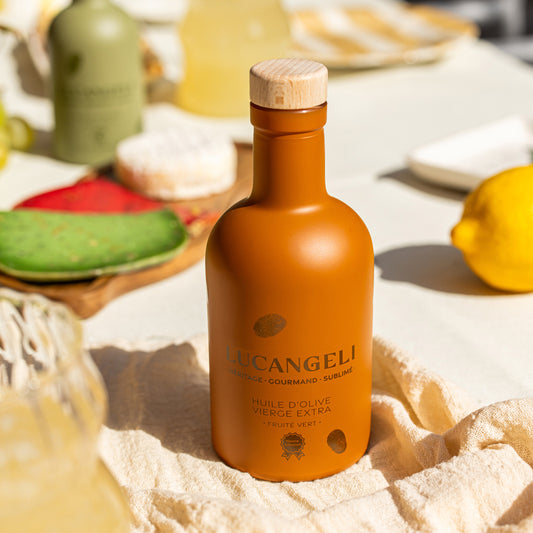
Coratina is a Calabrian variety harvested between October and November, at incomplete ripeness, to preserve its intense green fruitiness. Its aromatic profile evokes raw artichoke, fresh grass, and green tomato, with a frank bitterness and a pronounced pungency at the finish. It is the go-to finishing oil for pizzas based on San Marzano tomatoes: its natural acidity resonates with that of the sauce, and its pungency enhances rich toppings (anchovies, capers, olives, cured meats). The organic green fruity olive oil in 200 ml expresses this Coratina profile.
Carolea, harvested later (November to December), develops a soft ripe fruitiness with notes of ripe apple, fresh almond, and a slight pungency. It is better suited for white pizzas (bianche) and toppings based on mild cheeses (fior di latte, burrata, ricotta), where an overly intense oil would overpower the delicacy of the ingredients. The organic ripe fruity olive oil in 200 ml matches this profile.
For pizzerias wishing to test both profiles before setting their standards, the trio of 200 ml olive oils allows for comparative tasting by the staff.
Summary of uses and formats by station
Here are the four stations to organize in your pizzeria:
- In the dough (contemporary pizza): versatile organic blend, neutral and stable profile, 5 L can format.
- Topping before baking: standard quality extra virgin, heat-stable, 5 L can format.
- Tomato pizza finishing (San Marzano): Coratina green fruity, artichoke-herb-pungency profile, 200 ml bottle format.
- White pizza finishing (bianche): Carolea ripe fruity, apple-almond-sweetness profile, 200 ml bottle format.
For establishments wishing to offer a branded bottle on the table, the jeroboam of organic extra virgin olive oil is a suitable presentation format for table service. To go further, a customized bottle with your pizzeria's colors is available for orders of 24 bottles or more, with a design created by your establishment.
To establish a regular supply, negotiate volumes, and anticipate peak demand periods, the space dedicated to catering professionals allows you to contact the sales department.
Frequently Asked Questions
Should olive oil be added to Neapolitan pizza dough?
The STG recipe for Neapolitan pizza does not include oil in the dough. However, many professional pizzaiolos add 2 to 3% of the flour weight to improve the extensibility of the dough ball, facilitate shaping, and achieve a more even color when baked. This choice depends on the pizza style and the fermentation method used.
Which olive oil should be chosen to finish a pizza in a professional pizzeria?
For a tomato-based pizza, choose an intense green fruity oil (Coratina variety), whose pungency and vegetal notes resonate with the sauce's acidity. For a white pizza or one with mild cheese toppings, prefer a soft ripe fruity oil (Carolea variety), which is rounder and less overpowering. In both cases, the finishing is done out of the oven, with a drizzle of 5 to 8 ml per pizza.
Which olive oil format is best suited for a high-volume pizzeria?
For cooking and toppings, the 5-liter can is the reference format: it reduces the cost per portion and minimizes handling. For finishing, 200 ml bottles ensure rapid turnover and better preservation of aromatic qualities. An opened finishing bottle should be consumed within 3 weeks to maintain its taste profile.




 lucangeli.it