


Why choose garlic and chilli pressed olive oil in a restaurant?
Garlic and chilli pressed olive oil, made by co-milling the fresh produce with the olives during extraction, is making its way into professional kitchens for its ability to bring character without overloading a dish with aroma. Its use is no longer limited to Italian cooking: it lifts pizzas, roast vegetables, grilled meats, fish and even some cold starters.
For a restaurateur, it becomes a way to stand out, especially as a finishing touch on the plate. Offering an organic garlic and chilli olive oil in the dining room or on a sharing board leaves a mark on the guest experience and builds loyalty among customers looking for authenticity. To go further with personalisation, the personalised bottle for restaurants lets you make the oil part of the identity of the house.
Choosing the right format: bottle, can or jeroboam?

Formats suited to professional catering
The choice of format depends on how it is used in the kitchen and on the service in the dining room:
- 200 ml bottle: ideal for table service, plating or sharing boards. It also lets you offer a tasting on the menu.
- 500 ml bottle: suited to daily turnover in the finishing kitchen, and avoids oxidation setting in too fast.
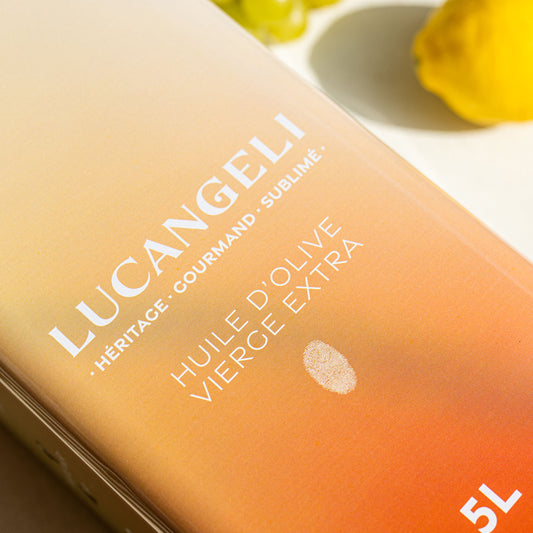
- 5 L can: an economical format for cooking or preparing in volume, to be decanted into smaller containers for service.
- 3 L jeroboam: a statement solution for dining room service, particularly on large tables or for events.
*Prices vary depending on the season, the harvest and the origin.
For an accurate food cost calculation, it is worth weighing the quantity used per portion (e.g. 6 to 8 g for a pizza or an aperitif board).
Discover the different formats: organic garlic and chilli olive oil and organic olive oil 5 L can.
Managing, storing and rotating stock in a restaurant
Good practice for preserving quality and profitability
- Store the oil away from light and heat, in airtight containers.
- Favour fast rotation, especially for open formats: a 500 ml bottle should be used within 3 to 4 weeks of opening.
- Write the opening date on every container to keep track of freshness.
- Use the 5 L can to refill service bottles, taking care not to expose the oil to air more than necessary.
- Match your order to customer volume and to the season: in September, business picking up again may call for a stock adjustment.
For orders above 24 personalised bottles, personalisation takes an average of 10 to 15 days, something to plan for if your restaurant wants to add its logo or a special mention to the bottle (professional personalisation).
Checklist for managing it well
- Assess the weekly need per dish and per dining room.
- Choose the right format for the use (service, kitchen, event).
- Plan restocking with the personalisation lead time in mind.
- Store away from light and heat.
- Check the opening date and the rotation.
- Train the team to present the oil in the dining room (professionals area).
Frequently asked questions about garlic and chilli olive oil in restaurants
What is the difference between a garlic and chilli pressed olive oil and a flavoured oil?
Garlic and chilli pressed oil is made by co-milling the fresh produce with the olives during extraction, which guarantees an intensity and an aromatic authenticity superior to an oil simply flavoured by adding aromas.
Which formats are the most cost-effective for a restaurant?
The 5 L can is the most economical for preparation in the kitchen, while the 200 ml or 500 ml bottle adds value to table service and to the finishing touch on the plate.
How long does an opened bottle of garlic and chilli olive oil keep?

It is recommended to use a 500 ml bottle within 3 to 4 weeks of opening to preserve all its aromas. To go further, take a look at the professionals area.




 lucangeli.it