

On August 15th, Italy comes to a halt. Families reunite, tables overflow with sun-drenched vegetables, and conversations stretch into the evening. Ferragosto is much more than a public holiday: it's the quintessential summer meal, bringing three generations together around an eggplant parmigiana or a fresh pasta salad. But behind every successful dish lie carefully selected products—and that's where all the magic happens.
Ferragosto, the Italian celebration of August 15: origins and traditions

From Roman Antiquity to the Assumption
The word Ferragosto comes from the Latin Feriae Augusti — the festivals of Augustus. Instituted by the Roman emperor in 18 BC, they marked a pause in agricultural work in the heart of summer. With the advent of Christianity, this date merged with the Feast of the Assumption of the Virgin Mary, celebrated on August 15th throughout the Catholic Church. In Italy, the two traditions intertwined to give birth to one of the most popular holidays on the calendar: a day of rest, beach, family, and especially, feasting.
A meal that brings the whole family together
What distinguishes Ferragosto from other Italian holidays is the intensity of the shared moment. Mamme and nonne get busy from morning to prepare dishes that can be eaten hot or cold, at home or picnicking on the beach. The meal can last for hours. It starts with antipasti, followed by a first course of pasta or rice, then comes the main course—often a vegetable gratin or a slow-cooked meat—before finishing with seasonal fruits and a homemade dessert. It's a feast in the true sense of the word, rooted in generosity and tradition.
The essential dishes of the Ferragosto meal

Sun-drenched vegetables in the spotlight
In August, Italian markets are full of plump tomatoes, shiny eggplants, zucchini, and bell peppers. These sun-drenched vegetables are at the heart of the Ferragosto meal. Parmigiana di melanzane—eggplant gratin with tomato sauce, mozzarella, and Parmesan—is undoubtedly the most iconic dish of the day, especially in Southern Italy. In Calabria, Sicily, and Puglia, it's prepared in large quantities, often the day before, so it tastes even better the next day. To make it successfully, the quality of the organic fruity ripe olive oil used for cooking the eggplants is crucial: it adds richness and depth to the dish.
Antipasti, the opening ritual of the feast
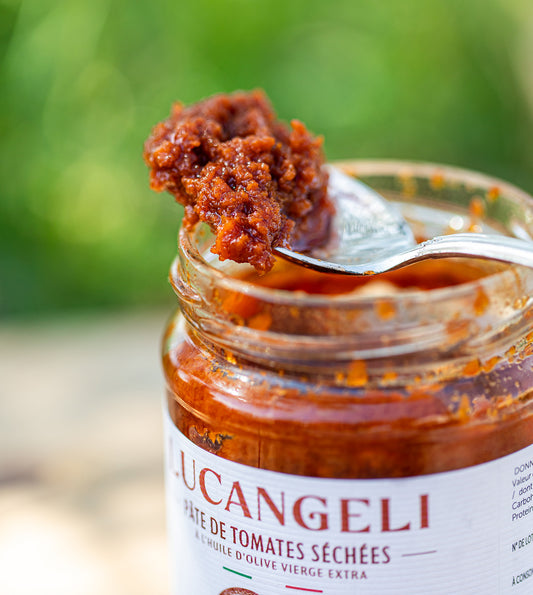
Even before sitting down to eat, antipasti set the tone. Marinated olives, bruschetta, grilled vegetables, cured meats, cheeses—the antipasti platter is a moment of conviviality in itself. Pitted black olives in olive oil naturally find their place, as does a black olive tapenade generously spread on toasted bread slices. To vary the flavors, a sun-dried tomato tapenade brings a concentrated and sunny note that immediately evokes the flavors of the South. The set of 4 tapenades allows you to compose a varied and generous platter, ideal for this type of festive meal.
Summer hot dishes and gratins
Contrary to popular belief, the Ferragosto meal is not only composed of cold dishes. Pasta gratins, gnocchi in tomato sauce, and slow-cooked chicken with bell peppers are among the classics. In the South, timballi—pasta baked with vegetables, hard-boiled eggs, and meat—are also prepared, which reheat easily and feed a whole table. For cold pasta or rice salads, a drizzle of organic green fruity olive oil as a finish provides an herbaceous freshness that contrasts nicely with the richness of the other ingredients.
The products that make the difference in Ferragosto cuisine
Olive oil, the soul of every dish
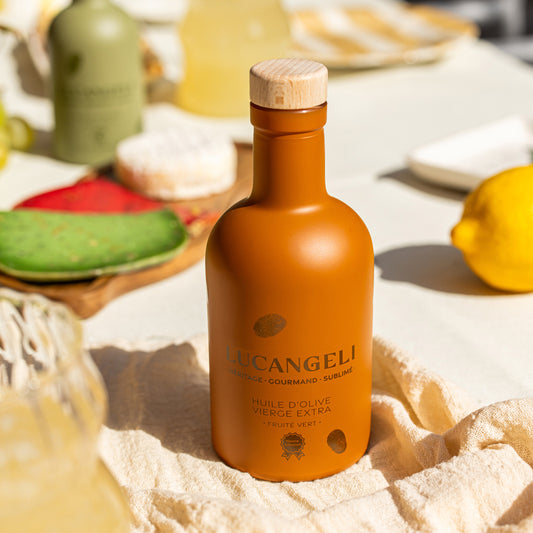
In Italy, and particularly in the South, olive oil is not just a simple fat: it is a full-fledged ingredient that structures the taste of a dish. For pan-frying or oven cooking—eggplants, zucchini, peppers—we prefer an oil with a strong character, like the organic ripe fruity olive oil, with its sweet and fruity notes. For raw finishes—on bruschetta, a salad, or a tomato carpaccio—the organic green fruity olive oil, more intense and slightly peppery, reveals all its complexity. For dishes that require a bit of character—grilled vegetables, marinated meats—the organic garlic & chili olive oil adds an additional aromatic dimension, typical of Calabrian cuisine.
Tapenades, pesto, and condiments to enhance the table
The Ferragosto meal is also an opportunity to bring out the fine condiments. A DOP basil pesto with olive oil, prepared according to the Ligurian tradition with DOP Genoa basil, transforms a simple pasta salad into a memorable dish. A few spoonfuls are enough to flavor a minestrone or coat gnocchi. As for organic basil olive oil, it is drizzled over fresh mozzarella or sliced tomatoes—a simple gesture that makes all the difference on a summer table.
Balsamic vinegar, the final touch
Balsamic vinegar is often the final touch that completes a dish. A few drops on creamy burrata, on strawberries for dessert, or reduced over grilled vegetables: it brings a sweet acidity and aromatic depth that nothing else can replace. The Gold PGI Modena balsamic vinegar, aged according to the PGI Modena specifications, offers a balance between sweetness and liveliness that suits both savory dishes and desserts. It's the condiment you bring out for special occasions—and Ferragosto is one of them.
Whether it's for an eggplant parmigiana prepared the day before, a generous antipasti platter, or a fresh pasta salad, the Ferragosto meal is built around quality products. It's this attention to ingredients—the chosen olive oil, the selected condiment, the carefully marinated olive—that transforms an ordinary meal into a lasting memory. In Italy, it has always been known: August 15th cuisine is first and foremost a matter of generosity and expertise.



 lucangeli.it