


Setting the Table: The Essentials Before the Details
An Italian-style dinner on the terrace doesn't require collector's tableware or elaborate decoration. What matters is a clean table and the quality of what you put on it. For two people, space is precious: keep the center clear for shared dishes and limit decorative objects to what is truly functional.
Tablecloth and Linens
Start with a clean tablecloth in a neutral tone, such as ecru linen, white, or sand beige. It serves as a backdrop and highlights the colors of the dishes. Two generous cloth napkins, simply folded on the plate: that's all you need. No napkin rings, no complicated folding. The care is in the cleanliness and the material, not in the staging.
Tableware and Glasses
Two dinner plates for antipasti, two soup bowls if you plan a primo, two water glasses, and two wine glasses. That's enough. If your tableware is mismatched, it's an asset: Italian family tradition unashamedly embraces sets that accumulate over the years. A colorful piece next to a white plate tells the story of a vibrant home.

The Centerpiece
For a summer dinner on the terrace, the centerpiece is made up of what the season offers: a few cherry tomatoes on the vine, a bouquet of basil in a glass, two or three lemons in a bowl. These elements discreetly perfume the air and remain consistent with the meal. Add two low candles for dusk: they soften the light and naturally slow down the pace of the meal.
Placing Products in the Center: Antipasto First and Foremost
In Italy, the meal begins before sitting down. The aperitivo is when a few snacks are placed on the table while the final preparations are completed. For a dinner for two on the terrace, this is also the easiest part to get right: everything can be prepared in advance.
What to Place on the Table
Here's a practical setup for an antipasto for two:
- A small bowl of pitted black olives in olive oil, placed in the center
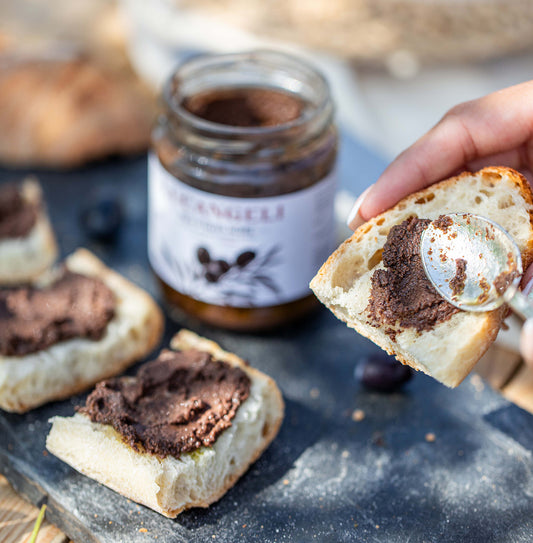
- A jar of sun-dried tomato tapenade with a few slices of toasted bread
- A jar of black olive tapenade alongside
- A small plate with DOP basil pesto for dipping or spreading
- A drizzle of olive oil on each item when serving
If you want to simplify even further, the set of four tapenades allows for variety without multiple purchases.
Olive Oil: When and Which One
This is the detail no one specifies, and it changes everything. For a summer terrace dinner, two oils play different roles depending on the mealtime.
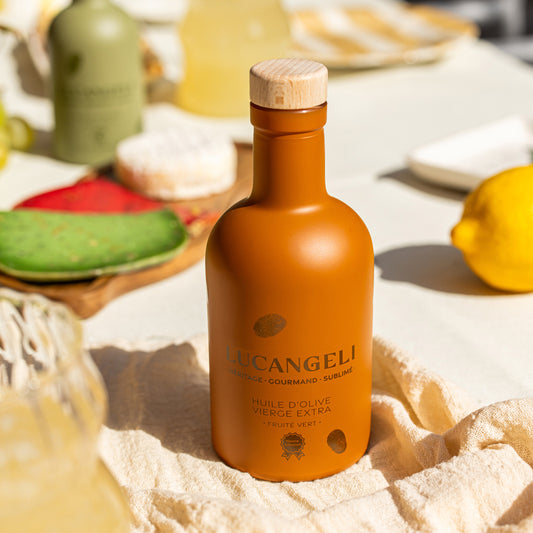
For antipasti and bread for dipping, choose an organic ripe fruity olive oil: its notes of tomato and sweet almond envelop without being aggressive. To finish a hot dish or dress a salad, an organic green fruity olive oil provides a slight pungency and fresh herb notes that enhance without overpowering.
Ripe fruity olive oil comes from the Carolea variety, a Calabrian olive harvested in November. It produces a round oil with notes of ripe tomato and sweet almond, ideal for dipping bread or finishing a bruschetta. It is a little-known variety in France, absent from supermarket shelves, and that's precisely what makes it interesting on a table.
Balsamic Vinegar, the Forgotten Condiment
A drizzle of Modena PGI balsamic vinegar on a slice of tomato or a few strawberries at the end of the meal: it's a simple gesture that always surprises. Place the bottle on the table with the olive oil; the two complement each other naturally.
Serving on the Terrace: Practical Details
An outdoor dinner in August poses some practical constraints that articles on table art never address.
Olive Oil Temperature
Extra virgin olive oil is ideally served between 16 and 18 °C. On a summer terrace, the bottle quickly heats up. Two simple solutions: take it out of the cupboard twenty minutes before the meal, not the refrigerator, which crystallizes it, and return it to the shade between servings. Oil that is too hot loses some of its aromas and becomes more fluid, making dosage less precise.
Serving Container
Avoid placing the entire bottle on the table if it's large. Pour the oil into a small oil cruet or a 100 to 150 ml carafe for serving. This limits exposure to light and heat and is more elegant for two people. A drip-free pourer prevents spills on the tablecloth.

Meal Duration
An Italian dinner is not rushed. Plan twenty to thirty minutes for antipasti, enough time to finish the aperitif and settle in. The main course then arrives, followed by a simple dessert: fresh figs with a drizzle of oil and balsamic, or ice cream. The short, strong caffè at the end of the meal naturally prolongs the evening without being heavy.
Frequently Asked Questions
How to set an Italian-style terrace table for two without special equipment?
A linen tablecloth, two plates, two glasses, a few products placed in the center, and a candle: that's all you need. The Italian spirit relies on the generosity of the products, not on the sophistication of the decor. A customizable gift box with olive oil, tapenade, and balsamic vinegar is enough to create a complete antipasto.
Which olive oil to use for dipping bread during a terrace dinner?
A ripe fruity olive oil, made from the Carolea variety from Calabria, is ideal for bread: its notes of sweet almond and ripe tomato complement most antipasti. Reserve the green fruity oil for finishing hot dishes or dressing a salad, where its light pungency adds depth.
How to prevent olive oil from oxidizing too quickly on a summer terrace?
Take the bottle out twenty minutes before the meal, pour the necessary amount into a small oil cruet, and keep the rest in the shade. An opened extra virgin olive oil can be stored for two to three weeks under good conditions, but heat and direct light accelerate oxidation. For professionals who serve oil in the dining room, the space dedicated to cafes, hotels, and restaurants details the formats and rotations suitable for each establishment.



 lucangeli.it