


Between the moment the olive leaves the tree and the moment it reaches the mill, something decisive happens. This interval, rarely shown on labels, is nevertheless one of the most important factors determining the final quality of extra virgin olive oil. The longer it is, the more the olive oxidizes, ferments and loses its qualities. The shorter it is, the better the oil retains its aromas and freshness, and its low acidity.
Why the time between harvesting and milling matters so much

What happens to olives after they are picked
A picked olive is a living fruit that continues to respire, metabolize and deteriorate. As soon as it is separated from the tree, several processes begin simultaneously.
First, oxidation: exposure to air starts breaking down aromatic compounds. The fruity aldehydes responsible for notes of fresh grass, artichoke or green tomato in a green-fruity oil begin to evaporate. Polyphenols — indicators of the oil’s vibrancy, perceptible when tasting as bitterness and pungency — decrease.
Next, fermentation: if olives are piled up loose, their own heat quickly builds. The temperature at the center of a pile of olives can exceed 30 °C within a few hours. At this point, bacteria and yeasts naturally present on the fruit’s skin trigger fermentation, producing free fatty acids. This is precisely what causes the oil’s free acidity to rise — the key parameter in classifying it as extra virgin (less than 0.8 g per 100 g), virgin or lampante.
Finally, enzymatic autolysis: the olive’s cells break down under the action of their own enzymes, notably lipases, which hydrolyze triglycerides and release fatty acids. This process is irreversible.
Key time frames to know
Olive oil experts agree on some general guidelines that every serious enthusiast should know:
- Less than 12 hours between harvesting and milling: ideal for an oil with very low acidity and an intact aromatic profile. This is the standard upheld by outstanding producers in Calabria for early-ripening varieties such as Carolea, which is milled continuously from the first weeks of October.
- 12 to 24 hours: still acceptable for a quality oil, provided the olives are stored in ventilated crates in a cool, airy place, without being piled up.
- 24 to 48 hours: the risk of increased acidity becomes real. The oil’s sensory qualities deteriorate noticeably.
- More than 48 hours: this falls outside the production standards for quality extra virgin olive oil. Acidity may exceed legal limits, tasting defects may appear — musty, winey or fusty notes — and a tasting panel may classify the oil as no longer extra virgin.
In Calabria, Carolea olives — an iconic variety of the Calabrian terroir — are traditionally milled within hours of harvesting, often in less than 12 hours. This continuous-flow operation requires the mill to run day and night during the harvest season, from October to December.
How the time frame is (or isn’t) shown on the label

What the label tells you
No European regulation requires producers to state the time between harvesting and milling. This information is provided voluntarily, and only the most transparent producers share it, sometimes on the back label or in the technical sheet available on request.
Other label details can offer clues:
- The harvest date or vintage, when stated, lets you work out how old the oil is and compare it with the best-before date.
- The terms “cold extraction” or “first cold pressing” guarantee that the malaxation temperature did not exceed 27 °C, which often goes hand in hand with rapid milling.
- A designation such as Olio di Calabria IGP or Bruzio DOP comes with strict specifications that include maximum time frames between harvest and milling. These designations are therefore an indication of a reliable supply chain.
- The lot number and traceability information can, for the most rigorously produced oils, help you find out the exact milling date by contacting the producer.
What you can ask
If you buy high-end olive oil directly from a producer or specialist retailer, you can ask them directly: what is the average time between harvesting and milling at your olive grove? A serious producer will know the answer without hesitation. A vague or evasive answer is itself informative.
For the organic green-fruity olive oils or the organic ripe-fruity olive oils produced in Calabria, rapid milling is built into the production process from the outset when planning the harvest; it is not optional.
Best practices at the mill: how to protect quality
Storing olives before milling
When the time frame cannot be kept under 12 hours — for example, because the mill is at capacity during peak season — the way the olives are stored makes all the difference.
Recognized industry best practices include:
- Use perforated, ventilated crates rather than sacks or bins. Air circulation allows heat to dissipate and limits anaerobic fermentation.
- Limit the pile height to a maximum of 20–25 cm to prevent heat building up at its center.
- Store the olives in a cool place, between 10 and 15 °C, away from moisture and direct light.
- Never mix olives of different qualities or harvest dates, which could conceal degraded batches in the mix.
- Sort out damaged fruit or olives that have fallen to the ground before they reach the mill. Ground-harvested olives consistently have higher acidity than those picked by hand or with a comb.
Why some mills operate at night
During the October harvest season, the most exacting mills in Calabria operate continuously, including at night. This is no minor detail: it reflects the need to minimize the time between harvesting and milling, especially for early-harvested varieties picked at the beginning of veraison, when aromas are at their peak and acidity is at its lowest.
This logistical requirement comes at a cost, which is reflected in the price of the oil. Oil milled within 12 hours costs more to produce than oil milled within 48 hours. This is one legitimate reason why exceptional oils are priced differently from mass-market oils, whose olives have often spent several days in transit before reaching the mill.
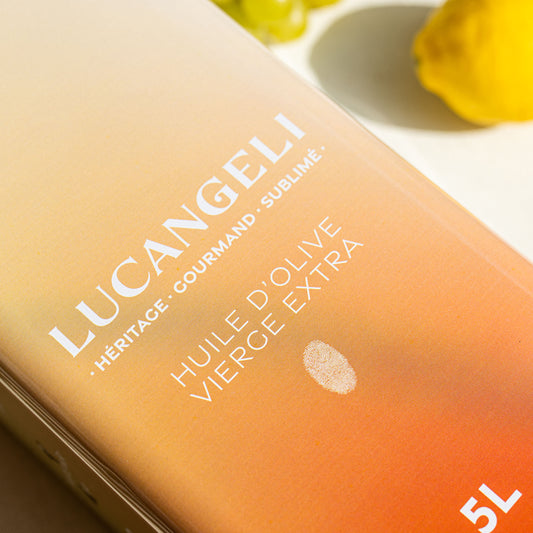
If you use a lot of olive oil and want to combine quality with economies of scale, the 5-liter can of organic olive oil is a practical option: one batch, one opening, optimized storage.
Restaurant owners and professionals looking for a reliable supply with documented information on origin and production conditions can visit the dedicated professionals’ section.
Frequently asked questions
What is the maximum time between harvesting and milling olives to obtain quality extra virgin olive oil?
The generally accepted limit is 24 hours, provided the olives are stored properly (in ventilated crates in a cool place). Beyond 48 hours, the risk of increased acidity and sensory defects becomes significant.
How can I tell whether the oil I buy was milled soon after harvest?
The label does not always say. You can look for a designation (DOP, IGP), a cold-extraction claim, and, above all, transparency from the producer or retailer selling the oil. Ask directly: a serious producer will give you a precise answer.
Is a short time between harvest and milling enough to guarantee good olive oil?
It is necessary, but not sufficient. The variety must also be suitable, the olives must be harvested at the right stage of ripeness, extraction must take place at a low temperature, and the oil must be stored properly after packaging (away from light, heat and air). Milling time is the first link in the quality chain, but not the only one.




 lucangeli.it