

What is olive oil decantation?
Olive oil decantation consists of letting freshly extracted oil rest, so that solid particles and residual water naturally settle at the bottom of the container. This process, used for centuries in the Mediterranean, allows for a clearer oil without mechanical filtration. Decantation is therefore neither a filtering nor a chemical clarification, but a simple act, achieved by gravity and patience.
For an amateur who wants to learn more about extra virgin olive oil, understanding decantation also means understanding why some oils have a slight deposit at the bottom of the bottle. This deposit is a sign of a traditional process and does not alter the quality in any way if stored correctly.
Discovering these production techniques also opens up to the richness of Italian terroirs, where each mill can have its own customs. To go further, explore the bottle customization page to understand how professionals showcase this expertise at the table.
Why is olive oil decanted?

An act for clarity and stability
Decantation aims to separate micro-particles and water, which makes the oil more stable over time and limits the risk of fermentation. A decanted oil is therefore clearer and keeps better, especially if stored in a suitable container or a dark bottle.
Decantation or filtration: what's the difference?
Unlike filtration, decantation is a natural process. It requires no sophisticated equipment, just time. Some olive oils, particularly those from varieties such as Carolea or Roggianella, are traditionally decanted to preserve their full aromatic richness. Basil-pressed oils, for example, can be decanted before bottling to stabilize their fragrance without depriving them of their character.
A choice for both producer and consumer
Some Italian millers prefer decantation for confidential batches or special vintages, such as jeroboam olive oil. For the consumer, this sometimes means accepting a slight cloudiness or deposit, a guarantee of the most natural extraction possible.
How to use decanted olive oil at home?

Practical tips for everyday use
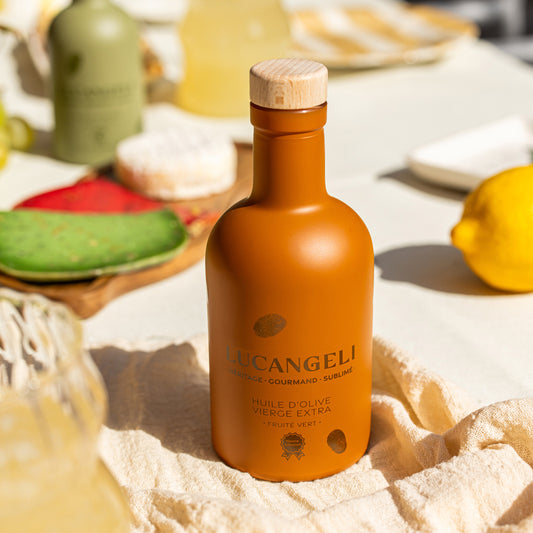
- Store your bottle upright, away from light.
- Pour gently so that the sediment remains at the bottom.
- If you notice a slight cloudiness, mix gently before use.
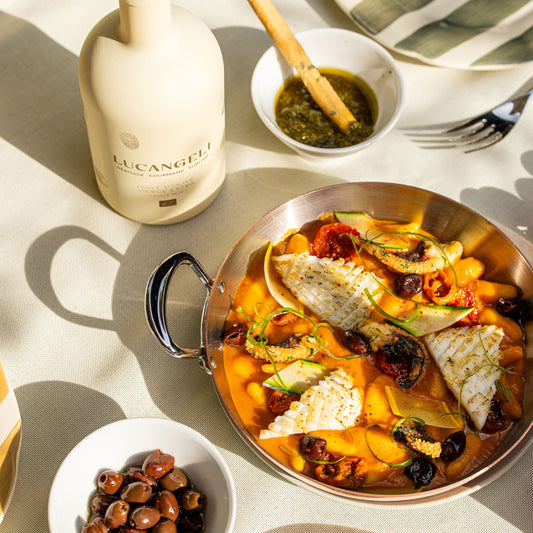
Decanted oil offers a sometimes superior texture and aromatic intensity. Try it on an Italian appetizer platter or as a finishing touch on seasonal vegetables.
What is the deposit for?
The deposit is a sign of an unfiltered or lightly filtered oil, often sought after for its sensory richness. It is not necessary to consume it, but some enthusiasts like to incorporate it into rustic recipes or marinades.
Decantation and flavored oils
Basil-pressed olive oils, such as those obtained by co-milling fresh basil with olives during extraction, often benefit from decantation to stabilize their fragrance. Discover this technique on the page dedicated to organic basil olive oil.
Checklist: choosing and using decanted oil
- Check for "decanted" or "unfiltered" on the label.
- Prefer an opaque container or can for storage.
- Accept a slight deposit, a sign of a traditional process.
- Use it as a finishing touch or seasoning to best enjoy its aromas.
- Consult the professionals page to discover how decantation is valued in restaurants.
Frequently asked questions
What is olive oil decantation and what is it for?
Decantation is a natural process that makes olive oil clearer and more stable, without mechanical filtration.
Should the deposit in decanted oil be avoided?
No, the deposit is natural and a sign of a traditional process. It can be used in cooking or left at the bottom of the bottle.
What is the difference between decanted and filtered oil?
Decanted oil is clarified naturally by gravity, filtered oil passes through a mechanical filter to achieve perfect clarity.




 lucangeli.it