

To make homemade preserves in olive oil with summer vegetables, the Calabrian sott'olio technique yields the best results: dry-prepared vegetables, sterilized jars, and a ripe fruity oil that coats without overpowering. August is the ideal month to start: tomatoes, eggplants, zucchini, and bell peppers are at their peak, and jars prepared now will be perfect in the fall.
The Calabrian sott'olio tradition
An ancestral practice from Southern Italy
In Calabria, sott'olio is a preservation practice passed down through generations. Long before refrigerators, every family in Southern Italy prepared their jars in August to get through winter with the flavors of summer. Eggplants, peppers, mushrooms, capers, sun-dried tomatoes: everything the land yielded in abundance was stored in glass jars, immersed in olive oil. If you want to discover the best of this tradition without getting into the kitchen, the sun-dried tomato spread is a great example.
Why Calabria excels in this art
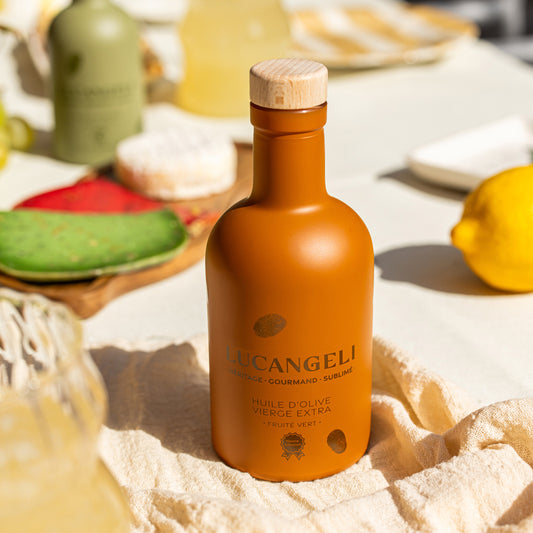
Calabria has a decisive advantage: the Carolea olive variety, dominant in the region, produces an oil with a mild and low-bitterness profile. This characteristic is essential for preserves: an oil that is too bitter or too pungent would overpower the aromas of the marinated vegetables. Carolea, however, coats without dominating. This same logic guides the selection of oils at Lucangeli, whose Calabrian cuvées come from this variety. For professionals who wish to integrate homemade preserves into their menu or catering offer, the professional section allows them to purchase oil in large quantities.
The Calabrian sott'olio tradition

Which vegetables to choose and how to prepare them
Essential summer vegetables
Not all vegetables are equally suitable for preservation in oil. Here are those that yield the best results in August:
- Eggplants: cut into slices or cubes, salt for at least an hour to draw out moisture before plunging them into boiling vinegar, then dry thoroughly.
- Sun-dried tomatoes: prepare in a low oven (90°C for 6 to 8 hours) or in the sun for two days. They are then preserved in oil with garlic and basil.
- Zucchini: cut into thin rounds, lightly grill in a pan without fat, then let cool before jarring.
- Bell peppers: grill whole in the oven or over a flame, peel, deseed, then layer in jars with garlic and herbs.
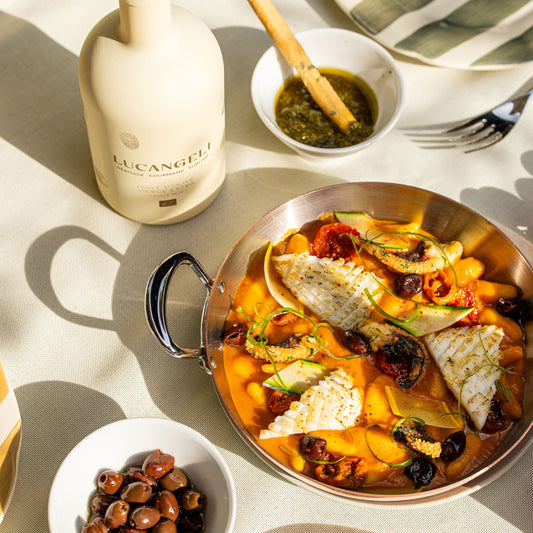
To complete an antipasti platter with no preparation effort, black olives in olive oil naturally pair with these homemade preserves.
Step-by-step preparation technique
Successful oil preserves depend on two imperatives: the complete absence of moisture in the vegetables, and rigorous sterilization of the jars. Here's how to proceed:
- Sterilize glass jars and their lids by plunging them into boiling water for 10 minutes, then letting them air dry on a clean towel.
- Prepare the vegetables according to their nature (draw out moisture, blanch, grill, or dry) and ensure they are perfectly dry before jarring them.
- Layer the vegetables in the jars, alternating with aromatic herbs (thyme, rosemary, bay leaf, basil) and possibly garlic.
- Pour the olive oil in a stream, slowly, gently pressing the vegetables to remove air bubbles. The oil must completely cover the vegetables, with at least one centimeter of margin above them.
- Seal the jars tightly and let them rest for 24 hours before storing.
If you're preparing large quantities, the 5-liter canister is the most suitable format for jarring.
Choosing the right oil and preserving safely
Ripe fruity or green fruity: which oil for jars?
The choice of oil determines the final result. For summer vegetable preserves, ripe fruity oil is the most suitable: its notes of ripe tomato, almond, and cooked artichoke harmonize with the confit vegetables without overpowering them. The organic ripe fruity oil is particularly suitable for eggplants, sun-dried tomatoes, and bell peppers.
The organic green fruity oil, more herbaceous and slightly bitter, is preferable for zucchini and vegetables with a more neutral flavor, to which it adds character. For a more pungent version, garlic and chili olive oil can be used as a finishing touch, poured last over jars of eggplant or bell peppers.
Preservation rules to follow
Poorly prepared oil preserves can pose risks. Here are the rules never to neglect:
- Vegetables must be perfectly dry before going into the jar. The slightest trace of water promotes mold growth.
- The oil must completely cover the vegetables at all times. If the level drops after a few days, top up with fresh oil.
- Store jars in a cool, dark, and dry place. A cellar or a cupboard away from light is perfect.
- Once opened, a jar should be kept in the refrigerator and consumed within two weeks.
- Do not hesitate to discard any jar with a bulging lid, an abnormal odor, or unusual color.
Summary: which vegetable with which oil
- Eggplants: ripe fruity oil, 4 to 6 months, salt to draw out moisture then blanch in boiling vinegar.
- Sun-dried tomatoes: ripe fruity oil, 6 to 8 months, dry in oven at 90°C for 6 to 8 hours.
- Grilled zucchini: green fruity oil, 3 to 4 months, grill dry and let cool completely.
- Roasted bell peppers: ripe fruity or garlic-chili oil, 4 to 6 months, peel and deseed after cooking.
- Mushrooms: green fruity oil, 3 to 5 months, blanch 2 minutes in water and vinegar.
Frequently Asked Questions
Can any olive oil be used for homemade preserves?
No. Poor quality or overly oxidized oil will transfer its defects to the vegetables. Use extra virgin olive oil, from a recent harvest, with a free acidity of less than 0.8%. The aromatic profile also matters: an oil that is too bitter or too pungent can unbalance the final taste of the preserves.
How long do vegetables preserved in olive oil last?
A tightly sealed jar, properly prepared, will keep between 3 and 8 months depending on the vegetable, away from light and heat. Once opened, it should be refrigerated and consumed within two weeks. The duration also varies depending on the initial water content of the vegetable: sun-dried tomatoes last longer than grilled zucchini.
Do jars need to be sterilized after being filled with oil?
For preserves in oil, hot sterilization after filling is not recommended: heat degrades the aromas of the oil and can alter the texture of the vegetables. Safety relies on rigorous vegetable preparation (absence of moisture), sterilization of empty jars before filling, and adherence to preservation rules. This rigorous preparation is also what guides the manufacturing of spreads at Lucangeli, as evidenced by the range of products made from olives and southern vegetables.
Which vegetables to choose and how to prepare them




 lucangeli.it